
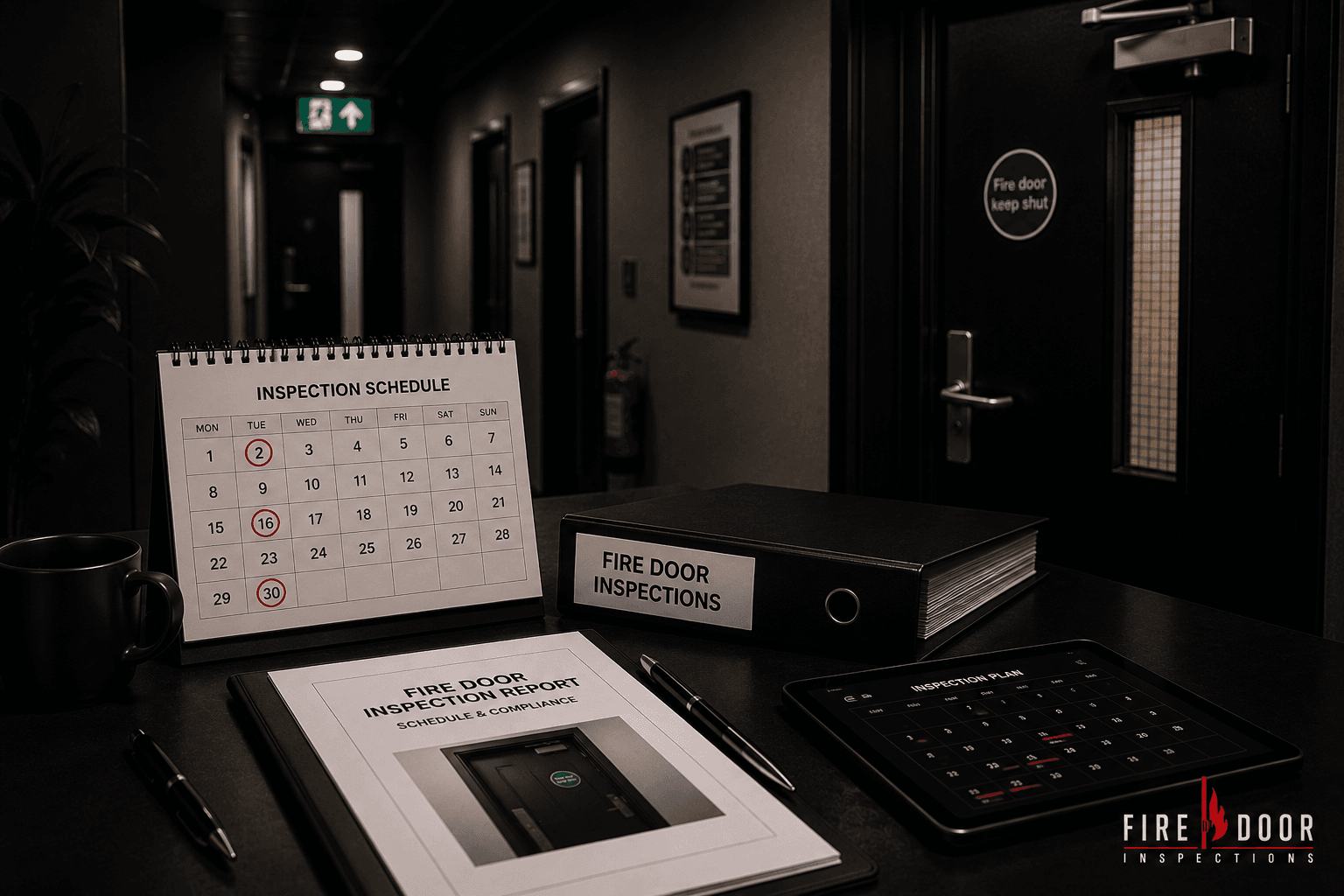
Compliance Guidance
Fire Door Inspection Frequency
If you are planning how often to schedule fire door reviews, start with building use, door wear and your own records — not a one-size-fits-all interval.
- Inspection frequency guidance
- Property-specific considerations
- Fire door record keeping
- Reports and photo evidence where recorded
- London property coverage
- General guidance only, not legal advice
Important: Inspection Frequency Depends on the Property
This page is provided for general information only and does not constitute legal advice. Fire door inspection frequency can depend on the building, occupancy, use, risk profile, management arrangements and applicable duties. Responsible persons and duty holders should confirm suitable inspection arrangements and seek competent advice where required.
Overview
How Often Should Fire Doors Be Inspected?
There is no single inspection frequency that should be assumed for every property.
Fire door inspection frequency may vary depending on the type of building, how heavily doors are used, whether the premises are residential, commercial, healthcare, education or care-related, and what the responsible person or duty holder requires.
This page focuses on practical scheduling — not statutory intervals. For a plain-English educational overview of how often fire doors should be inspected, see our companion guide. Statutory duties, including Regulation 10 where relevant, are explained on our Fire Safety (England) Regulations page. Responsible persons should confirm suitable arrangements for their premises and seek competent advice where required.
Key Factors
What Affects Fire Door Inspection Frequency?
Several factors may influence how property teams plan fire door inspections and record keeping.
Building type
Residential blocks, HMOs, offices, schools and care settings may involve different door types and inspection priorities.
Occupancy level
Higher occupancy or shared use may increase door wear and the need for clearer inspection records.
Door usage
Frequently used corridor and escape route doors may warrant closer review depending on management arrangements.
Escape route importance
Doors on primary escape routes may be prioritised where property teams plan inspection scope.
Resident or public access
Public-facing or resident-access areas may influence access planning and inspection scheduling.
Previous defects
Doors with prior defects or remedial history may be reviewed more closely in follow-up inspections.
Maintenance history
Maintenance records and contractor activity may inform when doors should be re-checked.
Refurbishment works
Fit-outs, alterations or building works may warrant additional inspection after completion.
Contractor activity
Recent repairs or hardware changes may affect when doors are next reviewed on site.
Risk assessment findings
Fire risk assessment actions may influence inspection priorities alongside competent advice.
Management requirements
Managing agents and portfolio teams may set internal reporting cycles for inspection records.
Portfolio reporting needs
Multi-site portfolios may require consistent door schedules and inspection dates across properties.
Planning
A Practical Approach to Fire Door Inspection Scheduling
Property teams may choose to plan inspections using a risk-based approach, reviewing higher-use areas, communal escape routes, high-risk premises or previously defective doors more closely.
Inspection timelines work best when tied to how doors are used — heavy corridor routes, recent defects and portfolio turnover all influence when the next visit makes sense. File each visit with door references and photos where recorded so you can compare condition over time — reports support your schedule but do not guarantee compliance.
- Identify all relevant fire doors
- Categorise door locations and use
- Review previous defects
- Consider high-use or high-risk areas
- Record inspection dates and scope
- Plan follow-up checks after remedial works
- Keep reports accessible for internal records
- Review frequency when property use changes
Property Types
Inspection Frequency Considerations by Property Type
The relevant inspection scope and scheduling can vary depending on building type, use, access and management arrangements.
Blocks of Flats
Communal routes, stairwells, risers and flat entrance doors where scoped may need clear records.
Sector guidance →HMOs
Shared houses can involve high tenant turnover, shared kitchens, escape routes and bedroom doors where scoped.
Sector guidance →Offices
Office buildings may involve tenant fit-outs, landlord areas, shared corridors and plant rooms.
Sector guidance →Schools
Education buildings often have high-use corridors, classrooms, halls and holiday access planning.
Sector guidance →Care Homes
Care settings can involve occupied resident areas, equipment movement and sensitive access arrangements.
Sector guidance →Housing Associations
Portfolio records can help compare recurring issues across housing stock.
Sector guidance →Local Authorities
Council portfolios may need consistent reporting across housing and public buildings.
Sector guidance →NHS & Healthcare
Healthcare premises can involve patient-facing areas, operational sensitivity and estate reporting.
Sector guidance →Property Managers
Managing agents may need consistent records across multiple managed sites.
Sector guidance →
Record Keeping
What Fire Door Inspection Records Should Capture
Depending on agreed scope, structured inspection records may help property teams maintain clearer documentation over time.
- Property or site details
- Door location or reference
- Inspection date
- Inspection scope
- Door leaf condition
- Frame condition
- Gaps and alignment
- Intumescent and smoke seals
- Self-closing device observations
- Hinges and fixings
- Signage observations
- Fire stopping observations
- Defect notes
- Priority guidance
- Photos where recorded
- Access limitations
- Follow-up action notes
Review Triggers
When Should Inspection Frequency Be Reviewed?
Property teams may revisit inspection scheduling when building use, occupancy or management arrangements change.
Change of building use
New occupancy or use may affect which doors are prioritised and how often they are reviewed.
Increased occupancy
Higher occupancy may increase door wear and warrant closer inspection planning.
Refurbishment or fit-out works
Building works may affect door sets and may warrant follow-up inspection after completion.
Repeated defects
Recurring issues on the same doors may indicate a need for more frequent review.
Contractor works
Recent repairs or hardware changes may affect when doors should be re-checked.
Fire risk assessment findings
Risk assessment actions may influence inspection priorities alongside competent advice.
New management arrangements
Changes in managing agent or portfolio structure may affect reporting cycles.
Resident or occupant concerns
Reported issues may prompt targeted inspection of specific doors or areas.
Damage or misuse
Visible damage or wedged doors may warrant earlier follow-up where observed.
Portfolio review cycles
Portfolio teams may schedule periodic reviews across multiple sites or estates.
Frequent Use Defects
Common Fire Door Defects Linked to Frequent Use
These are examples of visible issues that may be recorded during a fire door inspection, depending on the agreed scope and access.
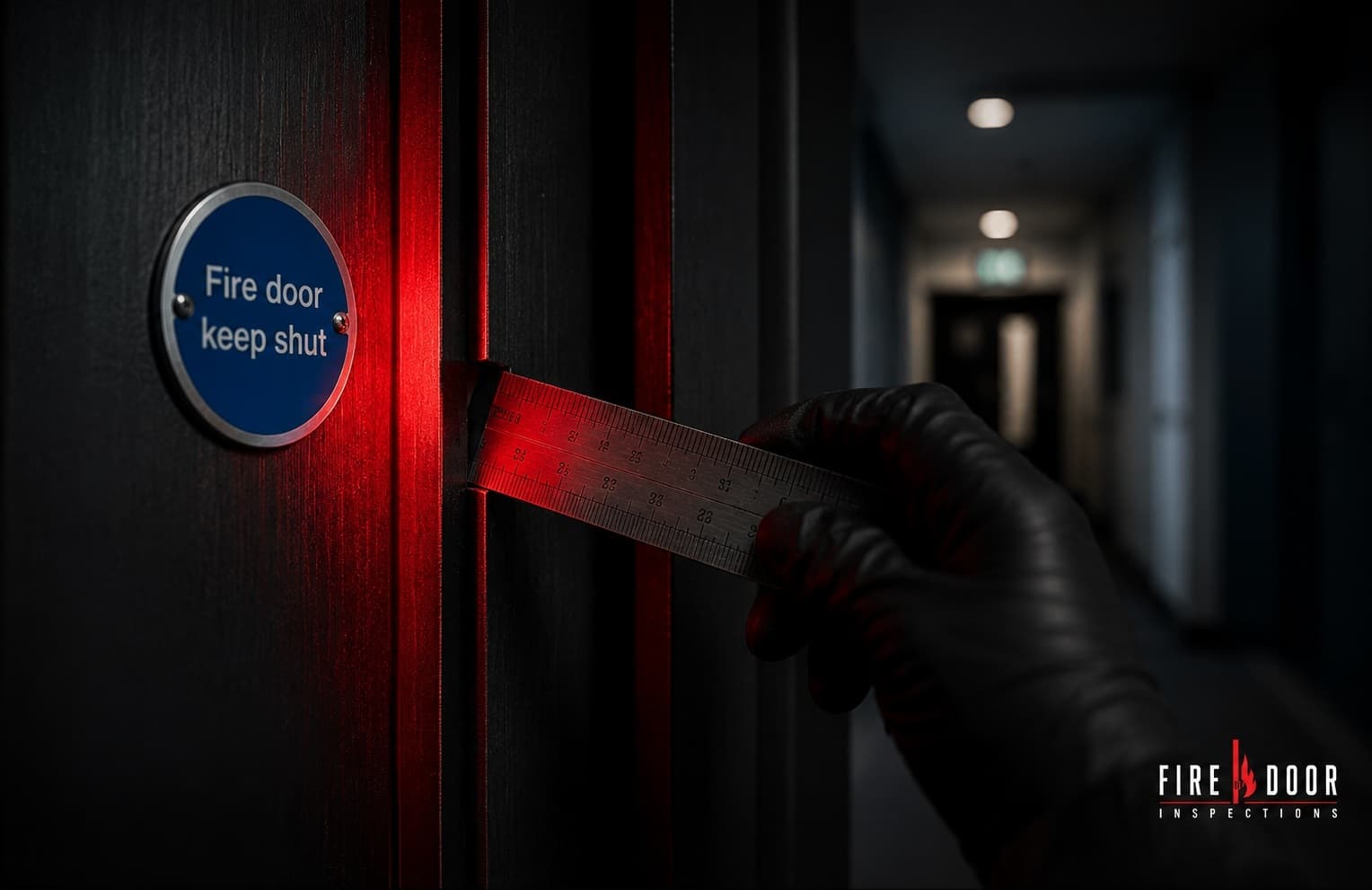
Issue recorded where observed
Excessive gaps
Gap issues may be recorded where observed and can affect how a door set performs in use. Documented observations can support remedial planning.
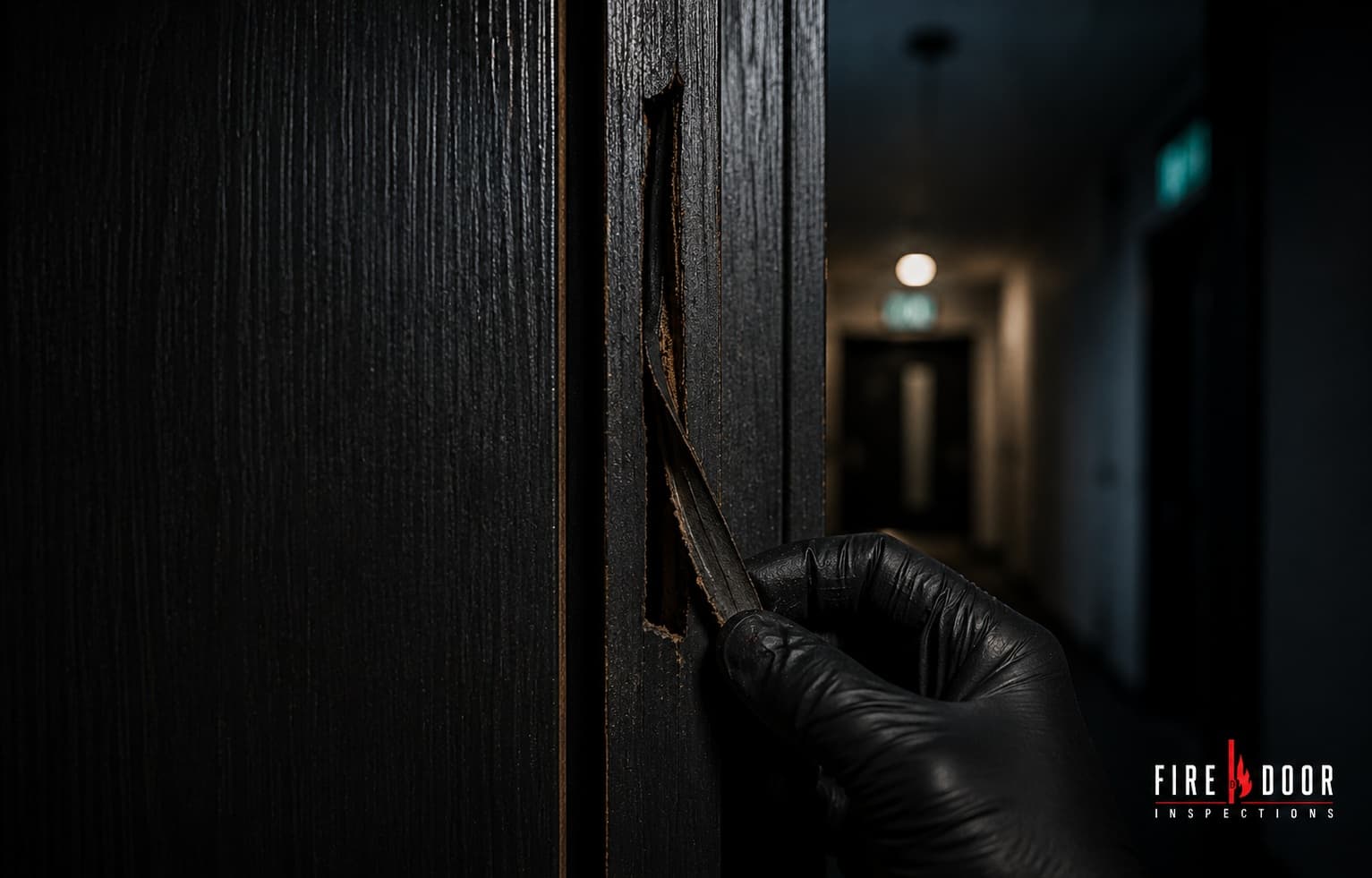
Issue recorded where observed
Damaged or missing seals
Seal defects can affect smoke and fire resistance where observed. Recorded findings may help property teams plan maintenance or replacement.
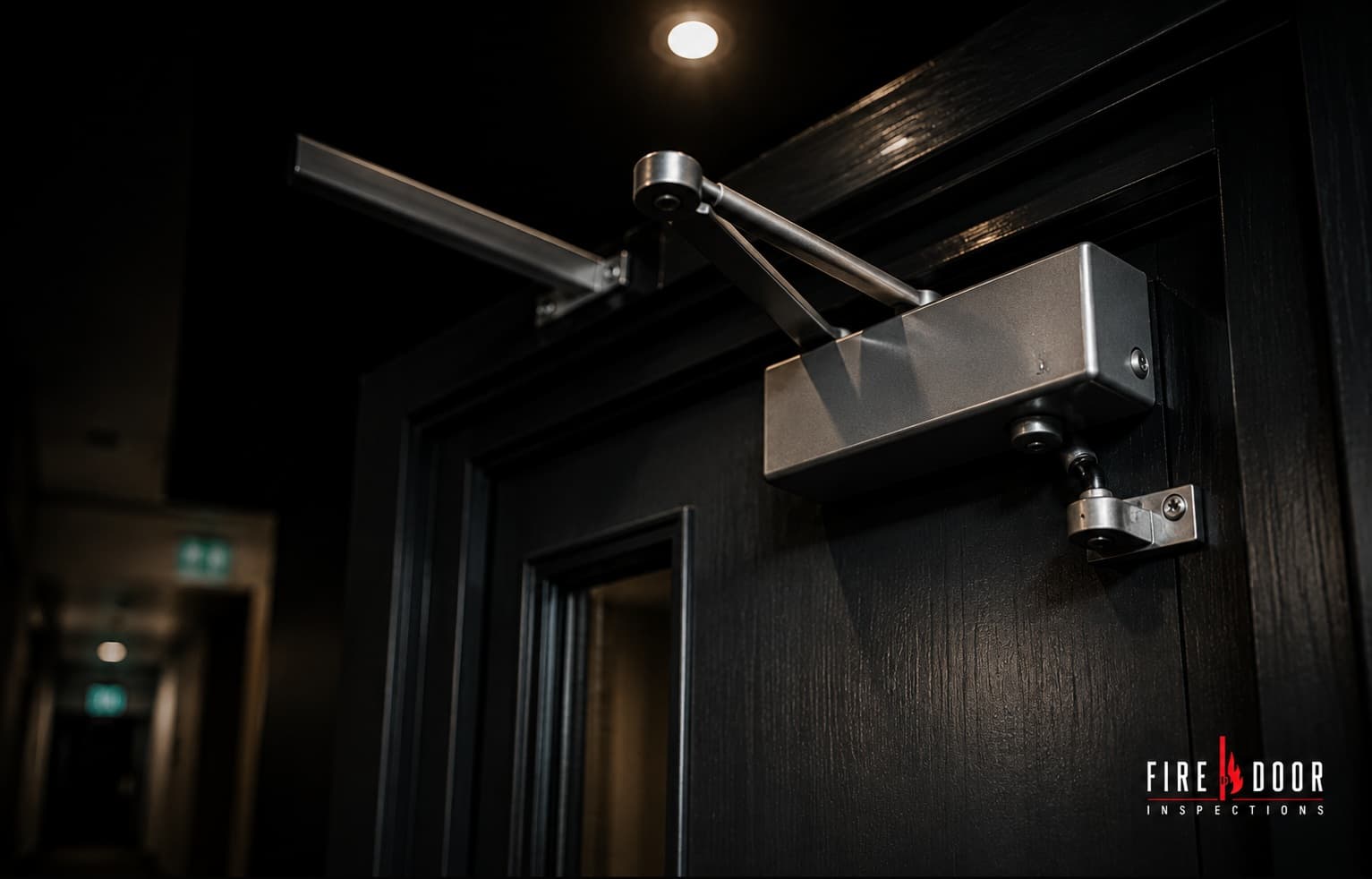
Issue recorded where observed
Faulty self-closing devices
Self-closing failures are frequently documented where doors may not close fully after use across corridors and escape routes.
Issue recorded where observed
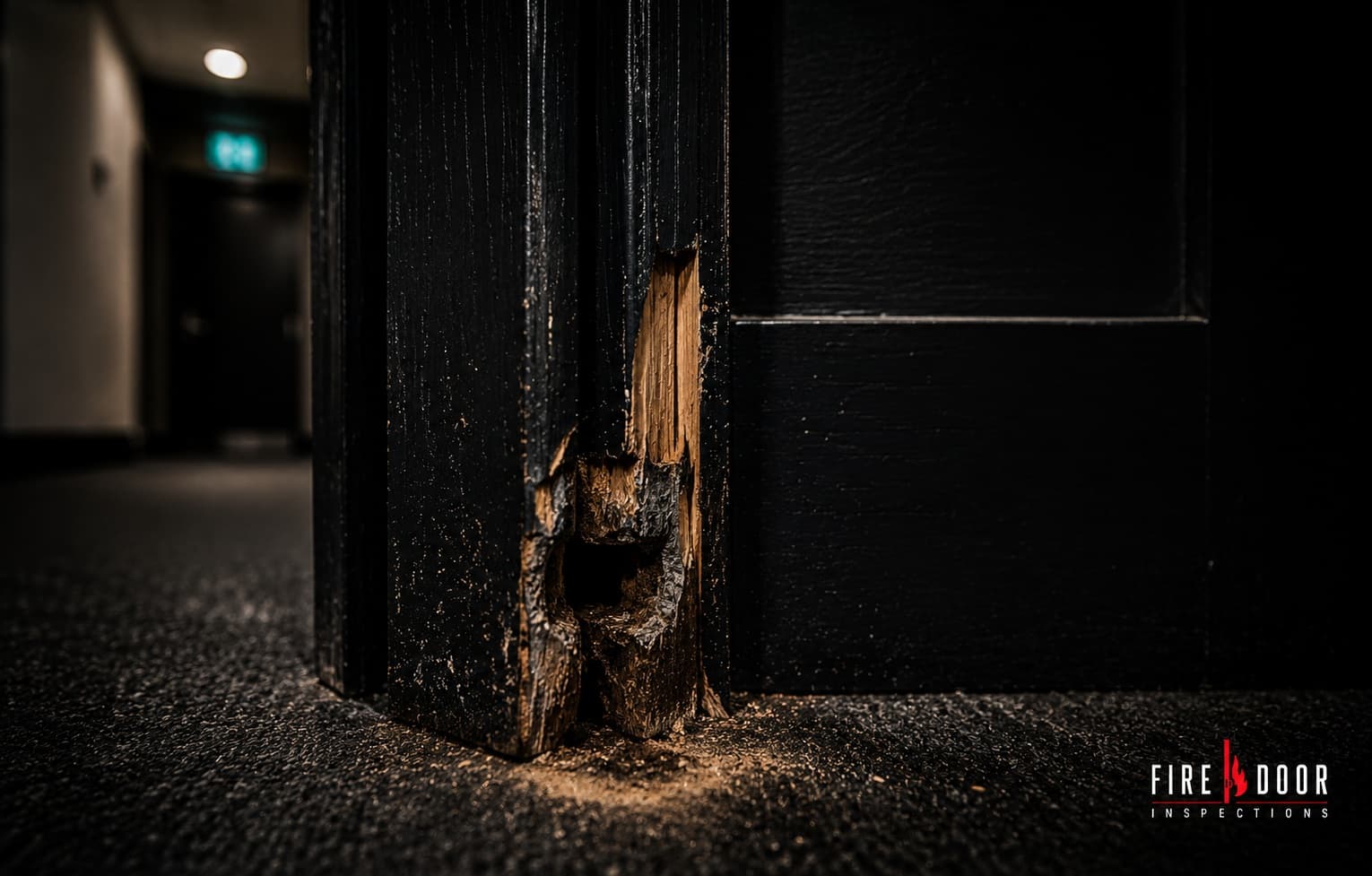
Damaged frames
Frame condition observations can be recorded to support maintenance decisions and contractor follow-up where damage is visible.
Issue recorded where observed
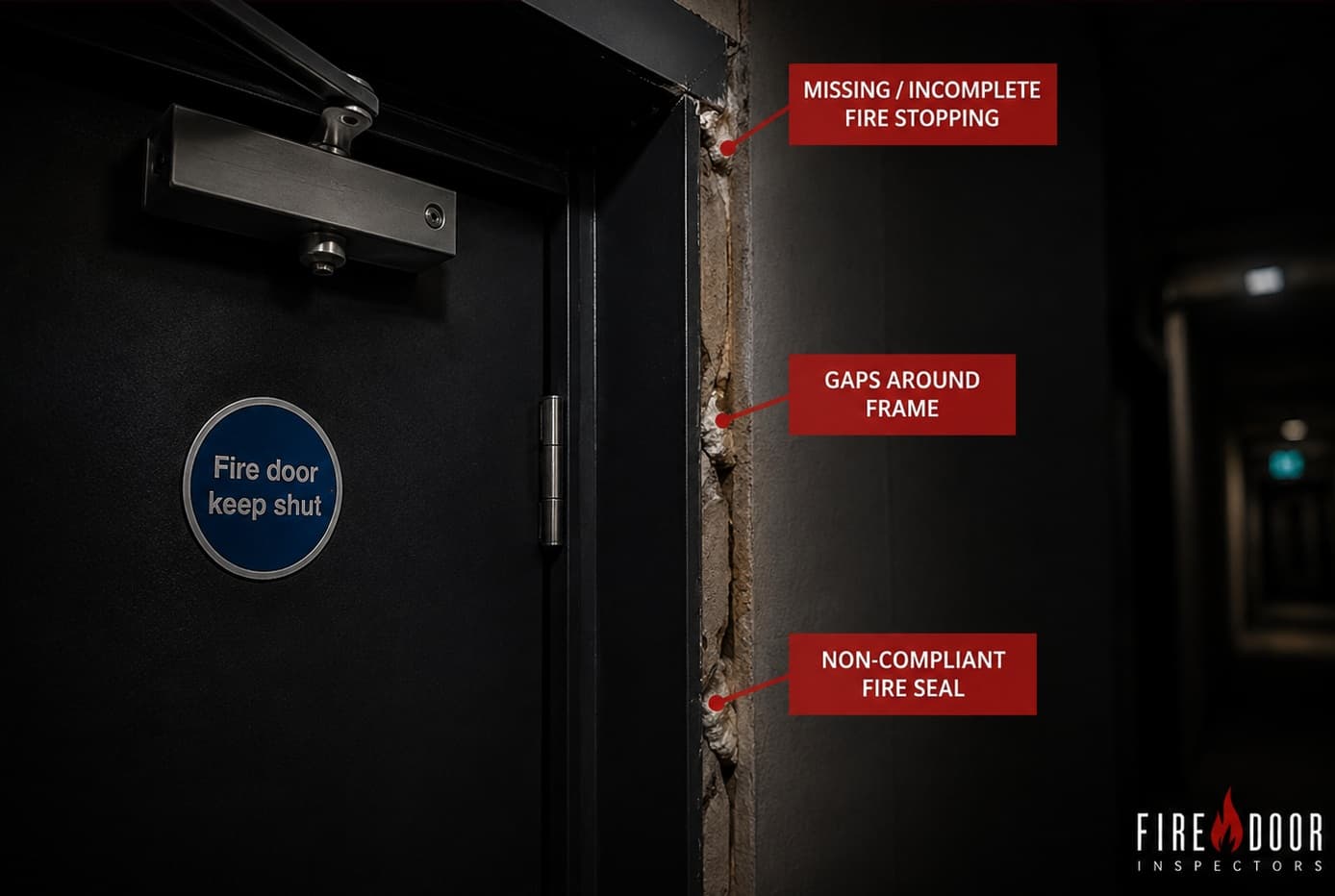
Fire stopping concerns
Observations around door frames and surrounding construction may be documented where visible during inspection.
Issue recorded where observed
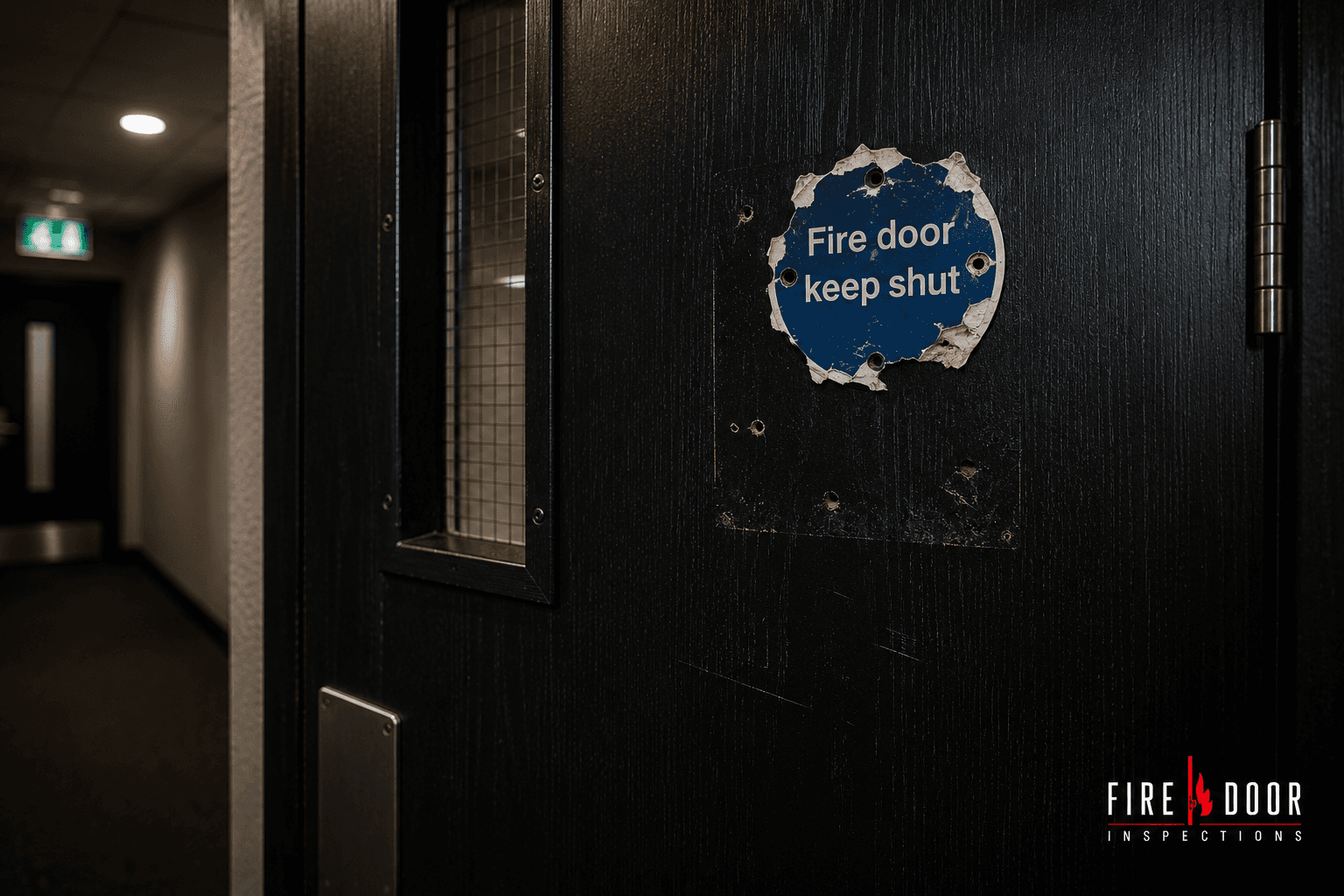
Poor or missing signage
Signage observations may be included where relevant to door identification, operation and escape route clarity.
Issue recorded where observed
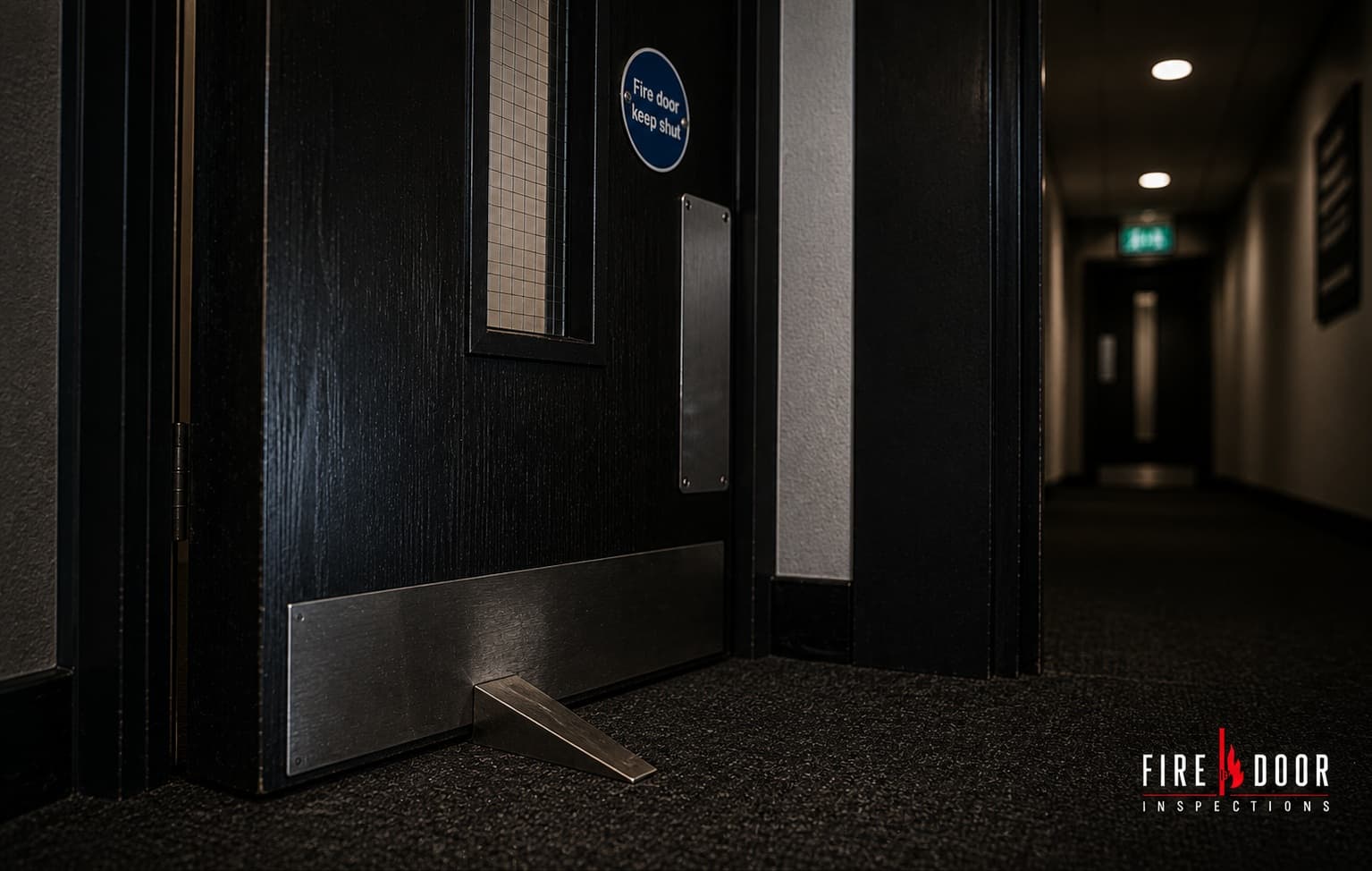
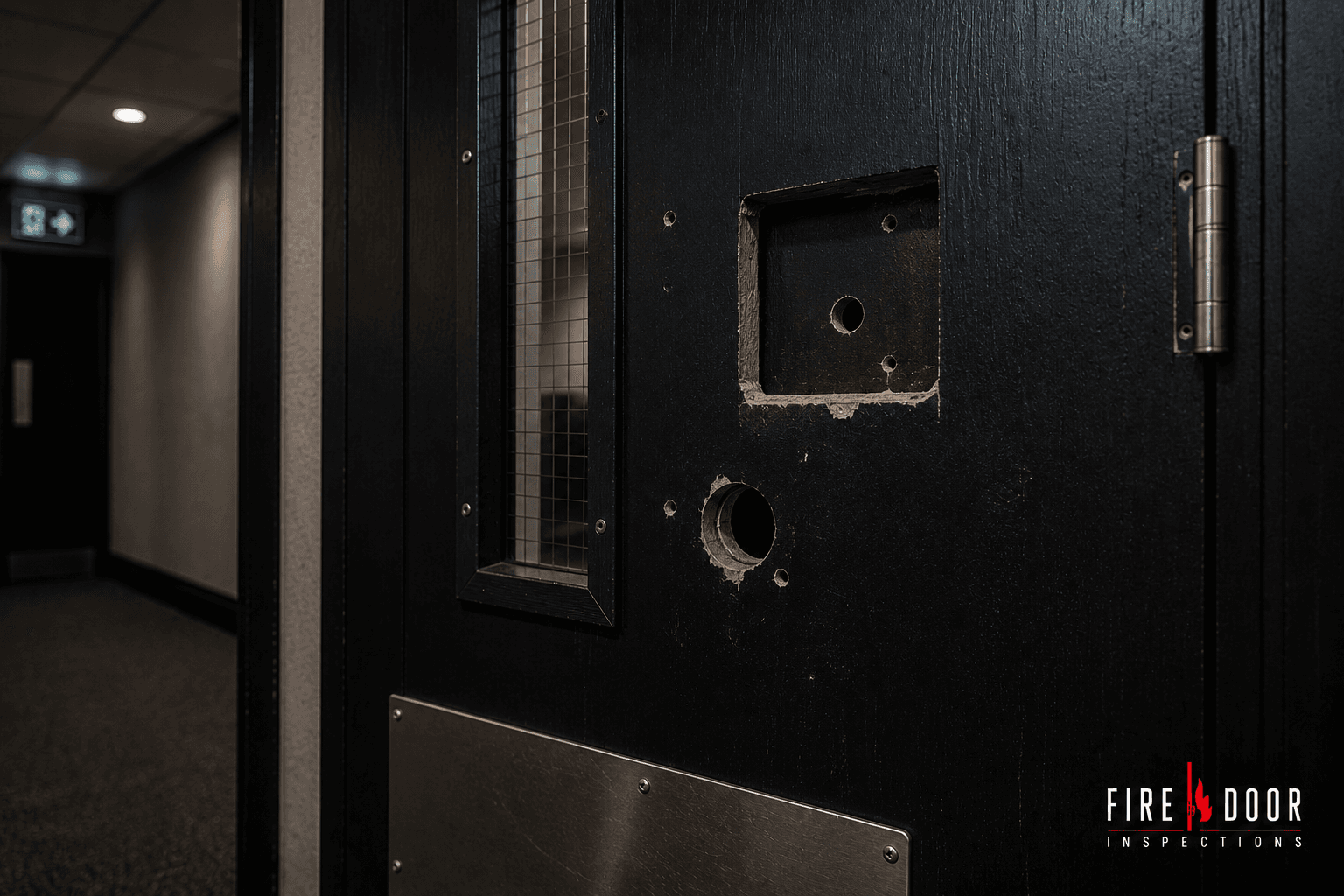
Doors wedged open
Doors held open without approved hold-open devices are commonly recorded where observed on site.
Issue recorded where observed
Unauthorised alterations
Alterations to door sets or hardware may be noted where they could affect performance or maintenance history.
Issue recorded where observed
Incomplete records
Structured inspection reports can help property teams maintain clearer documentation of door condition and observed findings.
Related Guidance
Related Fire Door Compliance Guidance
Explore further compliance topics on responsible person duties, regulations and checklists.
Compliance Hub
Explore fire door compliance topics, responsible person guidance and checklist resources.
Read topic →Responsible Person Duties
Understand how inspection records may support responsible persons and duty holders with internal fire safety management.
Read topic →Fire Safety Regulations
Learn how fire door inspection records may relate to fire safety duties and property management processes.
Read topic →Fire Door Checklist
See common visible fire door items that may be checked during inspections, including gaps, seals, closers and signage.
Read topic →Building Safety Act Context
A cautious overview of how building safety record keeping may relate to fire door inspection planning.
Read topic →Fire Door Compliance Support
See how structured inspections, reports and photo evidence where recorded can support remedial planning and internal records.
Read topic →UK Fire Door Inspection Frequency Guide
Educational article on what affects inspection scheduling across UK buildings and property types.
Read topic →quarterly fire door checks in residential buildings over 11 metres
Practical guidance on quarterly communal checks and annual flat entrance checks where the 11-metre residential duties apply.
Read topic →
Inspection Scheduling
Need a Fire Door Inspection Schedule for Your Property?
If you manage a London property or portfolio, a dated inspection report gives you a baseline to plan the next visit — door by door, with defects and photos where recorded.
FAQ
Fire Door Inspection Frequency Questions
Clear answers to common questions about how often fire doors may be inspected and why frequency can vary.
How often should fire doors be inspected?
Is there one inspection frequency for every building?
What affects fire door inspection frequency?
Should high-use fire doors be checked more often?
Should fire door inspections be recorded?
Can inspection reports help with ongoing records?
Is this page legal advice?
Can you help with fire door inspections in London?
Further Reading
Related Pages and Services
- Compliance hub
- Responsible person duties
- Regulation 10
- Flat entrance doors
- FRA and fire doors
- Fire door checklist
- Urgent inspections
- Compliance support
- Fire door inspections
- Fire door surveys
- Fire door reports
- Inspection cost
- Inspections London
- Sample report
- Get a quote
- Contact
- Building Safety Act
- UK fire door inspection frequency guide
- Property managers
- Housing associations
- Care homes
- Schools
- NHS healthcare