
Illustrative Inspection Scenarios
Fire Door Inspection Scenarios
Explore illustrative fire door inspection scenarios showing how defects may be recorded, reported and prioritised across different property types.
How to Use These Scenarios
From Inspection Findings to Structured Follow-Up
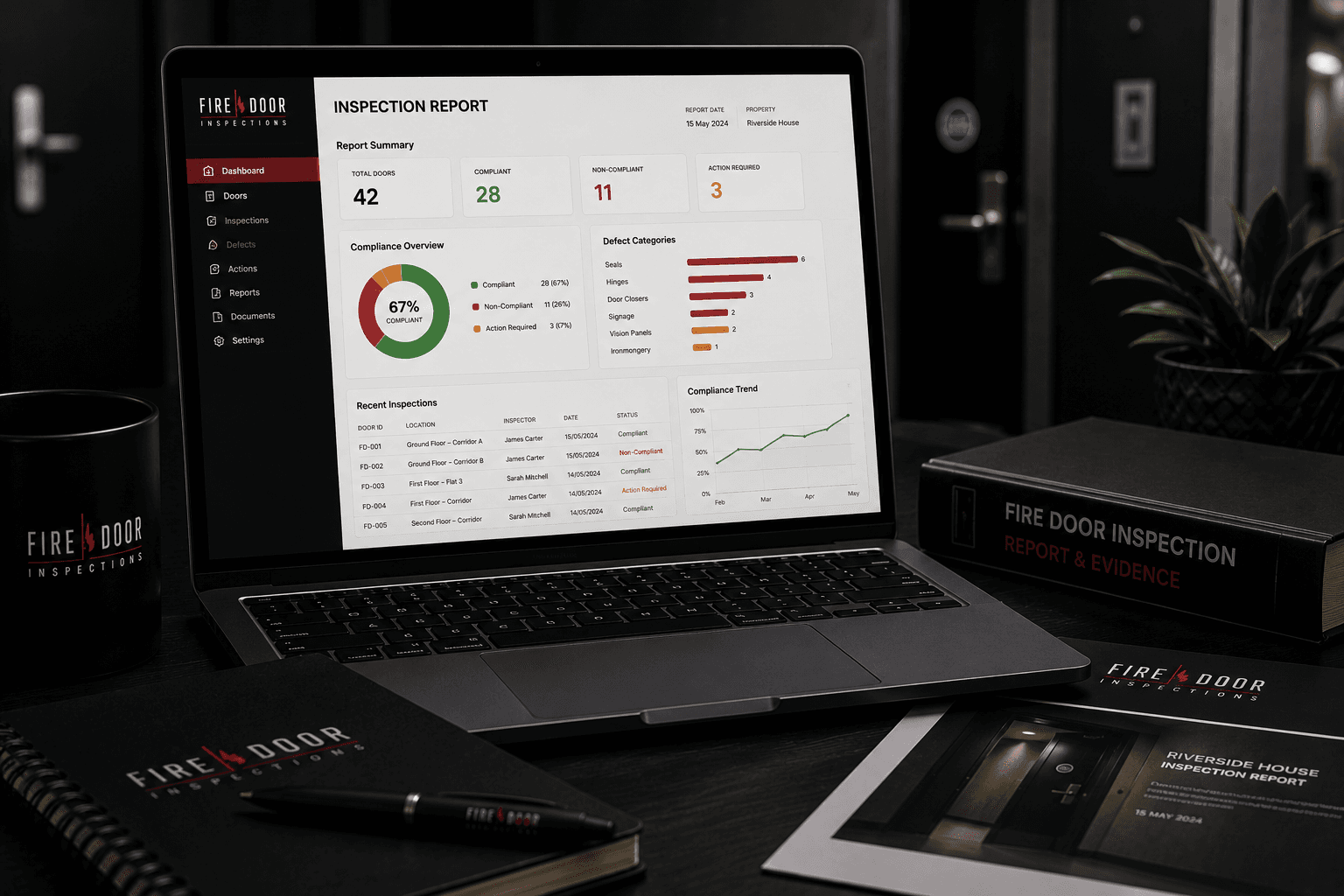
Fire door inspection findings are easier to act on when they are tied to a clear door reference, location, supporting photographs where included, and an understandable priority. The illustrative scenarios below show how different property types may shape the reporting approach.
These scenarios are illustrative and do not represent specific completed client projects. Actual findings and recommendations depend on the individual doorset, available evidence and agreed scope.
Anonymised Examples
Typical Fire Door Inspection Scenarios
Based on common inspection patterns across residential, commercial and institutional properties. These are illustrative examples, not verified completed projects.
Property type
Block of Flats
Communal Fire Door Inspection in a Residential Block
Illustrative scenario: a managed residential block may need inspection of communal fire doors serving corridors, stair cores and shared escape routes.
Common findings
- Excessive gaps around several door leaves
- Damaged or missing seals
- Doors not closing fully
- Poor or missing signage
Reporting outcome
Findings can be structured by door reference, location, evidence photos and remedial priority to support follow-up works.
Related guides
Property type
Commercial Office
Office Fire Door Survey with Reporting Dashboard
Illustrative scenario: a commercial office environment may need a structured overview of fire door condition across multiple floors and access-controlled areas.
Common findings
- Faulty self-closing devices
- Unauthorised alterations
- Damaged frames
- Inspection records requiring clearer organisation
Reporting outcome
A report dashboard can help group findings by floor, defect type and remedial priority.
Related guides
Property type
HMO
Fire Door Defect Review in an HMO Property
Illustrative scenario: an HMO-style property may need review of bedroom doors, communal areas and escape-route doors where day-to-day use has affected door condition.
Common findings
- Doors wedged open
- Missing fire door signage
- Damaged seals
- Door closers requiring adjustment
Reporting outcome
Inspection notes can highlight management actions, visible defects and follow-up items for remedial planning.
Related guides
Property type
Care Home / Supported Living
High-Use Fire Door Inspection in a Care Setting
Illustrative scenario: a high-use care or supported living setting may need careful review of doors affected by frequent access, mobility equipment and operational pressures.
Common findings
- Damaged frames at low level
- Faulty closers
- Excessive threshold gaps
- Poor signage visibility
Reporting outcome
Findings can be prioritised to support safer day-to-day management and clearer remedial planning.
Related guides
Property type
Education / School Building
Fire Door Inspection Across a School or Education Site
Illustrative scenario: a school-style building may need inspection of classroom, corridor and escape-route doors where heavy use and historic repairs have created visible issues.
Common findings
- Unauthorised alterations
- Damaged glazing or vision panels
- Missing signage
- Doors not latching correctly
Reporting outcome
Inspection findings can support a clearer schedule of remedial works and maintenance priorities.
Property type
Portfolio / Managing Agent
Portfolio Fire Door Reporting for Multiple Properties
Illustrative scenario: a property portfolio or managing agent may need consistent inspection records across several buildings, with findings organised for comparison and follow-up.
Common findings
- Recurring seal defects
- Fire stopping concerns
- Inconsistent inspection records
- Mixed signage and closer issues
Reporting outcome
A consistent dashboard-style report helps compare recurring issues, track remedial priorities and support maintenance planning.
Defect Patterns
Common Defect Patterns Found During Inspections
These are typical visible issues that may be recorded during a fire door inspection, depending on scope and access.
Each pattern links to a defect guide with more detail on what inspectors look for and how findings may be recorded. For a full overview, see our hub covering common fire door defects.
Remedial Planning
From Inspection Findings to Remedial Planning
A good inspection report should help duty holders understand what was found, where it was found, why it matters and what may need attention first. Scenario-style reporting helps identify repeated defect types, high-risk locations and practical next steps.
- Door references
- Evidence photos
- Location notes
- Defect categories
- Priority guidance
- Follow-up records
Book an Inspection
Need Fire Door Inspection Findings Recorded Clearly?
Book a professional fire door inspection and receive clear evidence photos, defect notes and practical remedial guidance for your building or portfolio.