
Inspection Defect Guide
Fire Door Inspection Defects
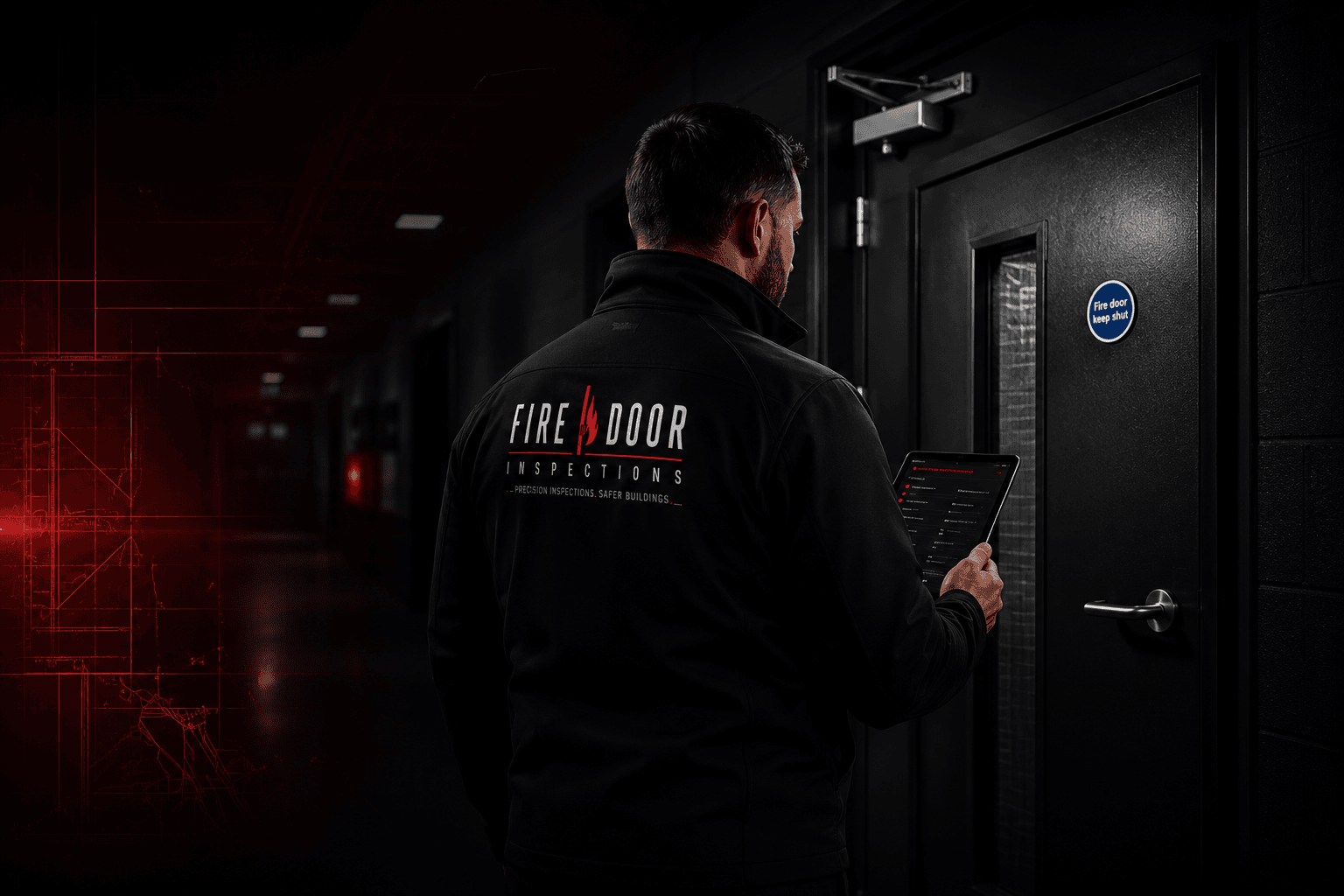
Fire door inspections identify defects that may affect compartmentation, smoke control, safe escape and the overall fire-resisting performance of a door set.
How Defects Are Recorded
Common Issues Found During Fire Door Assessments
Inspectors review door sets against accepted inspection criteria and document visible defects where observed.
During a fire door inspection, defects are recorded with photo records where captured, location notes, condition comments and remedial priority guidance where required. This helps duty holders understand what was observed, where issues were found and which actions may need attention first — including follow-up remedial works or re-inspection where appropriate.
For follow-up planning, see what happens after a fire door inspection, remedial works support after inspection, inspection vs maintenance and certification, and our Regulatory Reform Fire Safety Order guidance.
Defect Guides
Explore Common Fire Door Inspection Defects
Select a topic below to learn what inspectors look for, why the issue matters and how it may be recorded in an inspection report.
Defect Guide
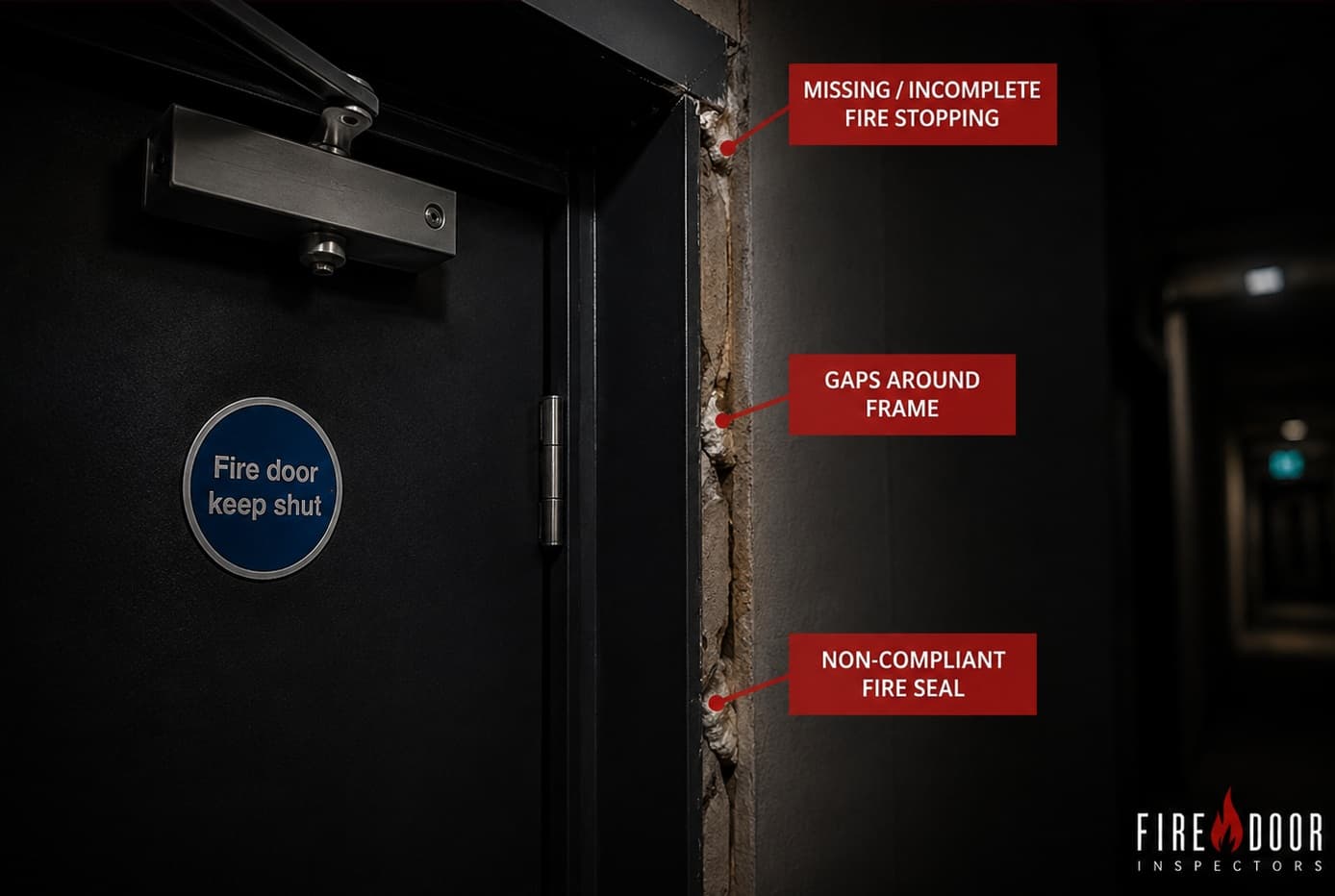
Fire Stopping Issues
Incomplete or damaged fire stopping around the frame can create pathways for fire and smoke spread.
View defect guide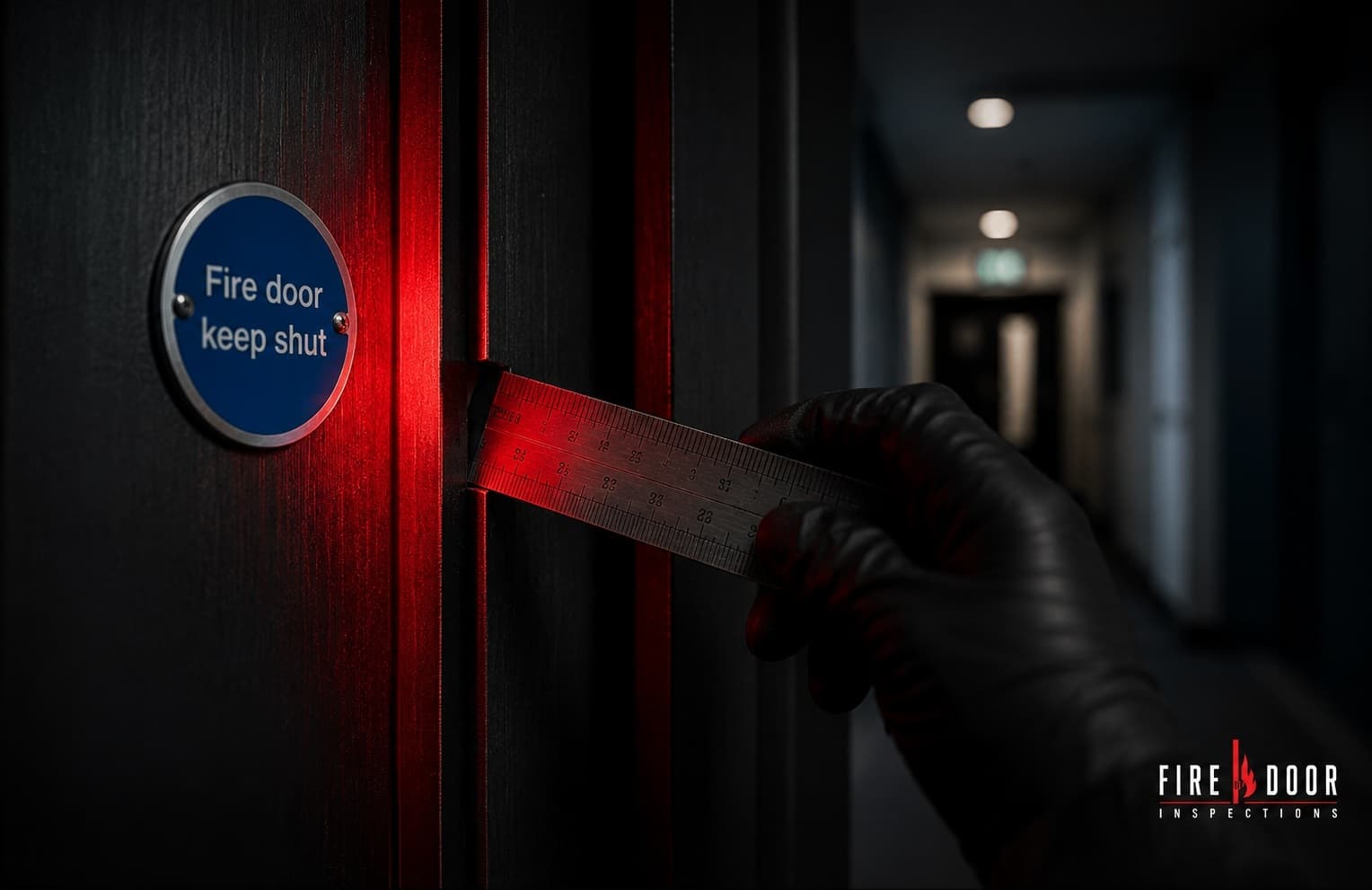
Defect Guide
Excessive Gaps
Gaps exceeding accepted tolerances can reduce smoke and fire separation performance.
View defect guide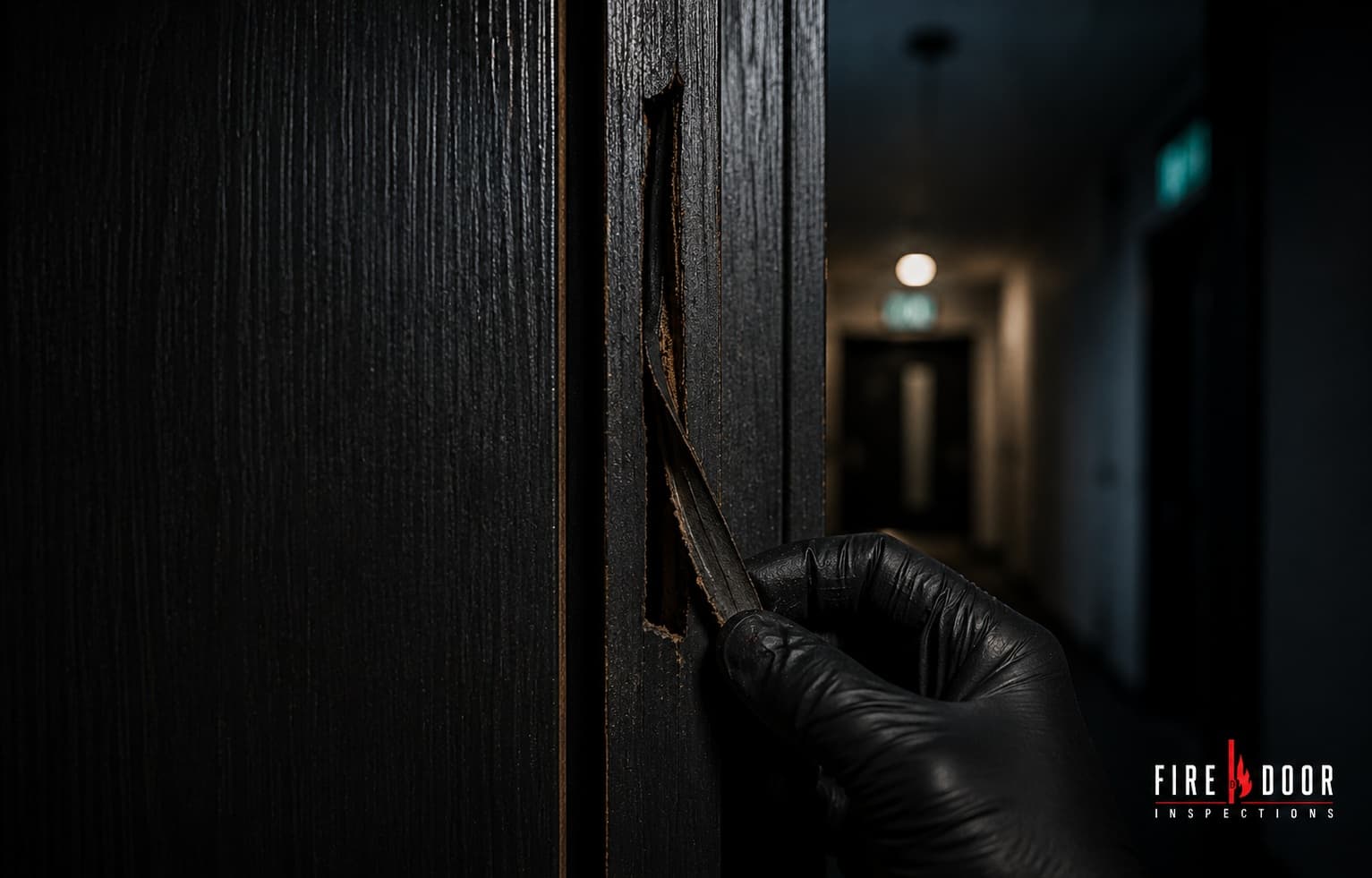
Defect Guide
Damaged or Missing Seals
Intumescent and smoke seals must be continuous, correctly fitted and undamaged to support door performance.
View defect guide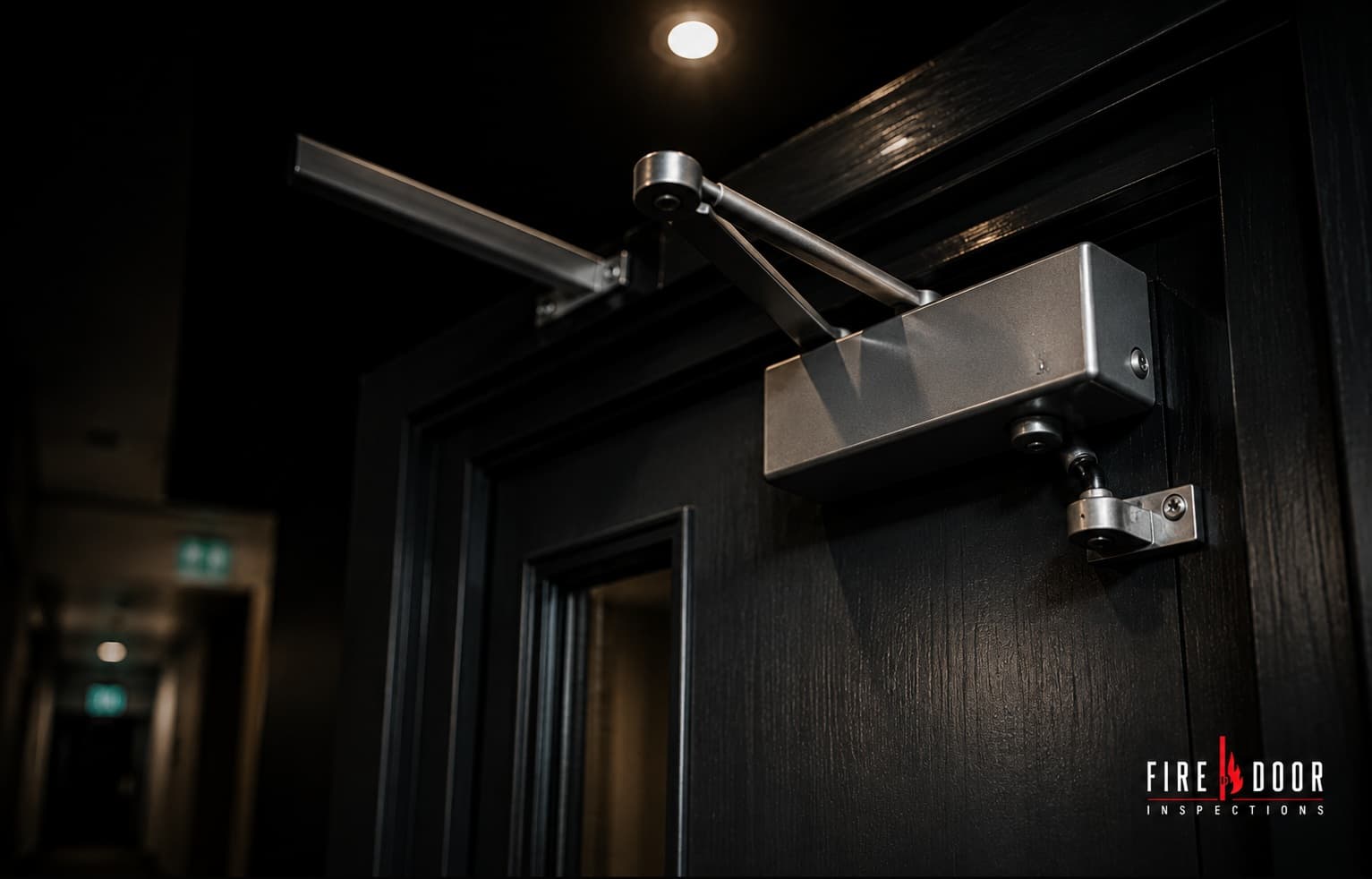
Defect Guide
Faulty Self-Closing Devices
A fire door that does not close fully may fail to protect the compartment when needed.
View defect guide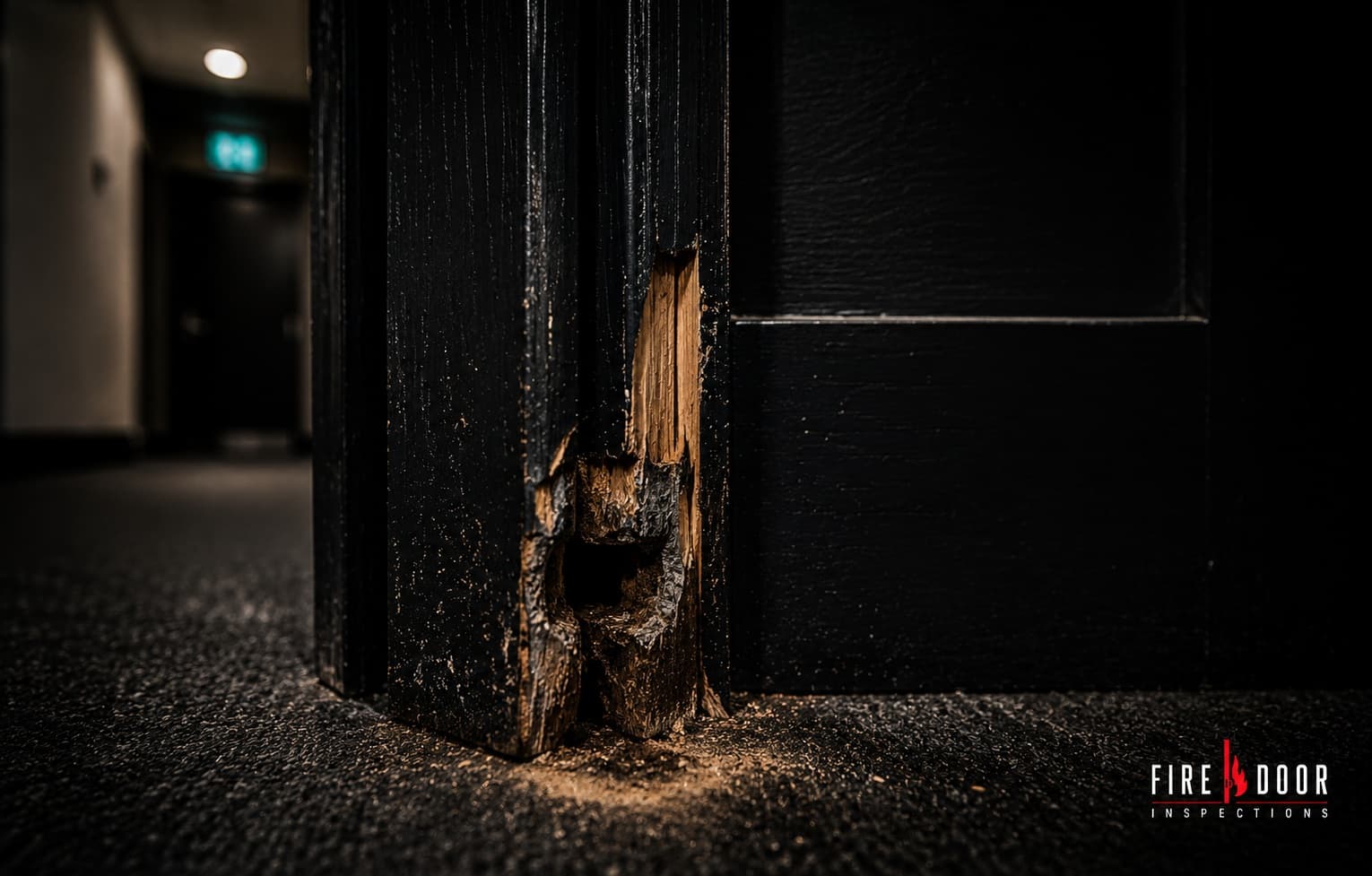
Defect Guide
Damaged Frames
Frame damage can affect fixing, alignment, smoke control and the fire-resisting performance of the door set.
View defect guide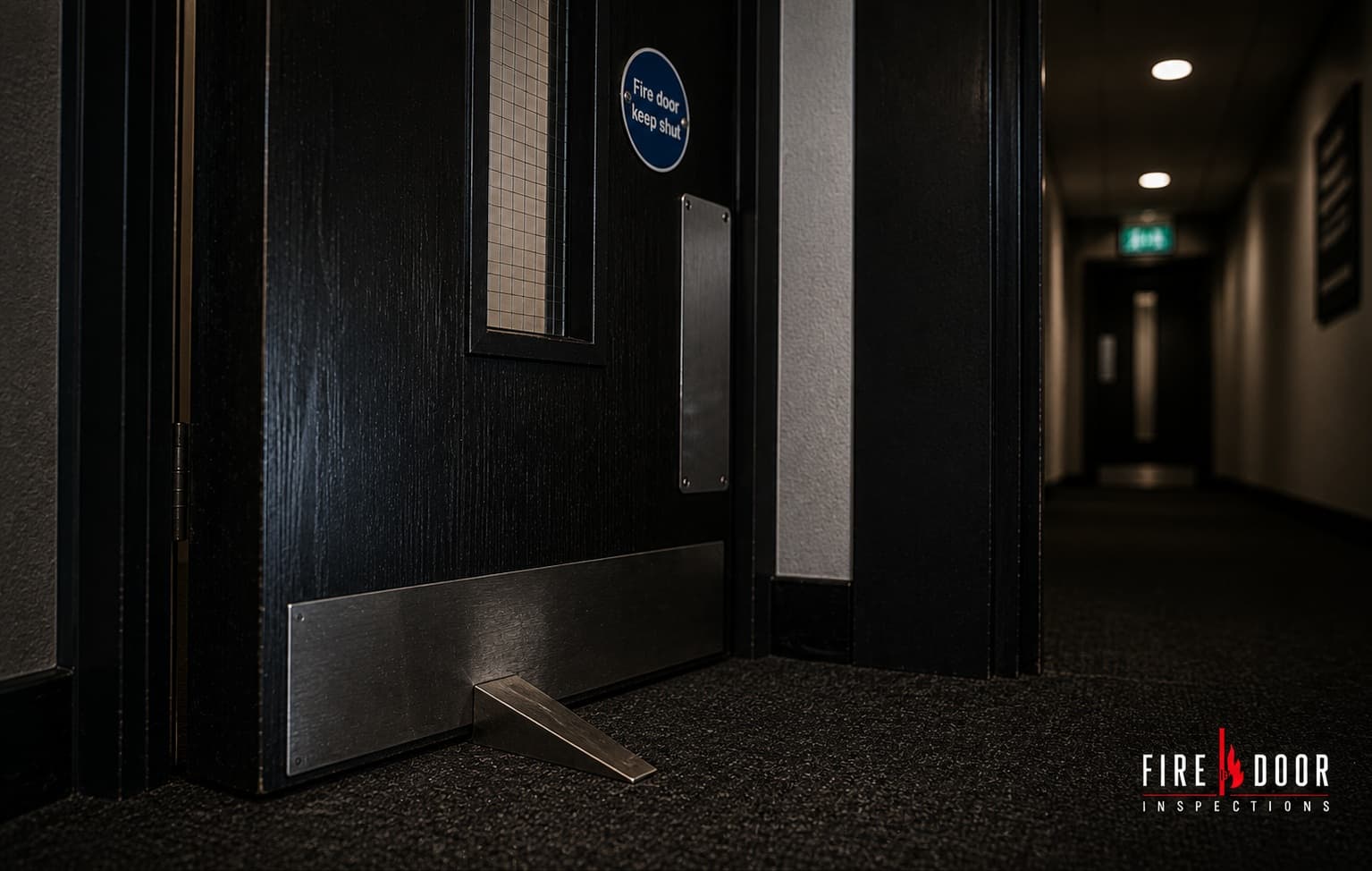
Defect Guide
Doors Wedged Open
Fire doors held open without approved hold-open devices cannot perform their protective function.
View defect guide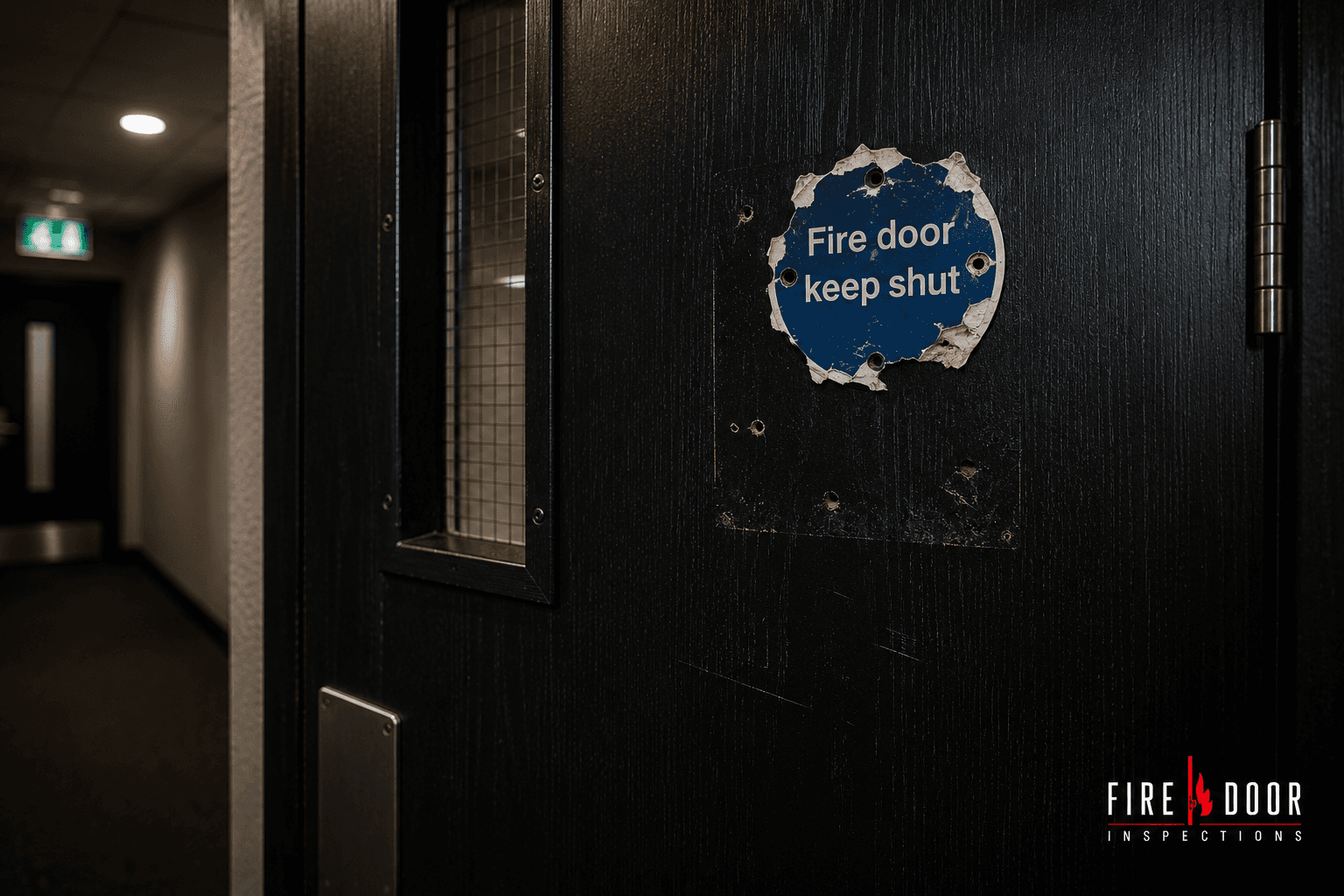
Defect Guide
Poor or Missing Signage
Fire door signage helps occupants understand the door purpose and correct operation.
View defect guide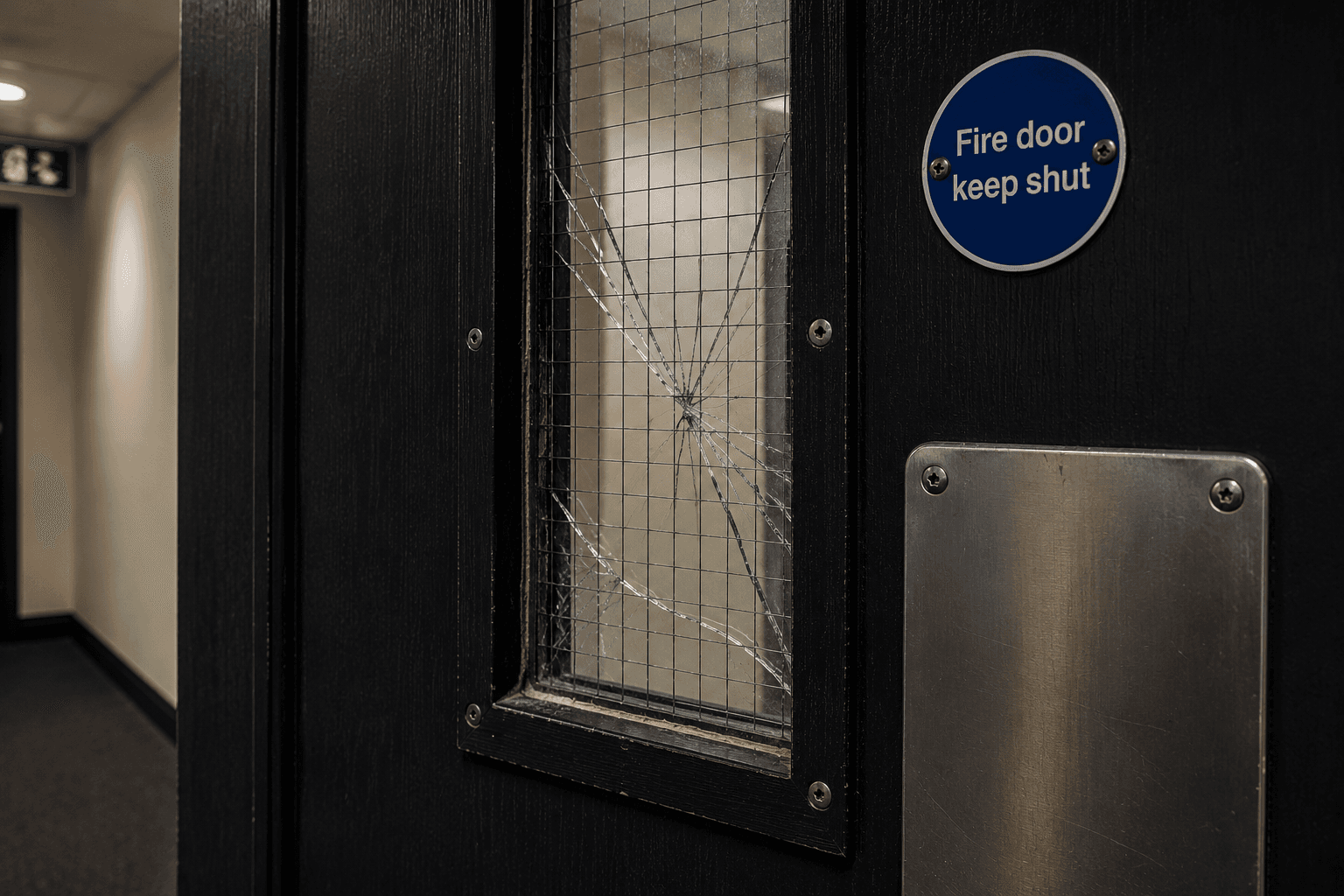
Defect Guide
Non-Compliant Glazing
Incorrect, damaged or uncertified glazing can compromise the fire-resisting performance of the door.
View defect guide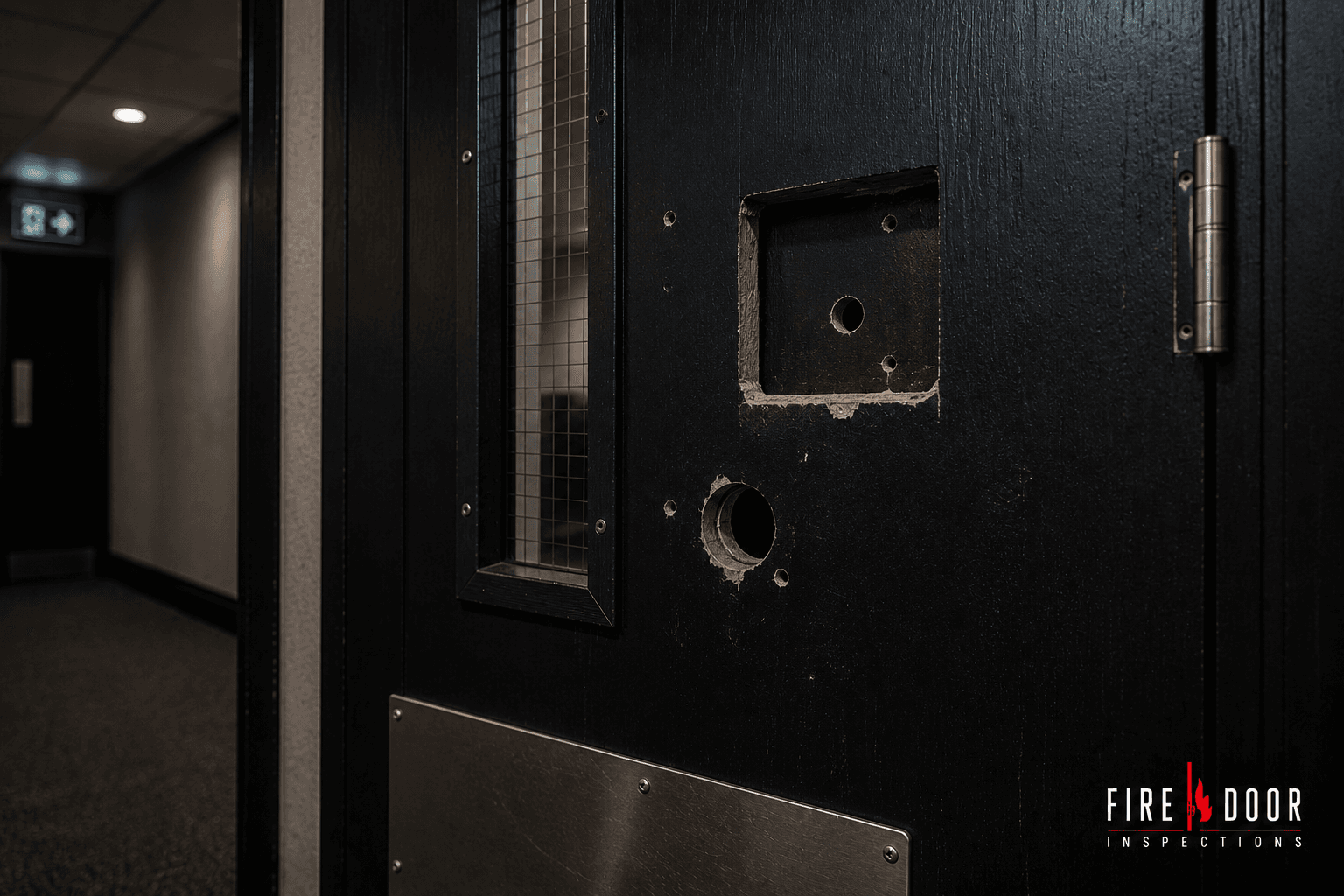
Defect Guide
Unauthorised Alterations
Unapproved changes to hardware, structure or components may affect certification and performance.
View defect guide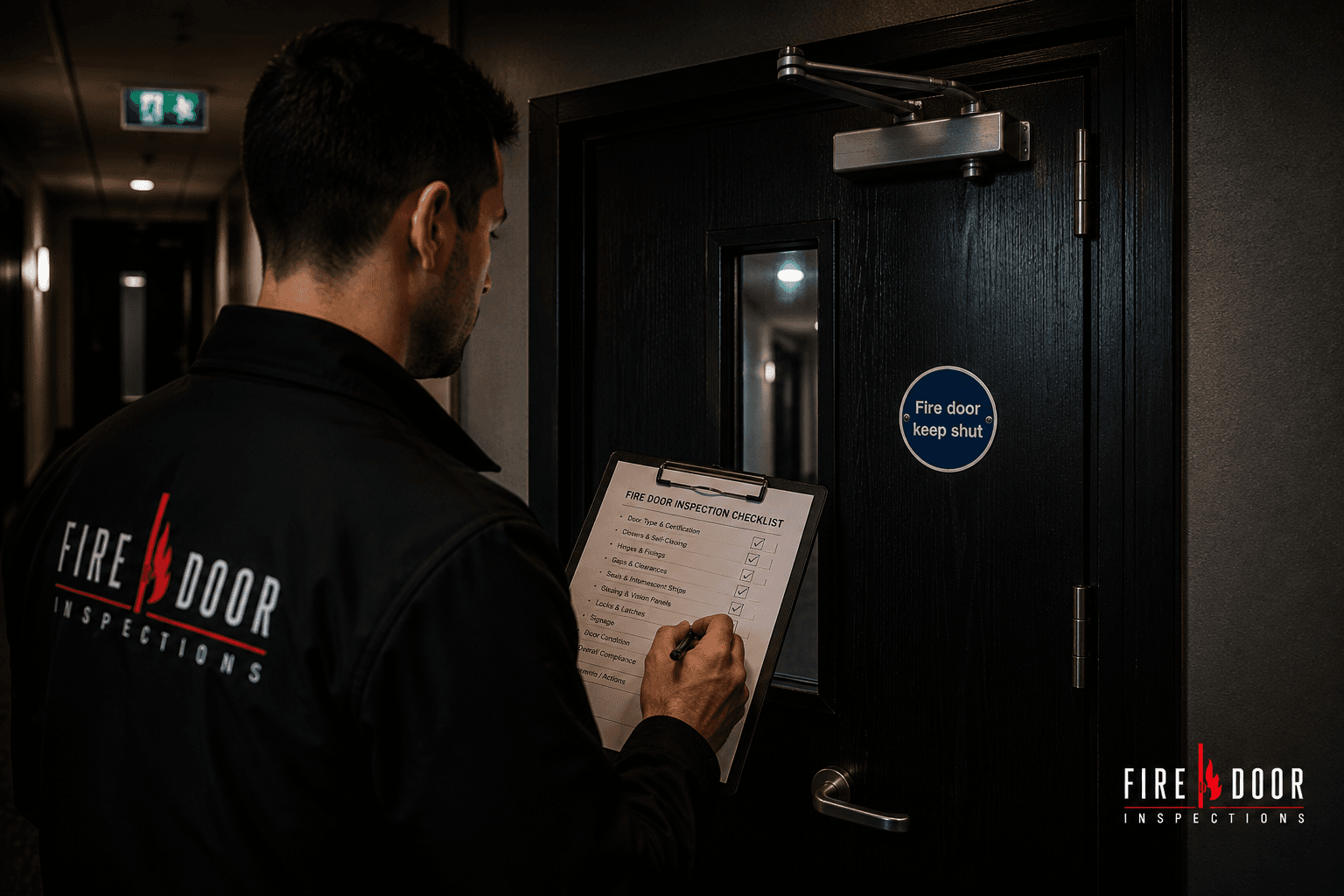
Defect Guide
Visible Fire Door Defect Checklist
How inspectors record door references, photo evidence, location notes and defect observations consistently in inspection reports.
View defect guide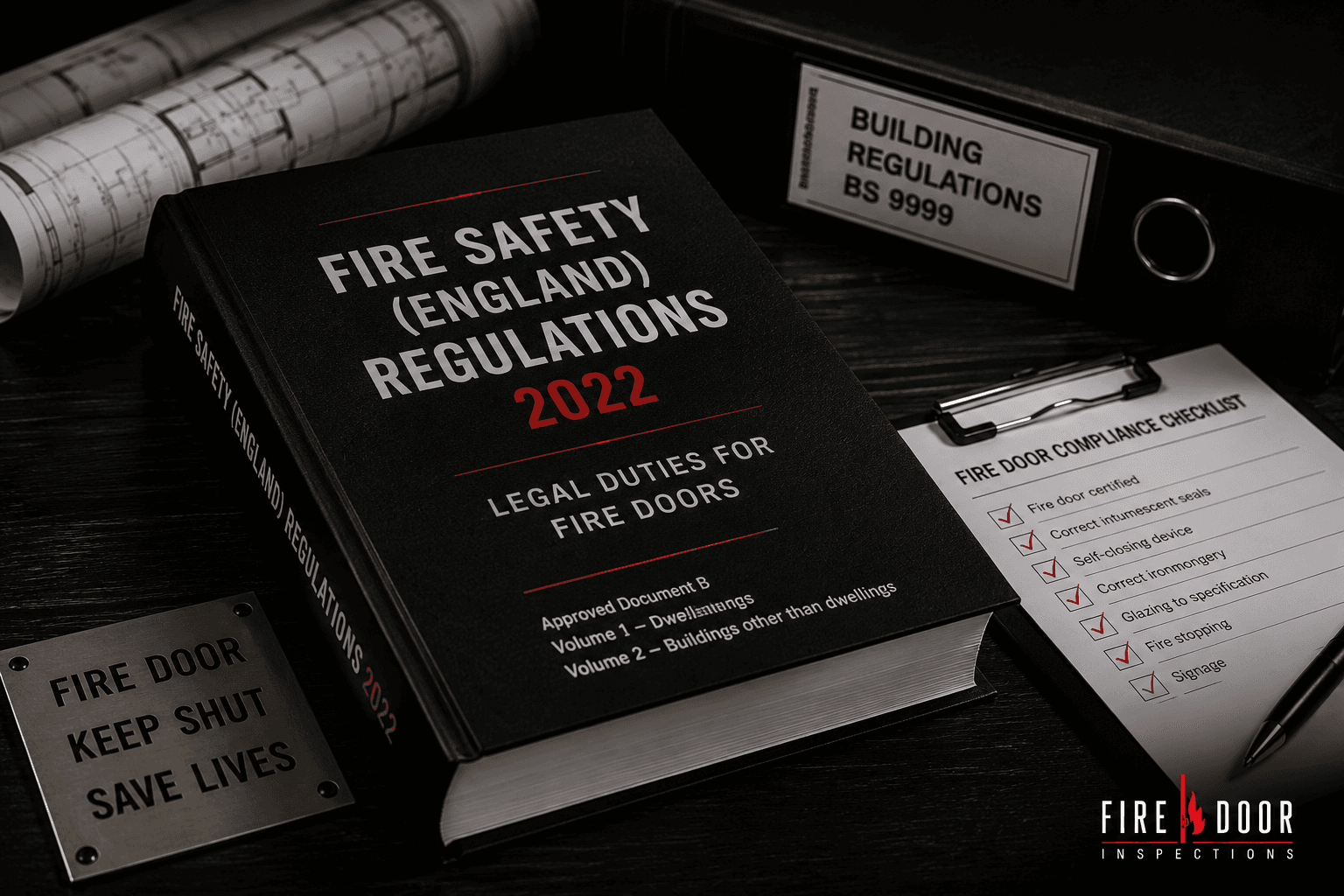
Defect Guide
Fire Door Regulations
Fire door requirements depend on the building type, use, risk profile and applicable fire safety duties.
View defect guide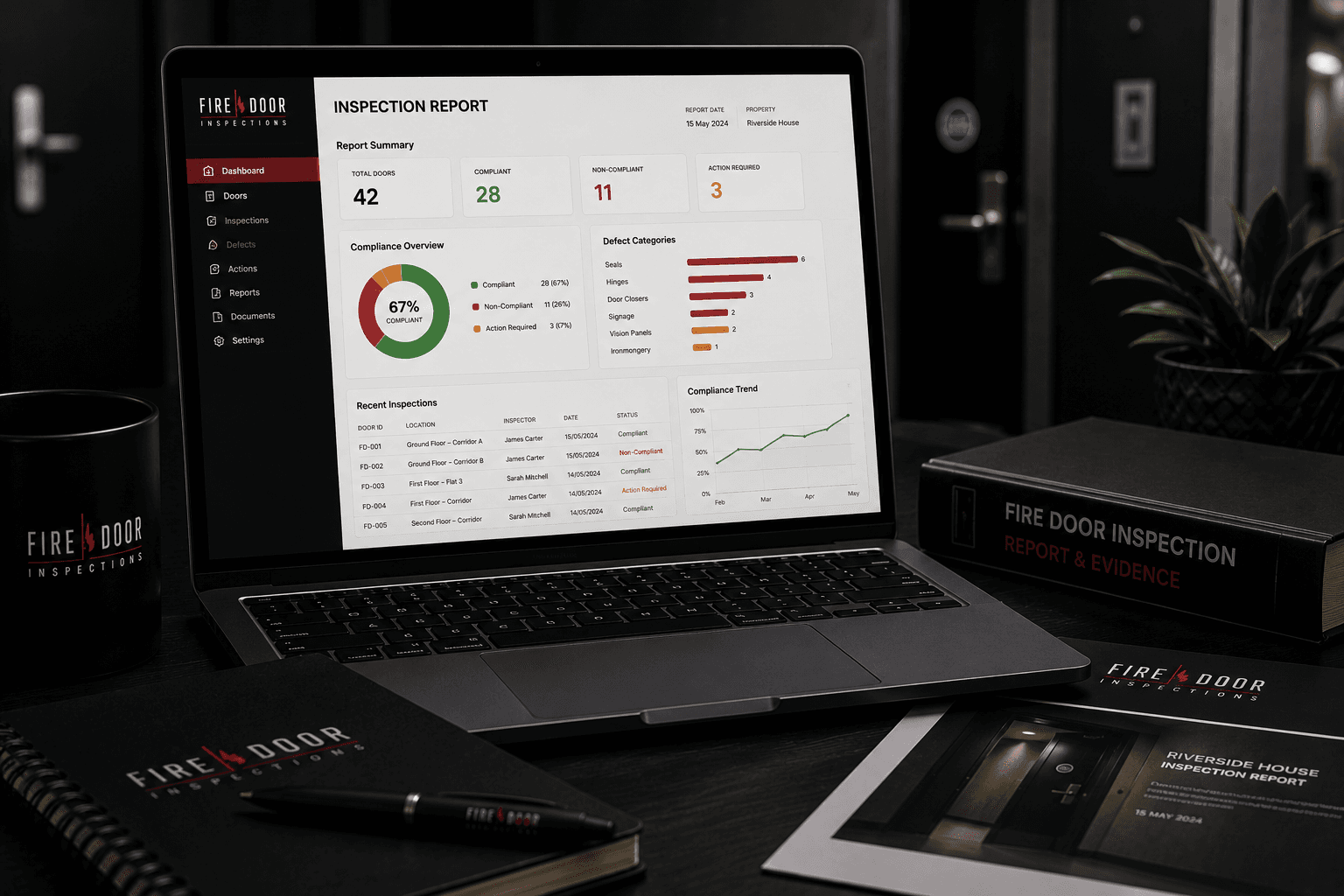
Defect Guide
Inspection Report Dashboard
Clear reporting helps duty holders understand defects, evidence photos and recommended actions.
View defect guide
Organise Your Concerns Before Booking
Not sure how serious your fire door concerns are? If you have noticed damaged seals, excessive gaps, doors not closing fully or other visible issues, the Readiness Checker can help you organise your answers and understand sensible next steps before requesting an inspection.
Not sure which fire door defect you are looking at?
Use the Fire Door Defect Identifier to select the visible issue you have noticed and find the most relevant guidance, next steps and inspection options. The tool gives general guidance only and does not confirm compliance or pass/fail status.
FAQ
Common Questions About Fire Door Defects
What are the most common fire door inspection defects?
Does a recorded defect mean the door has failed permanently?
What should happen after defects are found?
Can non-intrusive inspections find every defect?
Related Fire Door Inspection Resources
- Fire door inspection service
- London fire door inspections
- Fire door reports
- Fire door remedial works
- Fire door re-inspections
- Inspection limitations
- Fire door defect identifier
- Visible fire door defect checklist
- Inspection report dashboard
- Sample fire door inspection report
- After inspection guide
- Request a fire door inspection quote
Practical Examples
See Inspection Examples in Practice
Want to see how common fire door defects may appear in typical inspection scenarios? View our illustrative fire door inspection scenarios for examples of defect patterns, evidence-led reporting and remedial planning.
Book an Inspection
Need a Fire Door Inspection?
Book a professional fire door inspection and receive clear evidence, defect notes and practical remedial guidance.