
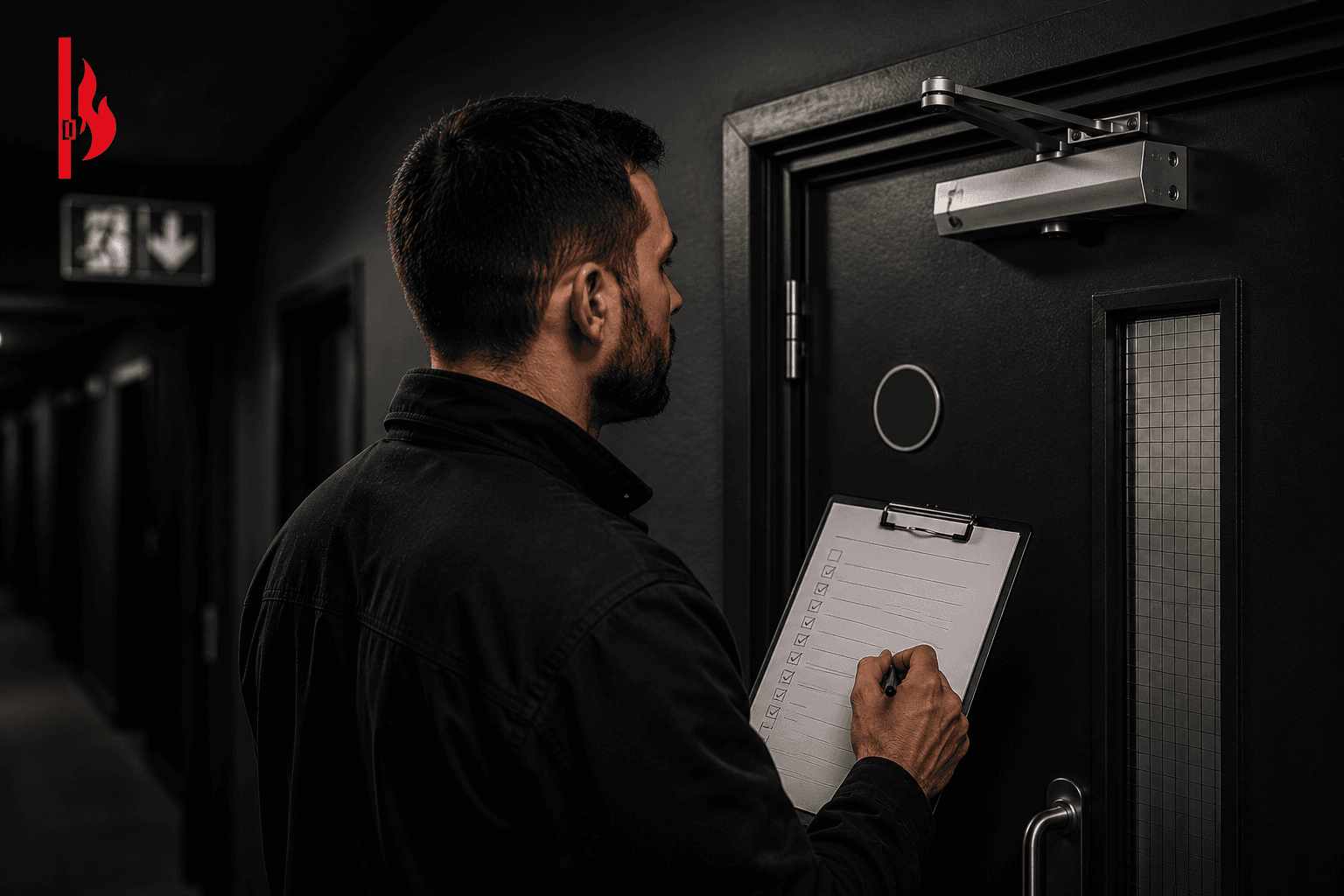
Follow-Up Fire Door Checks
Fire Door Re-Inspections
If fire door defects have been repaired or remedial works have been completed, a re-inspection can help confirm what is visible at the time of the follow-up visit and support updated documentation for your records.
- Follow-up visible checks
- Photo evidence where appropriate
- Updated report notes
- After remedial works
- London & Greater London
A re-inspection is based on visible conditions at the time of the follow-up visit and does not replace a fire risk assessment or guarantee full building compliance.
Who Needs Re-Inspection
Who Needs a Fire Door Re-Inspection?
Property teams who have completed remedial works or defect corrections and need follow-up checks or updated documentation.
Follow-Up Timing
When Re-Inspection May Be Useful
Examples of situations where a follow-up visit may help document visible changes after remedial or maintenance work.
- After excessive gaps have been adjusted
- After smoke or intumescent seals have been replaced
- After self-closers have been repaired or replaced
- After signage has been corrected
- After damaged hinges or ironmongery have been addressed
- After frame or leaf repairs
- After replacement doors are installed
- After a contractor completes remedial works
- Before updating internal compliance records
Our Process
How Our Re-Inspection Process Works
From reviewing the original report to updated follow-up notes — based on visible conditions at the time of the visit.
- 01
Review the original report or defect list
We review your original fire door report, defect notes or remedial completion information based on the information provided.
- 02
Confirm which doors need follow-up
Door references, locations and previously recorded issues are confirmed so the re-inspection focuses on the right door sets.
- 03
Check visible condition of corrected items
During the follow-up visit, previously noted items are checked based on what is visible at the time of re-inspection.
- 04
Record photo evidence where appropriate
Photographs may be captured where appropriate to support updated observations and internal records.
- 05
Note whether issues appear addressed
Where visible on site, previous concerns may appear addressed — subject to what can be observed during the follow-up visit.
- 06
Highlight remaining visible concerns
Any remaining visible issues are noted where observed so property teams can plan further action if needed.
- 07
Provide updated notes where appropriate
Updated report notes or a re-inspection summary may be provided where appropriate and agreed in scope.
Before Booking
What to Send Us Before Booking
These details help confirm follow-up scope, access and which doors need re-inspection.
- Original fire door report if available
- Door references or locations
- Photos of remedial works if available
- Number of doors needing re-inspection
- Property address and postcode
- Access details for the follow-up visit
- Contractor completion notes if available
If defects were identified but you are unsure how they should be categorised, the Fire Door Defect Identifier can help you understand the issue type before planning follow-up or re-inspection. Fire Door Defect Identifier.
Re-Inspection Enquiry
Get a Quote
Include your postcode, door references and original report where available so we can confirm follow-up scope and pricing.
What Re-Inspection Does Not Mean
- A re-inspection is not a full fire risk assessment.
- It does not guarantee full building compliance.
- It does not confirm hidden construction, concealed components, or original door certification unless evidence is available.
- It does not automatically approve third-party remedial workmanship.
- Further works may still be required if visible issues remain.
Inspection journey
Inspection → Report → Remedial Works → Re-inspection → Door Register
A practical sequence many London property teams use after arranging fire door inspections. Exact steps depend on findings, access and management arrangements.
01
Inspection
On-site assessment of agreed fire door sets with visible condition recorded.
02
Report
Structured findings, door references and photo evidence where recorded.
03
Remedial works
Defect priorities used to plan competent repair or replacement works.
04
Re-inspection
Follow-up checks where updated condition needs to be recorded.
05
Door register
Ongoing door schedule and tracking for portfolios and multi-site programmes.
Follow-Up Visit
Request a Fire Door Re-Inspection Quote
Send the original inspection report and remedial evidence where available, plus postcode, door references and number of doors to revisit. We will confirm follow-up scope and updated report notes.
FAQ
Fire Door Re-Inspection Questions
Clear answers about follow-up checks after remedial works or defect corrections.
When should a fire door be re-inspected?
Do I need a re-inspection after remedial works?
Can you re-inspect doors repaired by another contractor?
Does a re-inspection guarantee compliance?
What information do you need before a re-inspection?
Can you re-inspect several doors across a block or portfolio?
Will I receive updated documentation after re-inspection?
Related Information
- Get a quote
- Remedial works support
- Fire Door Defect Identifier
- Fire door reports
- Sample report
- Fire door defects
- Inspections London
- Fire door inspections
- Inspection cost
- Responsible person duties
- Fire door checklist
- Door register / door schedule
- Inspection limitations
- Blocks of flats London
- Property managers London
- NHS & healthcare London
- After inspection guide
- Inspection vs maintenance guide
- Inspection records guide (blog)