
Compliance Guidance
Responsible Person Fire Door Duties
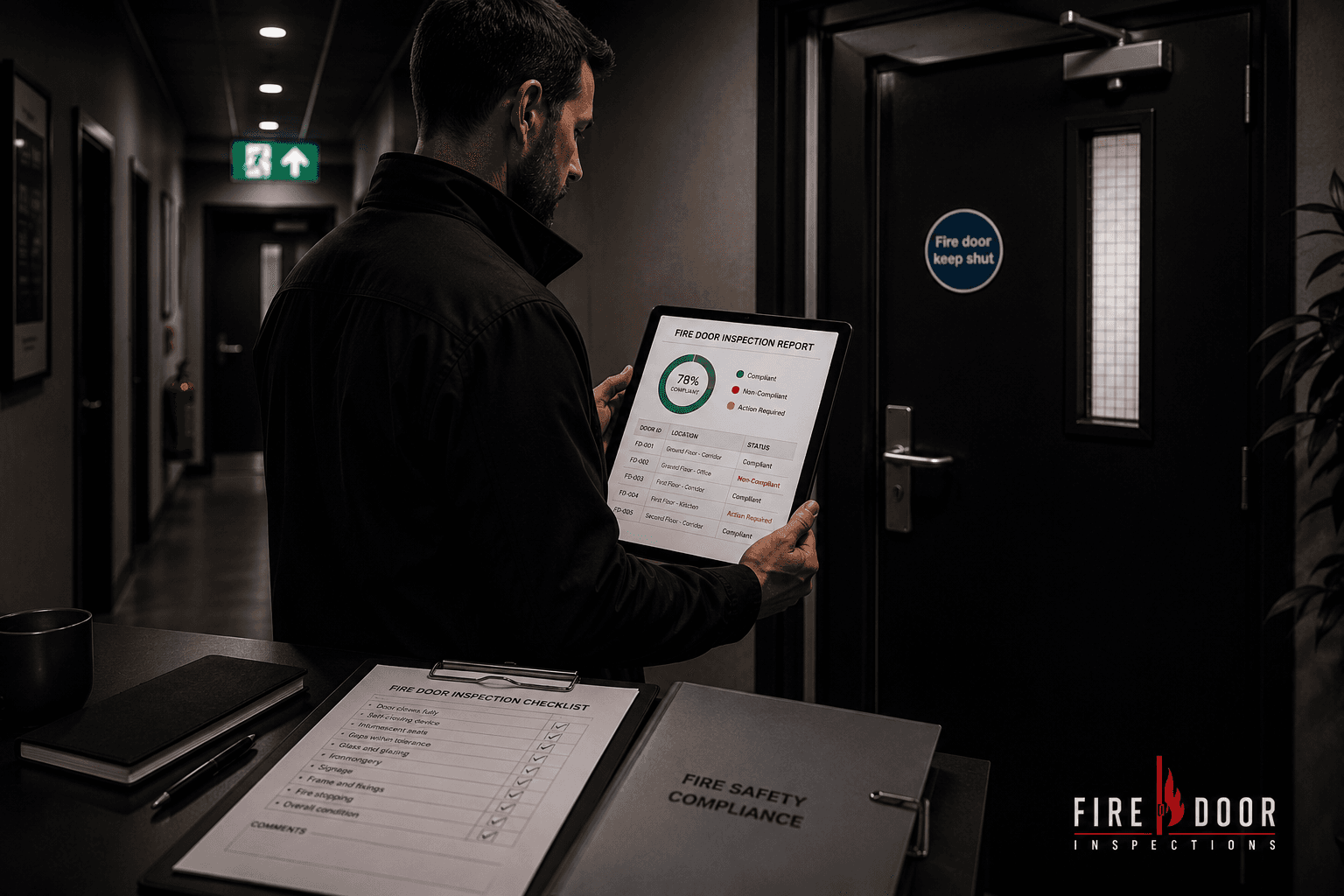
A practical guide to how responsible persons and duty holders may use fire door inspections, reports and records to support safer property management.
- Responsible person guidance
- Fire door inspection records
- Reports and photo evidence where recorded
- Practical remedial planning support
- London property coverage
- General guidance only, not legal advice
Important: This Is General Guidance Only
This page is provided for general information only and does not constitute legal advice. Fire safety duties depend on the building, occupancy, risk profile, management arrangements and applicable regulations. Responsible persons and duty holders should confirm their specific obligations and seek competent advice where required.
Overview
What Is a Responsible Person?
In many managed buildings, fire safety responsibilities may sit with a responsible person, duty holder or another person with control of the premises.
The exact position depends on the building, occupancy and management structure. Roles may include landlords, employers, managing agents, building operators or property managers depending on how the premises are managed.
This page offers practical guidance around fire door inspection records and reporting. It does not provide legal interpretations of fire safety law. Responsible persons should confirm applicable duties for their premises and seek competent advice where required.
Inspection Support
How Fire Door Inspections Can Support Responsible Persons
Structured fire door inspections can help responsible persons and property teams record visible fire door condition, identify defects, prioritise remedial works and maintain clearer inspection records.
Reports can support internal records but do not guarantee compliance or replace a fire risk assessment or legal advice.
Record visible door condition
Inspections can document door leaf, frame and hardware condition where observed during the agreed scope.
Identify damaged or missing components
Visible defects such as seal damage, closer faults or hardware issues may be noted where accessible on site.
Note defects and priorities
Structured reports can help property teams understand which observations may warrant follow-up attention.
Support contractor instructions
Defect notes and door references may help when briefing maintenance teams or specialist contractors.
Keep evidence where recorded
Photographic evidence may be included where captured during inspection, subject to scope and access.
Improve internal record keeping
Door schedules and inspection dates can support clearer documentation across single sites or portfolios.
Support remedial planning
Reports may help responsible persons plan maintenance, replacement or further specialist assessment.
Review recurring issues across properties
Portfolio teams may use inspection records to identify patterns across blocks, estates or managed portfolios.
Inspection Records
What Fire Door Inspection Records May Include
Depending on agreed scope, structured fire door inspection reports may document visible condition, defects and supporting evidence where recorded on site.
- Door location or reference
- Door leaf condition
- Frame condition
- Door gaps and alignment
- Intumescent and smoke seals
- Hinges and fixings
- Self-closing devices
- Locks, latches and ironmongery
- Glazing and vision panels
- Fire door signage
- Fire stopping observations
- Defect notes
- Priority guidance
- Photos where recorded
- Access limitations
- Report date and scope
Common Issues
Common Issues Responsible Persons Should Be Aware Of
These are examples of visible issues that may be recorded during a fire door inspection, depending on the agreed scope and access.
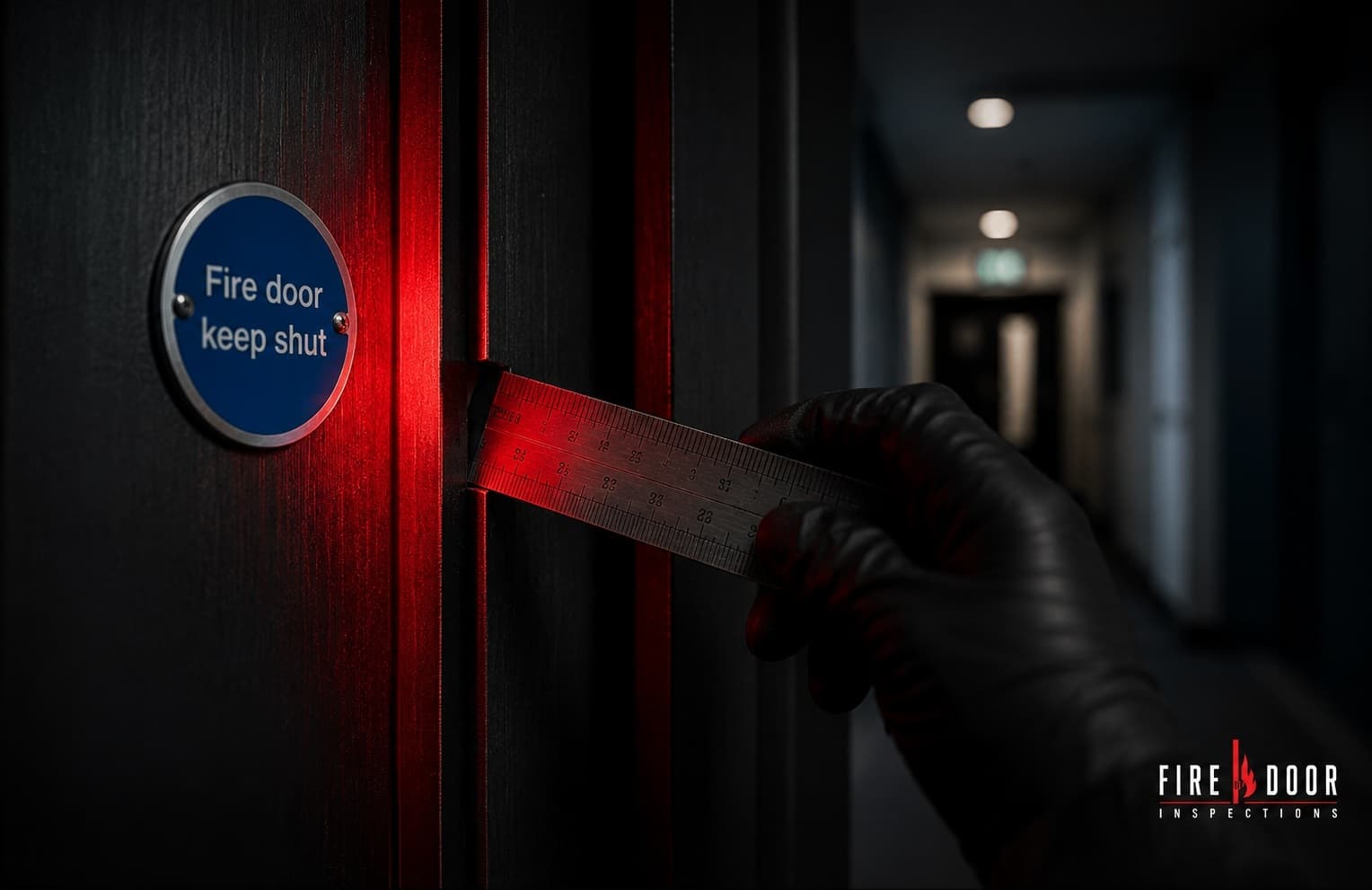
Issue recorded where observed
Excessive gaps
Gap issues may be recorded where observed and can affect how a door set performs in use. Documented observations can support remedial planning.
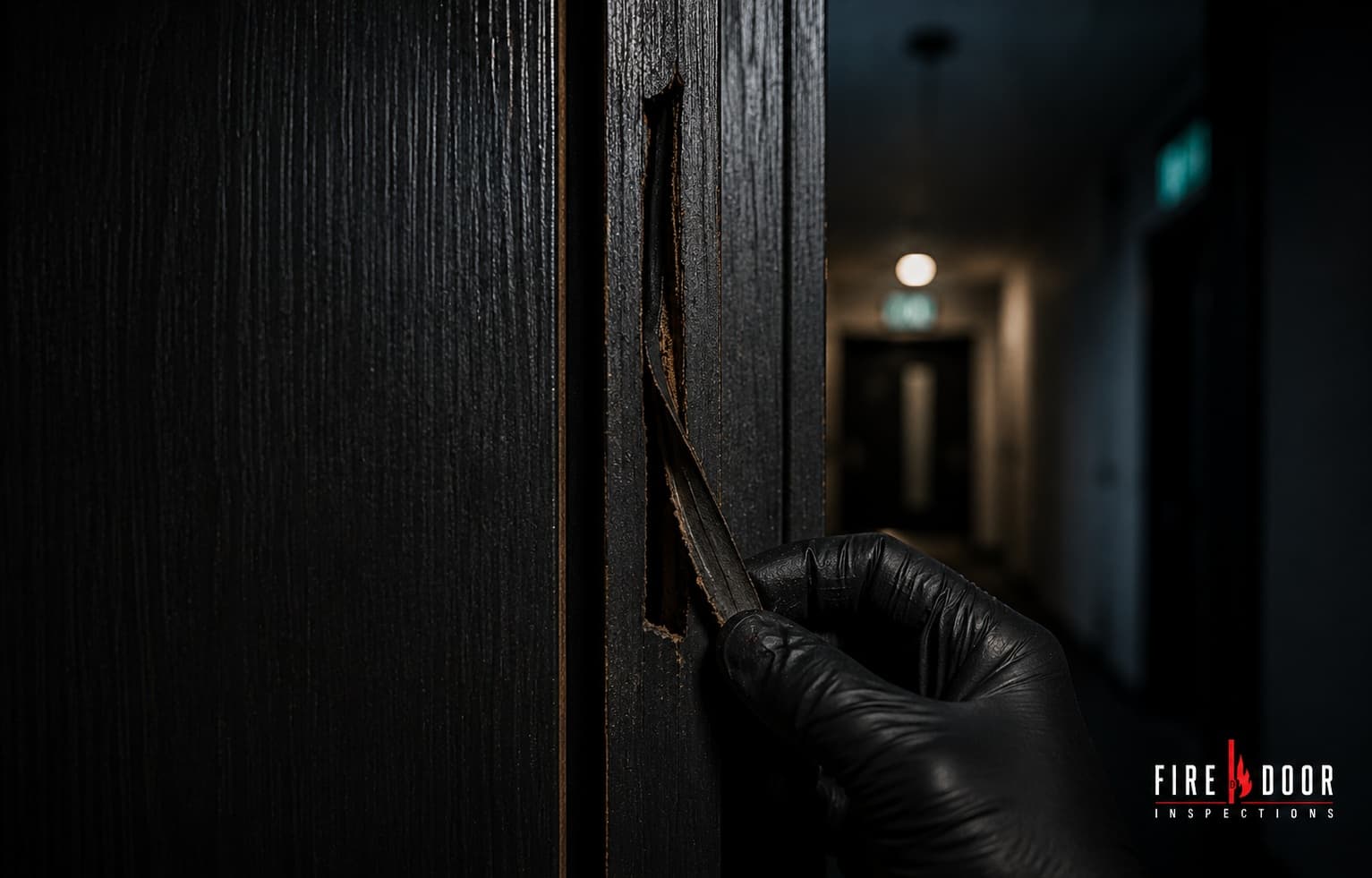
Issue recorded where observed
Damaged or missing seals
Seal defects can affect smoke and fire resistance where observed. Recorded findings may help property teams plan maintenance or replacement.
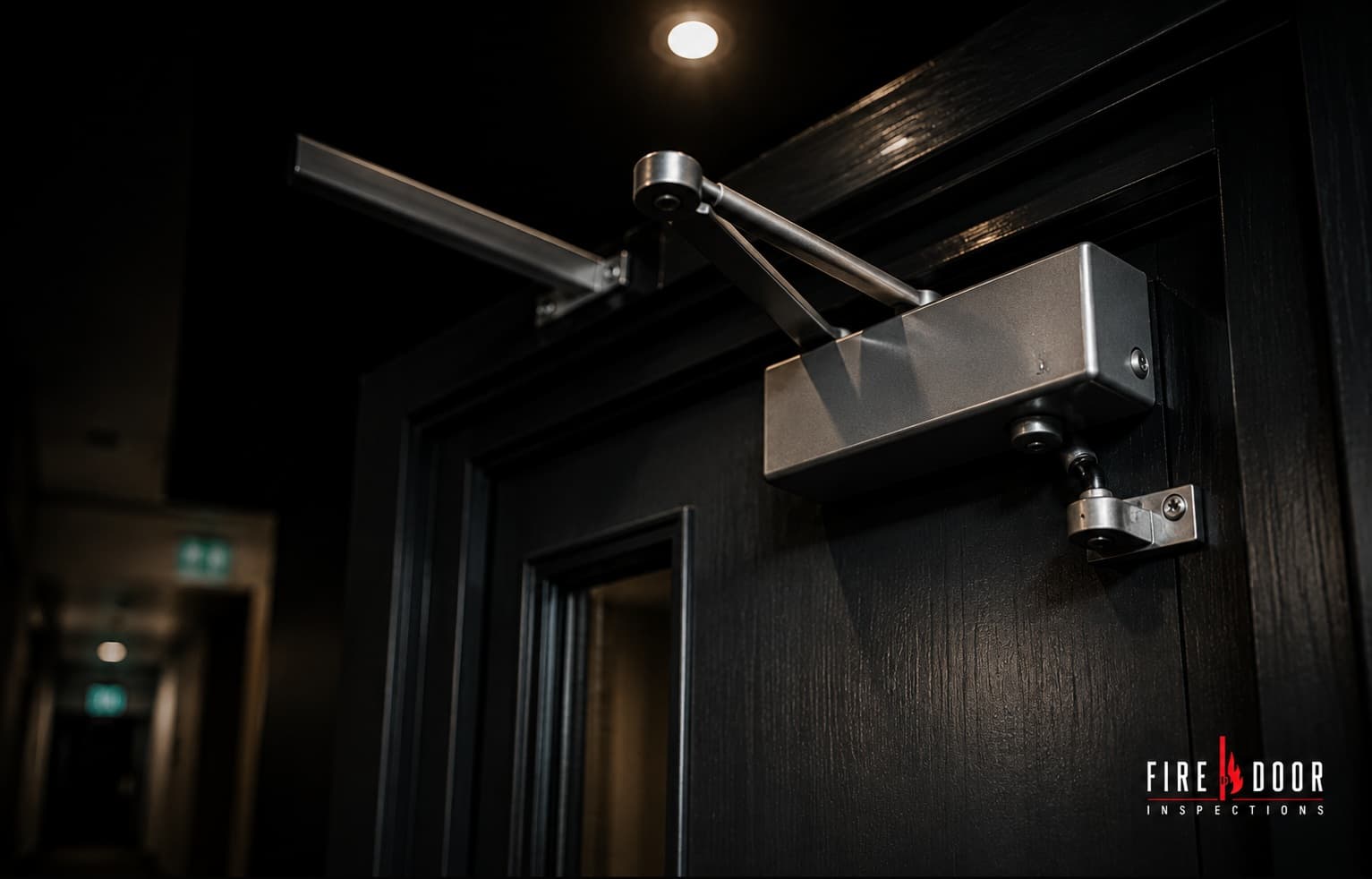
Issue recorded where observed
Faulty self-closing devices
Self-closing failures are frequently documented where doors may not close fully after use across corridors and escape routes.
Issue recorded where observed
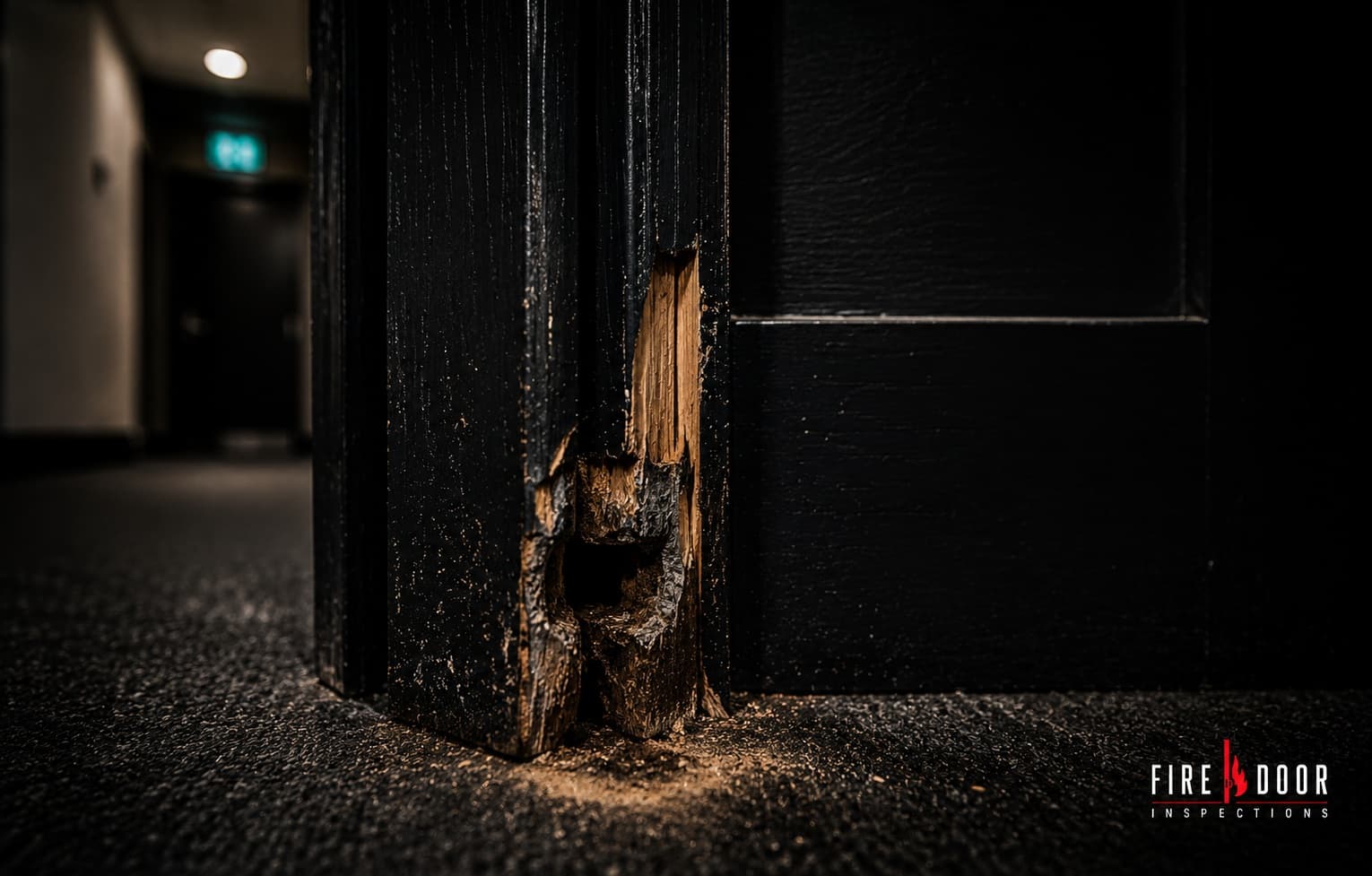
Damaged frames
Frame condition observations can be recorded to support maintenance decisions and contractor follow-up where damage is visible.
Issue recorded where observed
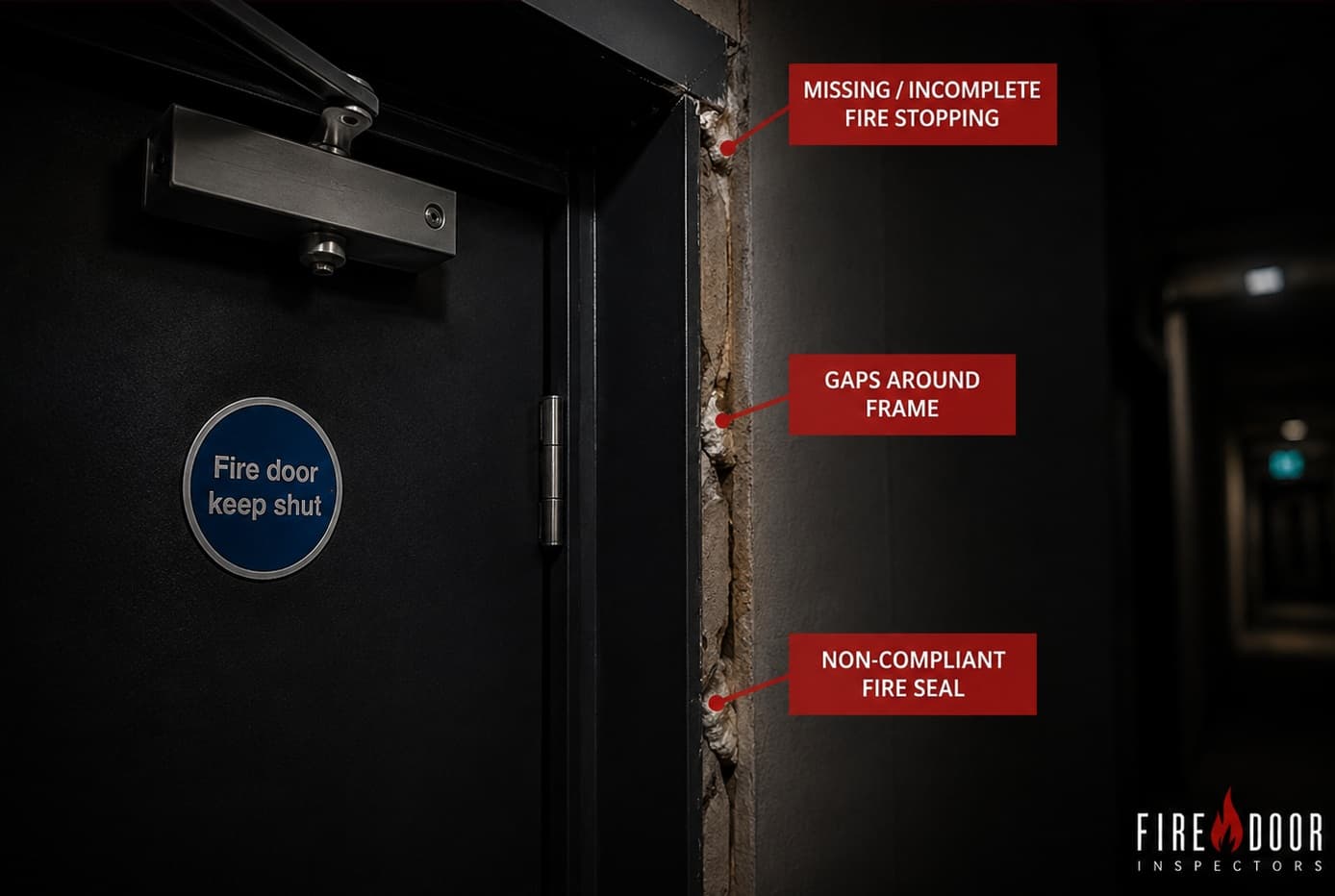
Fire stopping concerns
Observations around door frames and surrounding construction may be documented where visible during inspection.
Issue recorded where observed
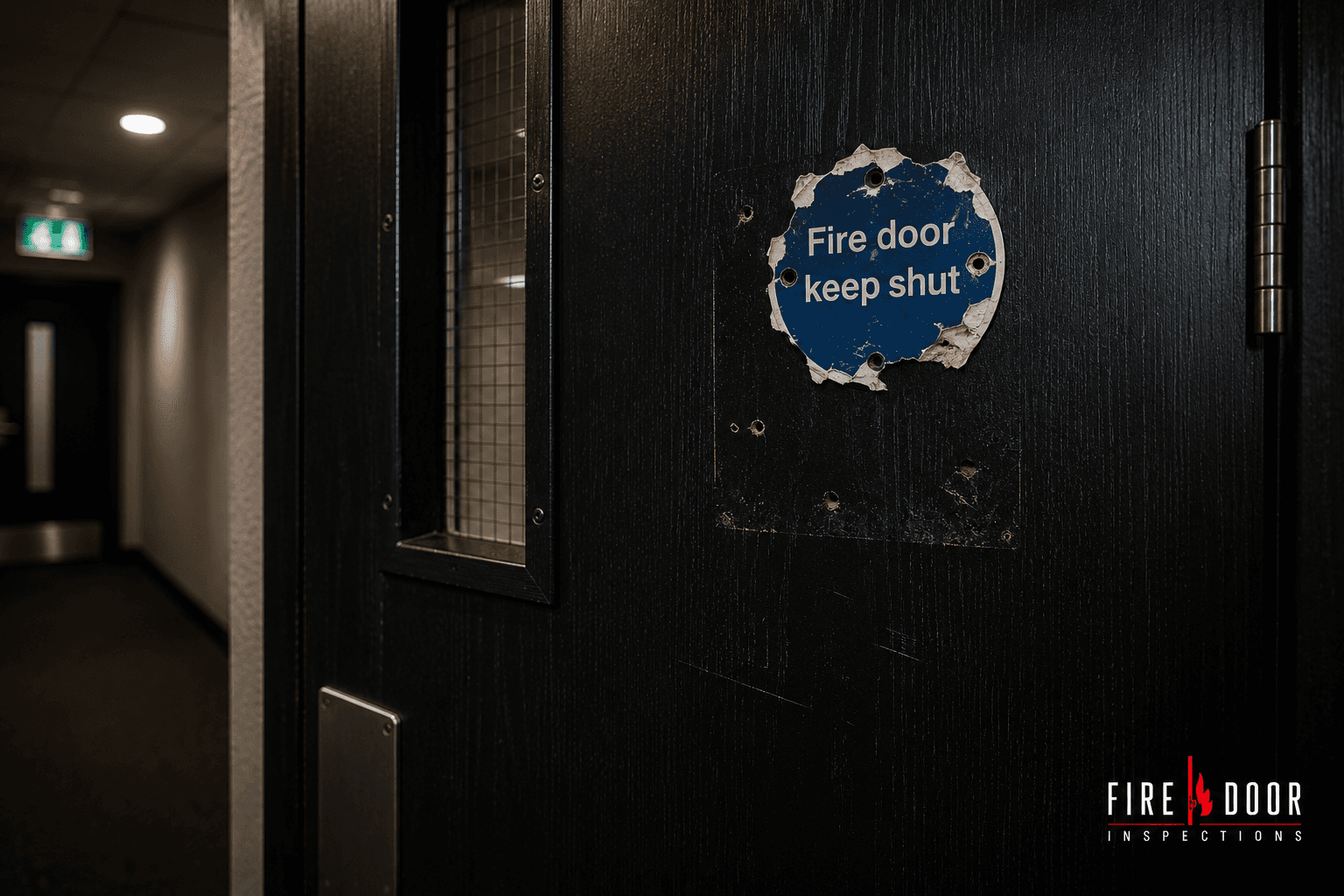
Poor or missing signage
Signage observations may be included where relevant to door identification, operation and escape route clarity.
Issue recorded where observed
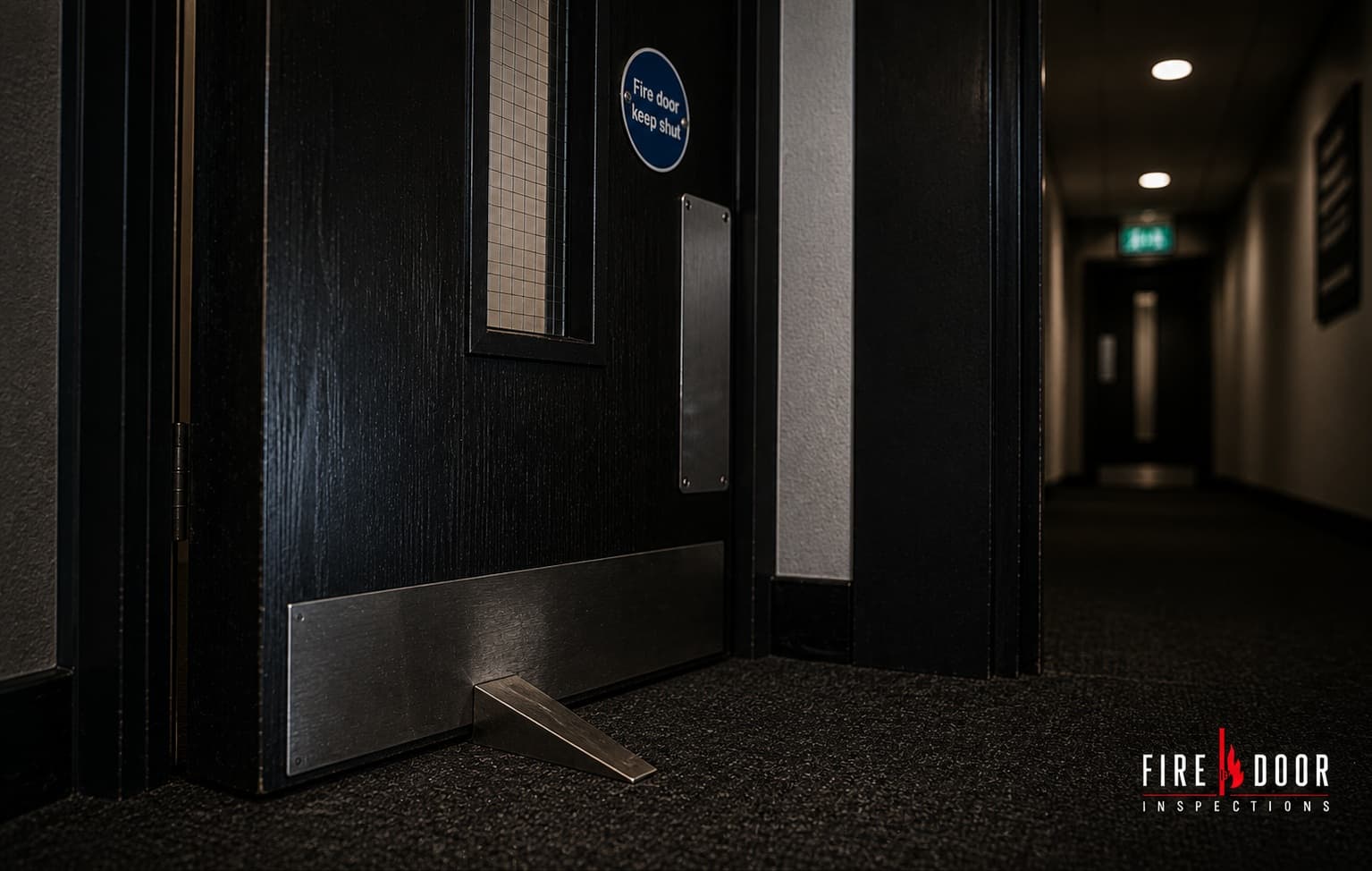
Doors wedged open
Doors held open without approved hold-open devices are commonly recorded where observed on site.
Issue recorded where observed
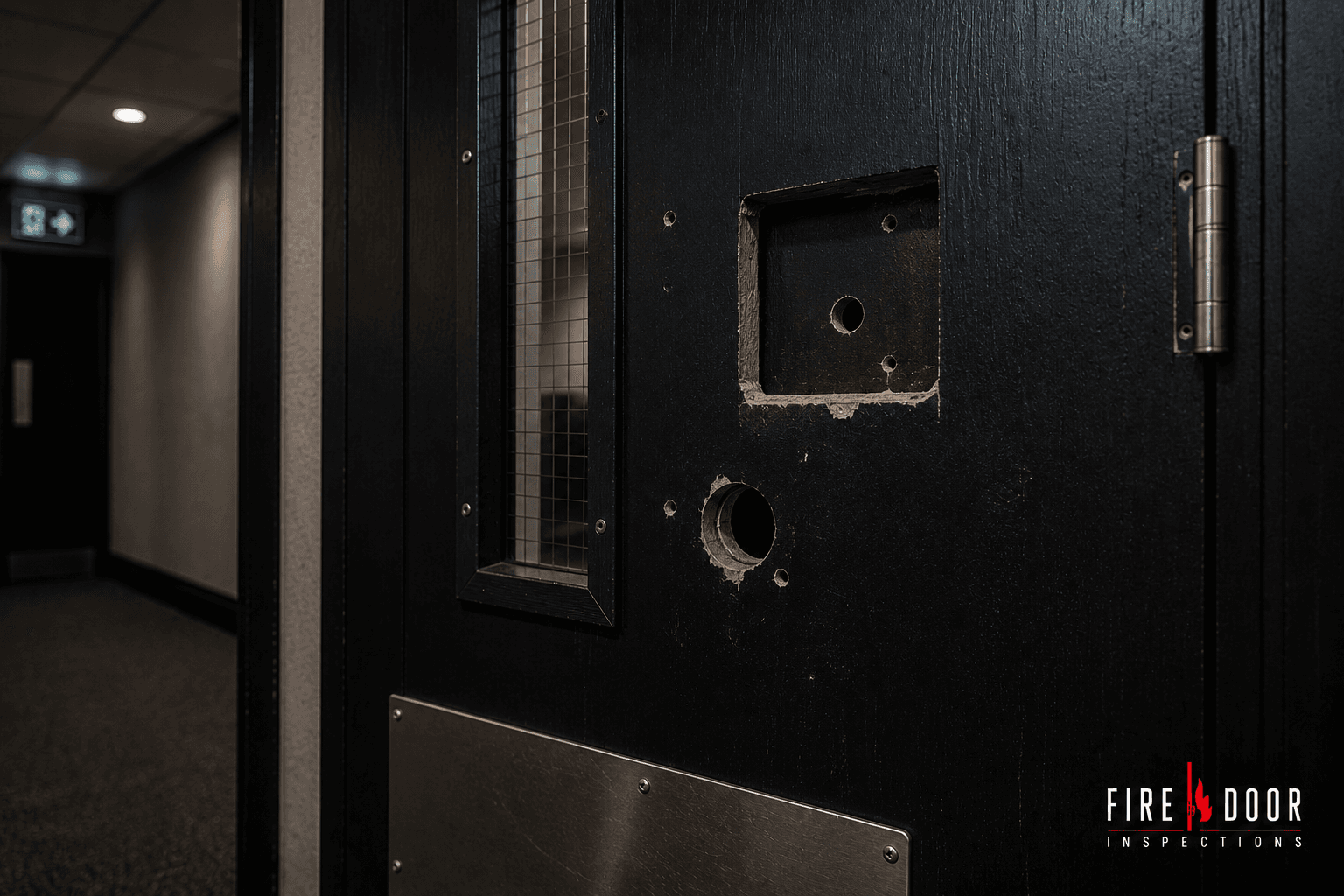
Unauthorised alterations
Alterations to door sets or hardware may be noted where they could affect performance or maintenance history.
Issue recorded where observed
Incomplete records
Structured inspection reports can help property teams maintain clearer documentation of door condition and observed findings.
Who This Helps
Who May Need to Understand Responsible Person Duties?
This guidance is designed for property teams, duty holders and portfolio owners who manage fire door inspection records and remedial planning.
Process
A Practical Inspection Record Process
Responsible persons hold ongoing duties — structured inspections provide dated evidence of what was seen on site, supporting internal records without replacing wider fire safety obligations.
Reports should be reviewed alongside wider fire safety arrangements, risk assessments and competent advice where required.
- 01
Confirm property type and inspection scope
Property type, door numbers, areas to include and reporting requirements are confirmed before booking.
- 02
Agree access arrangements
Access arrangements, resident notification where applicable and on-site coordination are agreed with the property team.
- 03
Inspect visible fire door items where accessible
Fire door sets are assessed on site against agreed scope where access is available on the day.
- 04
Record observations and evidence where included
Condition observations, defects and photographic evidence are recorded where captured during inspection.
- 05
Issue a report with defect notes and priorities
A structured report is issued with door schedule, observations and remedial priority guidance where applicable.
- 06
Use the report to plan follow-up action
Reports can support internal records and remedial planning. Follow-up actions should be reviewed by the appropriate competent person or duty holder.
Related Guidance
Related Fire Door Compliance Guidance
Explore further compliance topics on inspection records, regulations, checklists and inspection frequency.
Compliance Hub
Explore fire door compliance topics, responsible person guidance, checklists and inspection frequency resources.
Read topic →Fire Safety Regulations
Learn how fire door inspection records may relate to fire safety duties and property management processes.
Read topic →Fire Door Checklist
See common visible fire door items that may be checked during inspections, including gaps, seals, closers and signage.
Read topic →Fire Door Inspection Frequency
Understand why inspection frequency depends on building type, risk, use, access and responsible person requirements.
Read topic →Building Safety Act Context
A cautious overview of how building safety record keeping may relate to fire door inspection planning.
Read topic →Fire Door Compliance Support
See how structured inspections, reports and photo evidence where recorded can support remedial planning and internal records.
Read topic →
Inspection Records
Need Help With Fire Door Inspection Records?
If you manage a London property or portfolio, structured inspections and reports can help you record visible fire door issues, prepare remedial planning and maintain clearer documentation.
FAQ
Responsible Person Fire Door Questions
Clear answers to common questions about responsible person duties, inspection records and fire door reports.
Who is the responsible person for fire doors?
Are responsible persons required to keep fire door records?
Can a fire door inspection report support responsible person duties?
Does a fire door report prove compliance?
What fire door issues should responsible persons monitor?
How often should responsible persons arrange fire door inspections?
Is this page legal advice?
Can you help responsible persons in London?
Further Reading
Related Pages and Services
- Compliance hub
- Regulation 10 fire door checks
- Flat entrance doors
- FRA and fire doors
- Fire door inspection frequency
- Responsible-person fire door checklist
- Inspection limitations
- Fire door compliance support
- Fire door inspection service
- Fire door reports
- Sample fire door inspection report
- Fire door inspection readiness checker
- Remedial works support
- Fire door re-inspections
- After inspection guide
- Regulatory Reform Fire Safety Order
- Landlords
- Inspection cost
- Inspections London
- Request a fire door inspection quote
- Contact
- Building Safety Act