
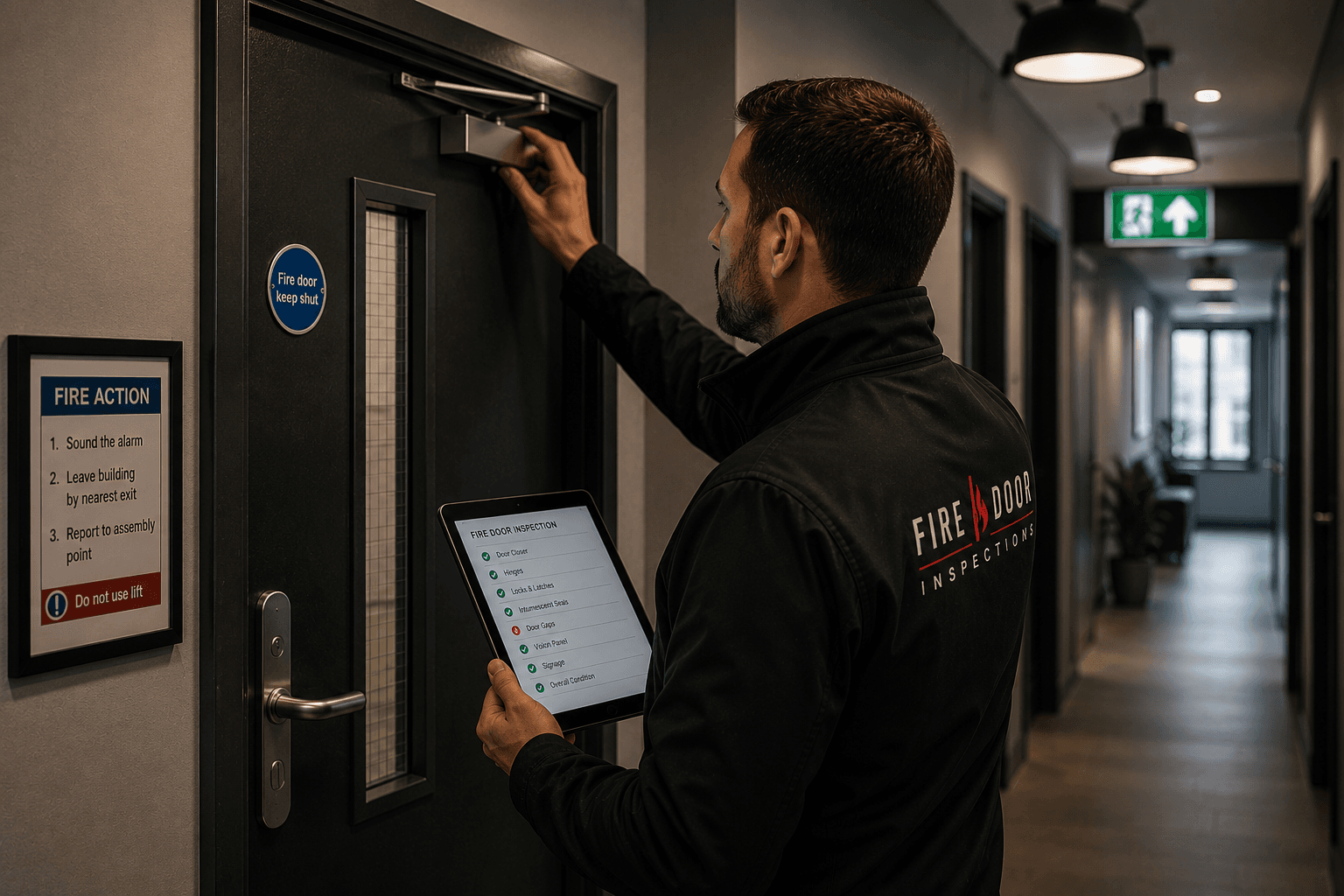
Hospitality Sector
Fire Door Inspections for Hotels and Hospitality Premises
Structured fire door inspections and reports for hotels, serviced apartments, aparthotels, hostels, guest houses and hospitality premises, with defect guidance and practical next steps for facilities and operations teams.
- Hotel & hospitality inspections
- Guest areas and back-of-house
- Photo evidence where recorded
- Defect notes and priorities
- Reports for facilities teams
- London & Greater London coverage
- General guidance only, not legal advice
Sector Overview
Fire Door Inspections for Hotels and Guest Accommodation
Hotels, serviced apartments and hospitality premises combine sleeping accommodation with high daily traffic across corridors, stairwells, kitchens and back-of-house routes.
Fire door inspections for hotels help owners, operators, facilities teams and Responsible Persons understand the observed condition of fire doors across guest areas, escape routes, corridors, stairwells, back-of-house areas, plant rooms, kitchens and staff spaces. The inspection report can help identify visible defects and support remedial planning, record keeping and ongoing fire safety management.
Inspections are visual and non-destructive where agreed in scope. Concealed components may not be assessed without further investigation. Learn more about our fire door inspection service and how reports are structured.
Reports help support compliance planning and record observed condition at the time of inspection. They do not guarantee statutory compliance, do not prove compliance and do not constitute legal advice. Duty holders should confirm applicable duties for their premises.
Hospitality Enquiry
Request a Hotel Quote
Share property type, approximate door numbers, guest and back-of-house access requirements and operating hours.
Hotel Context
Why Hotels Need Careful Fire Door Management
Hospitality buildings face daily operational pressures that can affect fire door performance — from guest turnover and housekeeping activity to contractor access and high-traffic escape routes.
Hotels and guest accommodation often combine sleeping occupancy with frequent use of bedroom doors, corridors, stairwells and escape routes. Back-of-house activity, maintenance contractors, deliveries and housekeeping can lead to doors being propped open, hardware being adjusted or repairs being completed without follow-up checks.
Wear from luggage, cleaning trolleys and sustained corridor traffic can affect closers, seals and frames over time. Clear inspection records and practical defect notes can help facilities teams prioritise follow-up — but reports do not replace legal advice or a fire risk assessment. This is general operational guidance only.
- High guest turnover
- Sleeping accommodation context
- Daily corridor and stairwell use
- Housekeeping and delivery activity
- Maintenance contractor access
- Doors propped during service
- Wear from luggage and trolleys
- Records and follow-up actions
Who This Is For
Who This Service Is For
The service supports hospitality operators and property teams that need clear inspection records, practical defect notes and reports that can be shared with contractors and internal fire safety management.
- Hotels
- Boutique hotels
- Serviced apartments
- Aparthotels
- Hostels
- Guest houses
- Hospitality operators
- Facilities managers
- Building managers
- Managing agents
- Portfolio operators
Inspection Scope
What Hotel Fire Door Inspections May Include
Hotel inspections follow a structured scope across guest routes, escape paths and back-of-house areas where included. Final scope depends on building layout, instruction and access on the day.
Items below may be included where agreed in scope before booking. Guest room doors, plant rooms and service areas are confirmed as part of the quotation process.
- Guest room doors where applicable and agreed in scope
- Corridor and escape route doors
- Stairwell doors
- Cross-corridor doors
- Kitchen and back-of-house doors
- Plant room and service doors
- Staff area doors
- Door leaf condition
- Frame condition
- Hinges and fixings
- Closers and self-closing action
- Gaps around doors
- Intumescent and smoke seals
- Locks, latches and ironmongery
- Fire door signage where relevant
- Glazing or vision panels
- Thresholds
- Visible damage, alteration or poor repairs
- Evidence photos where recorded
- Defect notes
- Remedial priority guidance
- Door schedule
Common Issues
Common Fire Door Issues in Hotels
In hotels and hospitality premises, fire doors can be affected by housekeeping activity, deliveries, contractor works, luggage impact, high corridor traffic and uneven maintenance focus between guest areas and back-of-house routes.
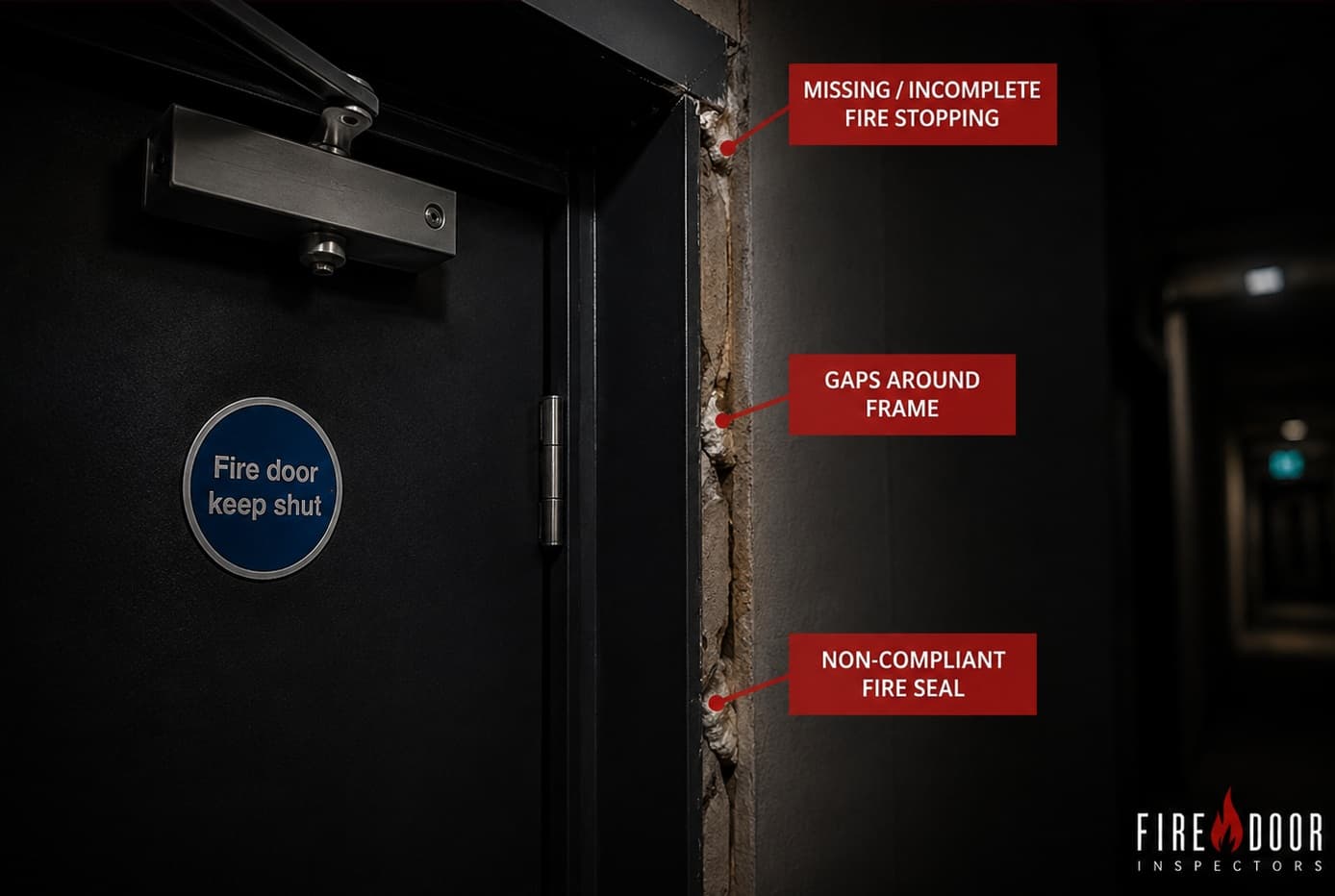
The examples below illustrate common issue types in hospitality buildings. Issues are recorded where observed during inspection, subject to scope and access. See our fire door defects guide for defect-specific detail.
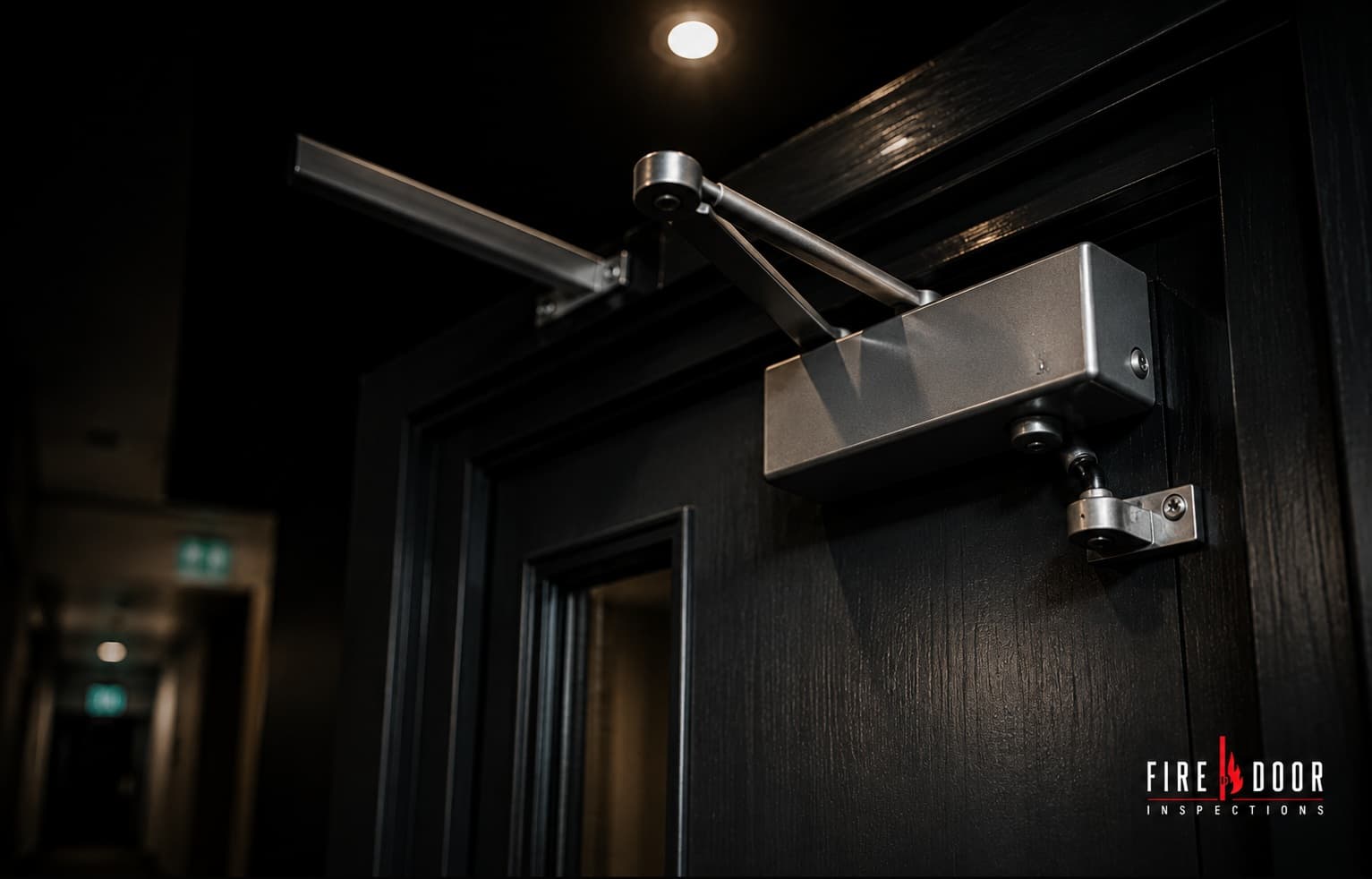
Issue recorded where observed
Doors not closing fully
Guest corridor and back-of-house doors may fail to latch after heavy daily use, poor closer adjustment or frame misalignment in busy hospitality routes.
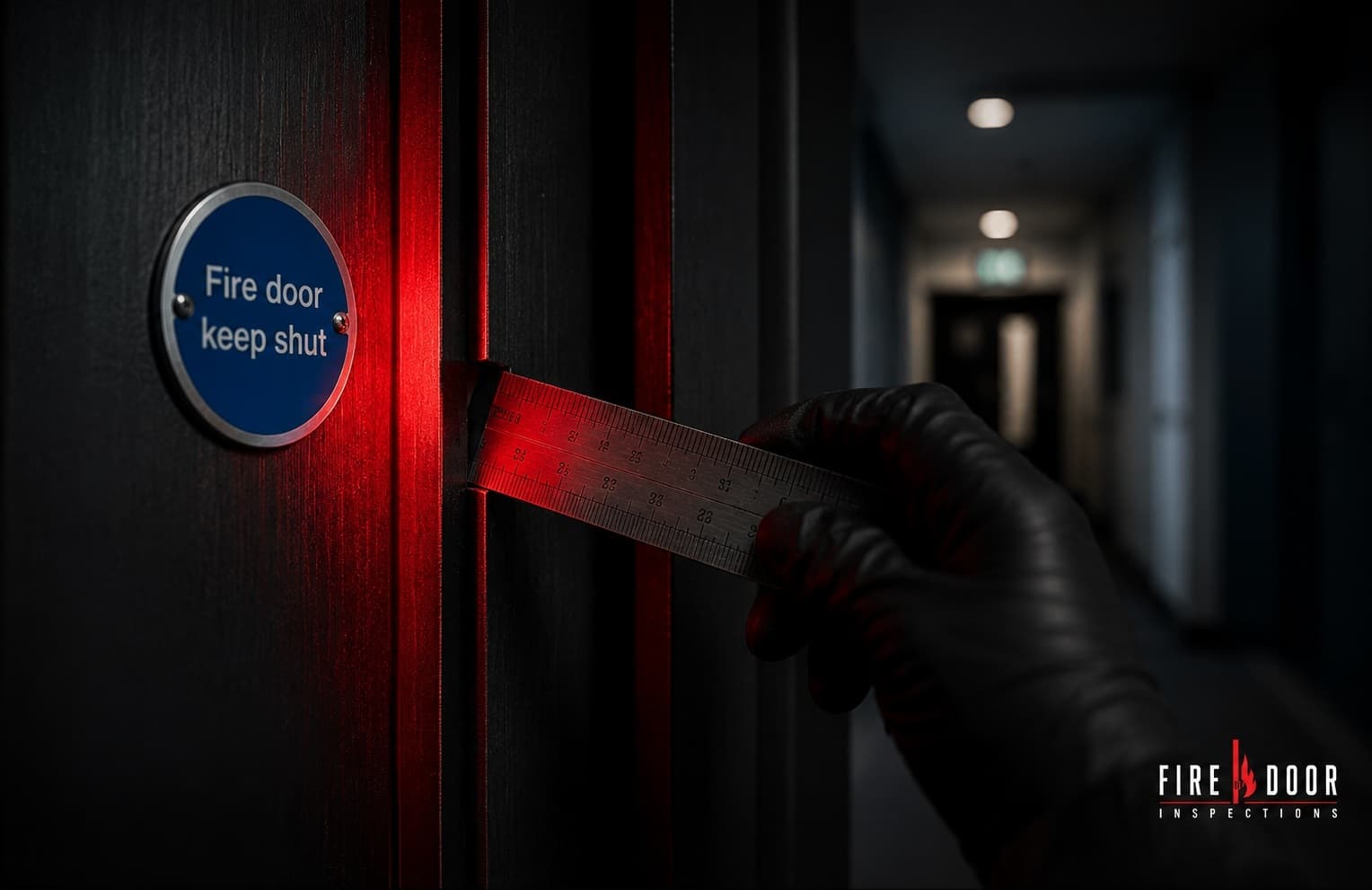
Issue recorded where observed
Excessive gaps
Gap tolerances around hotel door sets may be exceeded where observed, particularly on high-traffic stairwell and corridor doors subject to luggage impact.
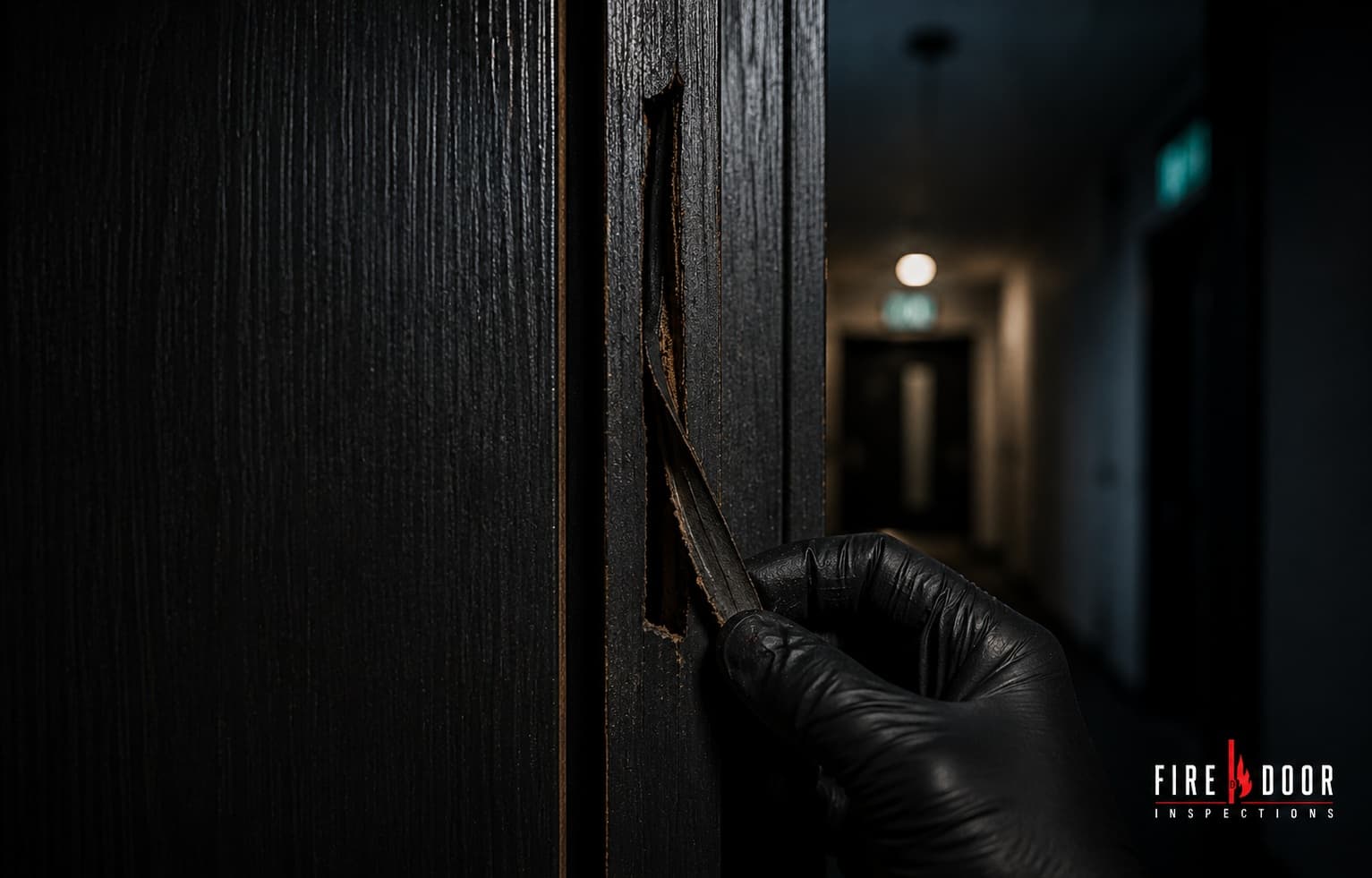
Issue recorded where observed
Damaged seals
Intumescent and smoke seals may be damaged by cleaning trolleys, housekeeping equipment, contractor activity or sustained guest and staff traffic.
Issue recorded where observed
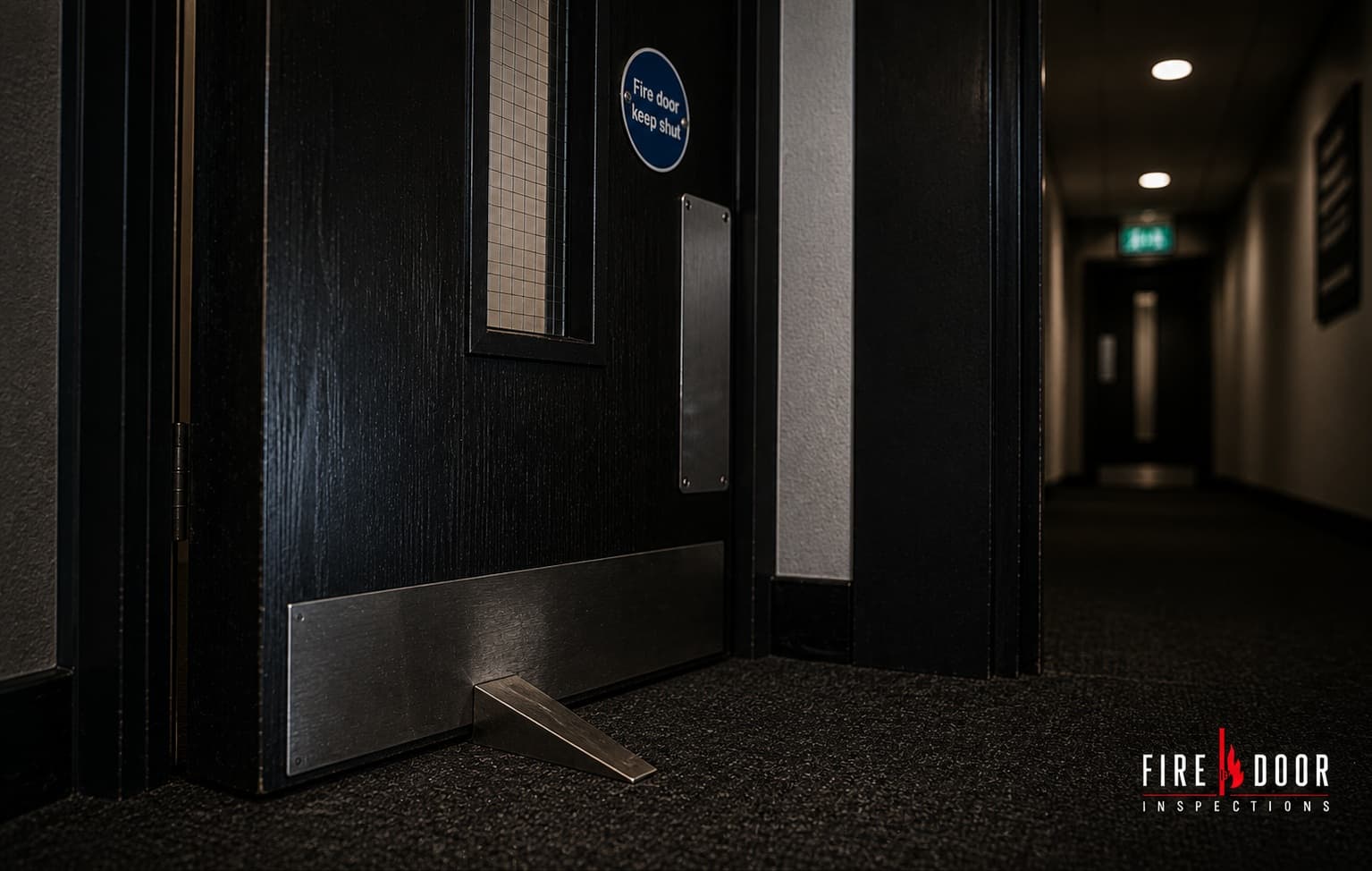
Doors wedged open
Housekeeping, deliveries and back-of-house service periods can lead to fire doors being held open without approved hold-open devices.
Issue recorded where observed
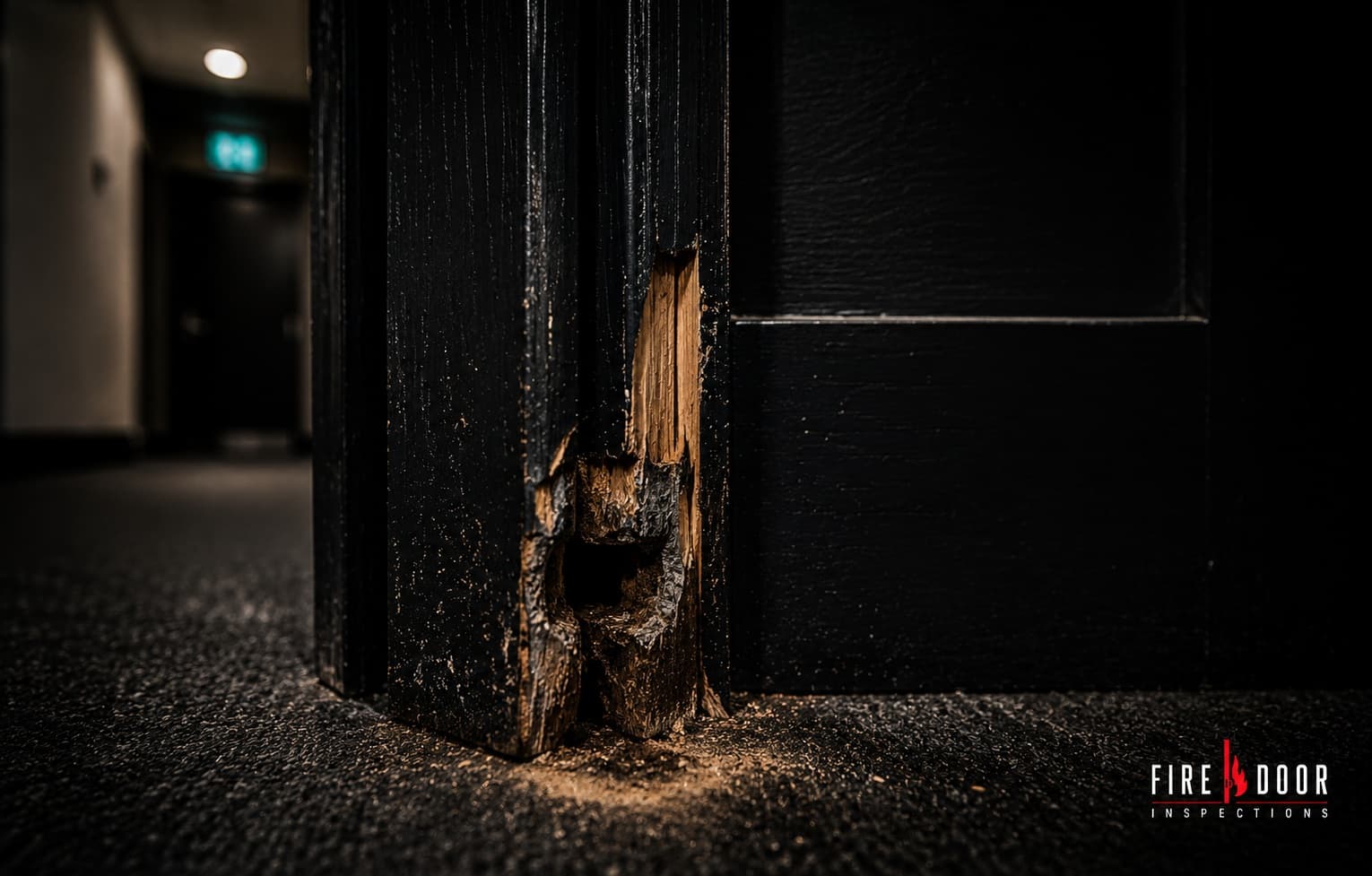
Damaged frames or edges
Door leaves and frames can suffer impact damage from luggage, trolleys, catering equipment and high-volume corridor traffic in hospitality buildings.
Issue recorded where observed
Closers disconnected or poorly adjusted
Self-closing devices may be disconnected, overridden or poorly adjusted after maintenance works, particularly on kitchen and service corridor doors.
Issue recorded where observed
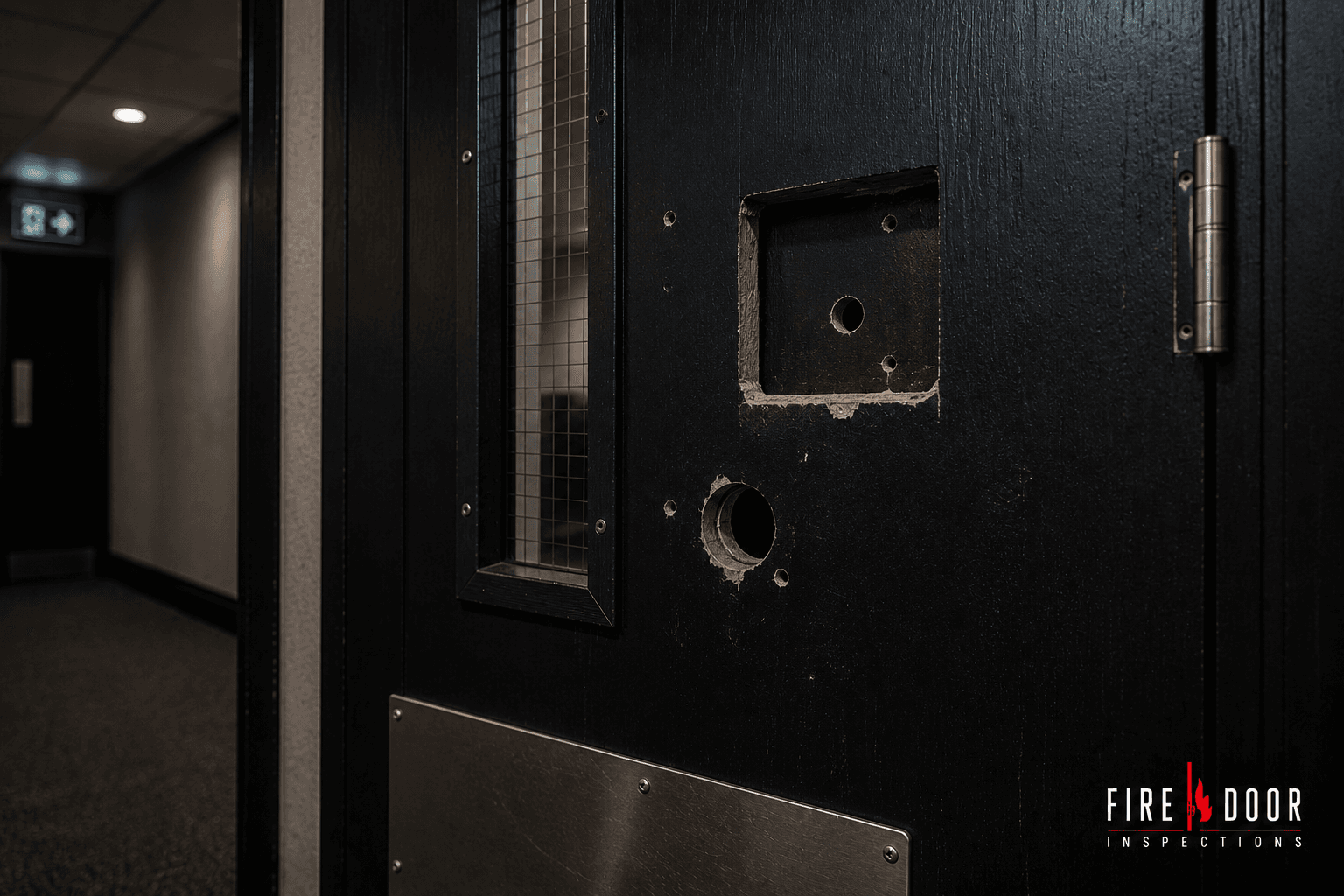
Poor repairs after maintenance
Contractor repairs to hardware, vision panels or surrounding finishes may affect closing performance where alterations are not re-checked after works.
Issue recorded where observed
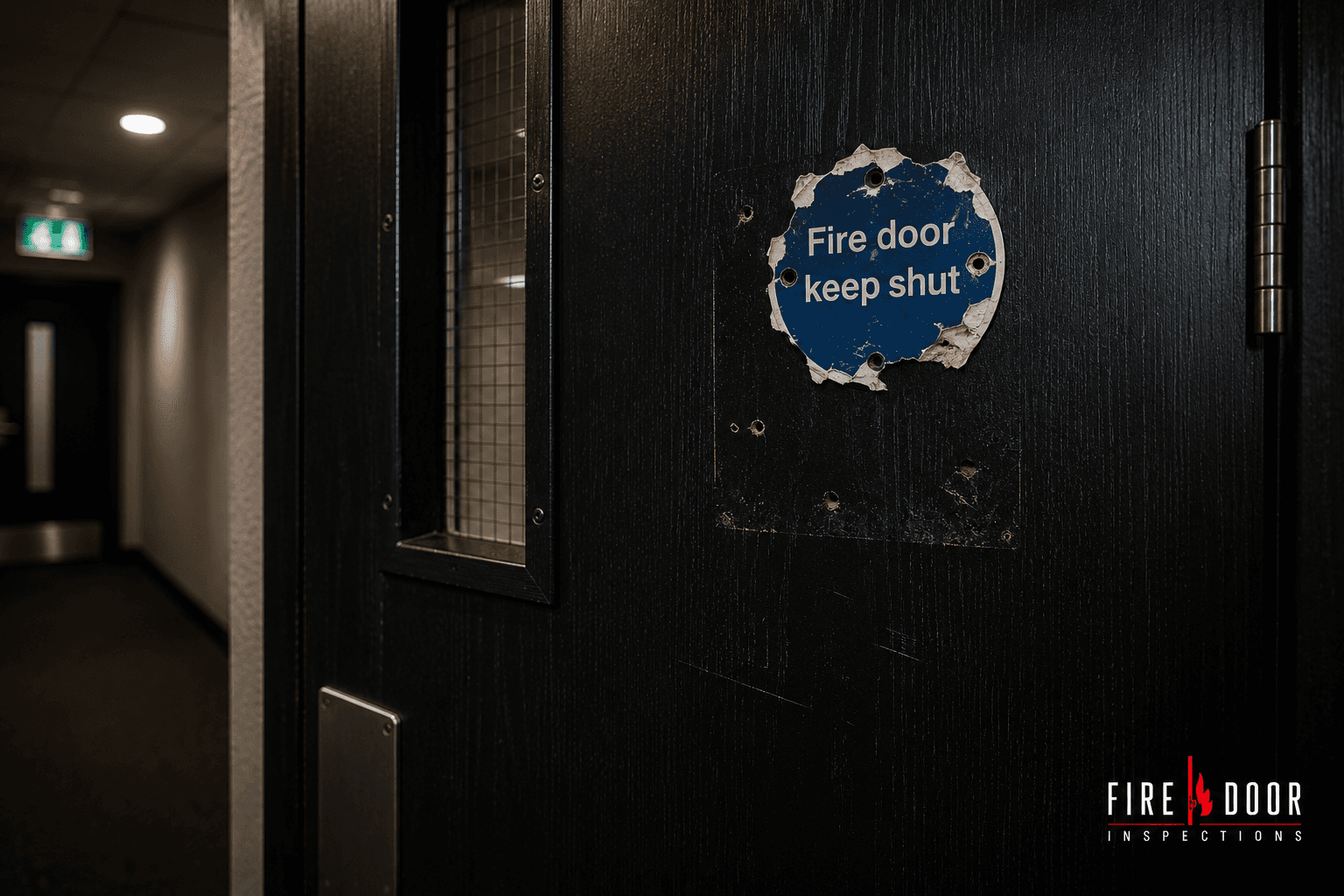
Missing or unsuitable signage
Fire door signage may be missing, unclear or inconsistent where guest areas and back-of-house routes have been refurbished or reconfigured.
Issue recorded where observed
Back-of-house neglect
Service corridors, plant rooms and staff routes may show more defects than front-of-house areas where maintenance focus has been uneven across the building.
Reporting
What the Hotel Receives After Inspection
After inspection, hotels and hospitality operators receive structured documentation to support internal review, contractor briefing and follow-up planning.
- Fire door inspection report
- Door-by-door findings where applicable
- Observed condition notes
- Defect notes
- Photo records where appropriate
- Practical next-step guidance
- Information to support remedial planning
- Re-inspection decision support
View our sample report, after-inspection guide and inspection vs maintenance guide for more detail on report format and follow-up steps.
Our Process
Hotel Inspection and Reporting Process
Hotel inspections separate guest corridors from back-of-house routes — coordinated with operations so guest areas, service doors and escape routes are assessed without unnecessary disruption.
- 01
Send hotel property details
Share property type, approximate door numbers, guest area and back-of-house access requirements, operating hours and any known concerns.
- 02
Confirm inspection scope
We confirm which guest areas, corridors, stairwells, kitchens, plant rooms and staff routes are included, along with reporting format and pricing.
- 03
Agree access arrangements
Housekeeping schedules, guest disruption windows, escorted access, plant room entry and facilities liaison are agreed before the visit.
- 04
Site inspection
Fire door sets are assessed on site against agreed scope across guest routes, escape paths and back-of-house areas where access is available.
- 05
Evidence and observations recorded
Condition observations, defects and photographic evidence are recorded where captured during inspection, subject to scope and access on the day.
- 06
Report issued with priorities
A structured report is issued with door schedule, observations, defect notes and remedial priority guidance where applicable.
After Inspection
What Happens If Defects Are Found
Recorded defects are practical observations — not an automatic statement that the whole building is non-compliant.
The fire door inspection report helps hotel facilities and operations teams identify what may need attention, prioritise follow-up and brief contractors. Some defects may require competent remedial works. Re-inspection may be useful after remedial works to review updated condition.
Hotel duty holders and responsible persons remain responsible for confirming applicable duties and taking suitable action. Inspection reports support planning — they do not replace legal advice or a fire risk assessment. See our after-inspection guide for practical next steps.
Learn more about remedial works support and follow-up re-inspections after defects are addressed.
Responsible Person Duties
Hotel Fire Door Inspections and Responsible Person Duties
Hotels and hospitality premises usually need active fire safety management. Inspection reports can support Responsible Persons and duty holders alongside wider arrangements.
Fire door inspection reports can support Responsible Persons, facilities managers and hospitality operators by documenting observed door condition, defects and priorities at the time of inspection. Reports should be considered alongside the wider fire risk assessment and fire safety arrangements for the premises.
This page provides general guidance only and is not legal advice. Reports do not guarantee statutory compliance. Legal and regulatory responsibilities remain with the relevant responsible person or duty holder for the premises.
London Coverage
Hotel Fire Door Inspections in London
We provide fire door inspections for London and Greater London hotels, serviced accommodation and hospitality premises, subject to availability and agreed scope.
Central and West London hospitality buildings often require coordination with concierge teams, facilities staff and managing agents — particularly in areas such as Westminster and West London. See our London inspections hub for wider area coverage.
- Westminster
- West London
- Central London
- Kensington & Chelsea
- City of London
- Greater London
Pricing
Hotel Fire Door Inspection Cost and Quoting
Hotel inspection cost depends on door numbers, building layout, access, operating hours, reporting detail and whether multiple floors or sites are included.
Hospitality inspections vary with guest corridor coverage, stairwell access, back-of-house routes, night-time restrictions and portfolio reporting requirements. Scope-based quotes are provided once property details are confirmed — we do not quote fixed prices for every building on this page.
Get a Quote
Share hotel property details and we will confirm inspection scope, availability and pricing.
Before the Visit
Preparing a Hotel for Fire Door Inspection
Practical steps that help facilities teams confirm scope, reduce disruption and make the site visit more efficient.
- Provide door schedules if available
- Confirm access to guest corridors, stairwells, plant rooms, kitchens and back-of-house areas
- Plan access around guest disruption where possible
- Provide previous inspection or report records if available
- Identify known problem doors in advance
- Arrange suitable staff access or escort where required
Book a Hotel Inspection
Need Hotel Fire Door Inspections?
Request a quote for your hotel, aparthotel, serviced accommodation or hospitality premises. We will confirm scope, availability and pricing.
FAQ
Hotel Fire Door Inspection Questions
Clear answers to common questions about fire door inspections, guest area scope and reporting for hotels and hospitality premises.
Do hotels need fire door inspections?
What fire doors are checked in a hotel?
Are guest room doors included in a hotel fire door inspection?
Can inspections be arranged around hotel operations?
What happens if hotel fire door defects are found?
Is a fire door inspection the same as a certificate?
How much does a hotel fire door inspection cost?
Do hotels need re-inspection after remedial works?
Related Information
- Get a quote
- Contact
- Sample report
- Fire door inspections
- Hotels London inspections
- Review visible concerns before booking
- Find the closest defect guidance
- Fire door inspection defects
- Remedial works support
- Fire door re-inspections
- After inspection guide
- Regulatory Reform Fire Safety Order
- Case studies
- Fire door checklist
- Defect reporting checklist
- Inspection report dashboard
- Inspection cost guidance
- Inspection vs maintenance guide
- Doors wedged open
- Faulty self-closers
- Damaged seals
- Excessive gaps
- Poor signage
- Fire door surveys
- Fire door reports
- Fire door compliance
- Inspection cost
- Inspections London
- Westminster inspections
- West London inspections
- Property managers
- Offices
- Blocks of flats
- Landlords
- UK inspection cost guide (blog)
- Inspector checklist guide (blog)
- Common defects guide (blog)