
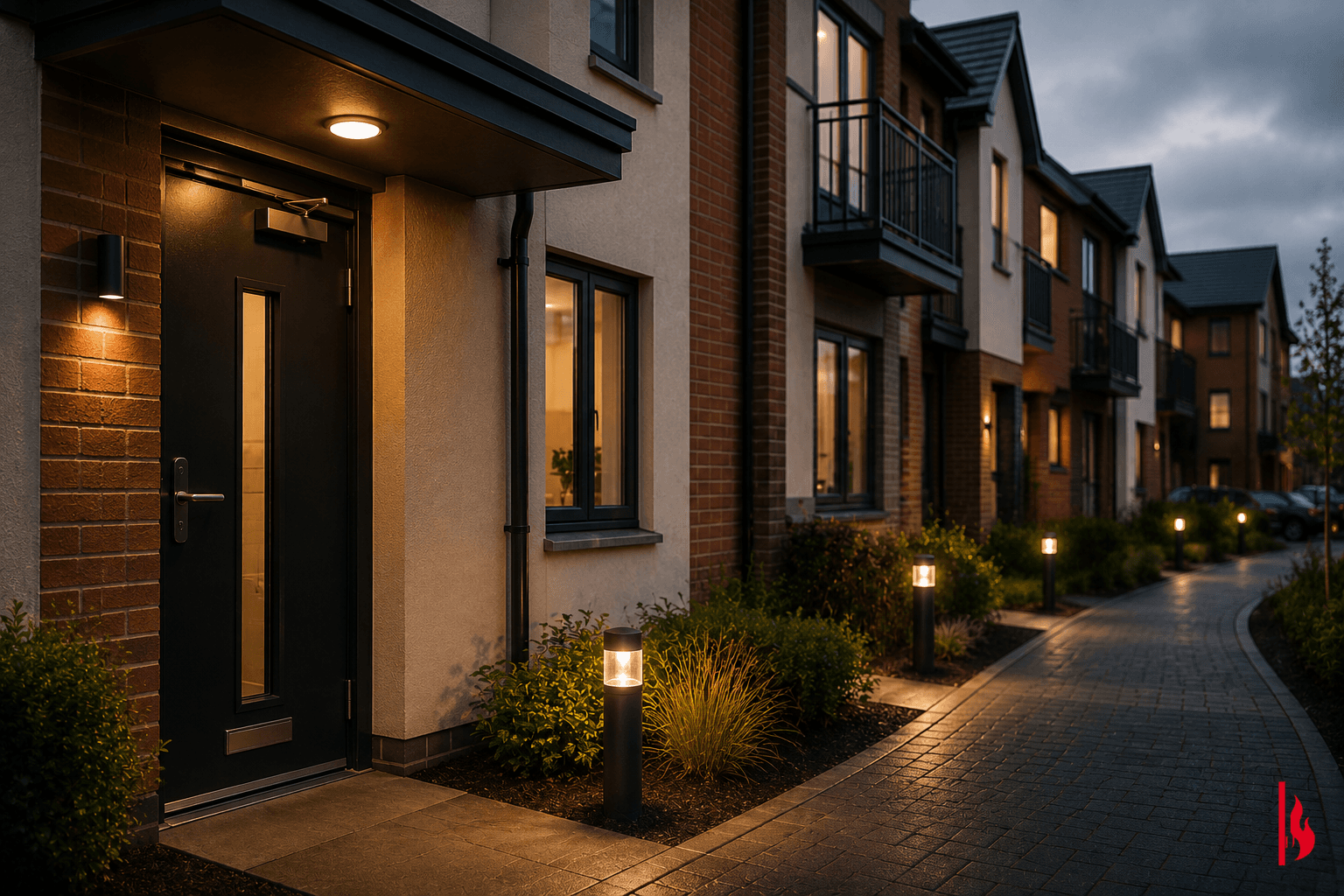
HMO Sector
Fire Door Inspections for HMOs
Structured fire door inspections, surveys and reports for HMOs, shared houses, licensed HMOs and multi-occupancy residential properties across London.
- HMO fire door inspections
- Shared house reporting
- Bedroom door observations where scoped
- Photo evidence where recorded
- Reports for landlords and agents
- London & Greater London coverage
Sector Overview
Fire Door Inspection Support for HMOs
HMOs often include multiple occupied rooms, shared kitchens, shared escape routes, communal stairwells and high-use doors.
Structured inspections can help landlords, agents and property managers understand visible fire door defects, organise remedial planning and maintain clearer internal records. Scope is confirmed before booking based on HMO layout, door numbers and access arrangements.
Reports can support internal documentation and remedial planning but do not constitute legal advice or guarantee statutory compliance. Landlords and responsible persons should confirm applicable duties for their premises.
HMO Enquiry
Request an HMO Quote
Share HMO details, room numbers, bedroom door requirements and tenant access arrangements.
HMO Context
Why HMOs Need Clear Fire Door Records
HMOs can involve higher occupancy, shared facilities, frequent tenant changes, access coordination challenges and regular wear to doors, closers and seals.
Fire door records can help landlords and property managers understand what has been observed, brief contractors and plan practical next steps. In shared houses and licensed HMOs, clear documentation may support internal record keeping depending on scope and what is recorded on site.
Reports do not prove compliance, do not constitute legal advice and do not replace confirmation of applicable licensing or regulatory duties. Landlords and responsible persons should confirm applicable requirements for their property where needed.
- Tenant turnover
- Shared kitchens and escape routes
- Multiple bedroom doors
- Wear from daily use
- Landlord and agent record keeping
- Access coordination
- Contractor follow-up
Inspection Scope
What Can Be Inspected in an HMO
HMO inspections follow a structured scope across shared areas, escape routes and bedroom doors where included. Observations are clear, evidenced where recorded and useful for landlords briefing contractors.
- Bedroom doors where included in scope
- Communal corridor fire doors
- Kitchen fire doors
- Stairwell doors
- Shared living area doors
- Cupboard or service doors where relevant
- Final exit doors where relevant
- Door leaf condition
- Frame condition
- Door gaps and alignment
- Intumescent and smoke seals
- Hinges and fixings
- Self-closing devices
- Locks, latches and ironmongery
- Glazing and vision panels
- Fire door signage
- Fire stopping around frames
- Evidence photos where recorded
- Defect notes
- Remedial priority guidance
- Door schedule
Common Issues
Common Fire Door Issues in HMOs
In shared houses and HMOs, fire doors can be affected by tenant use, frequent moving in and out, room changes, contractor works, repeated repairs and poor maintenance. Structured reporting can help identify visible issues and support proportionate remedial planning.
The examples below illustrate common issue categories identified during HMO inspections. Issues are recorded where observed during inspection, subject to scope and access.
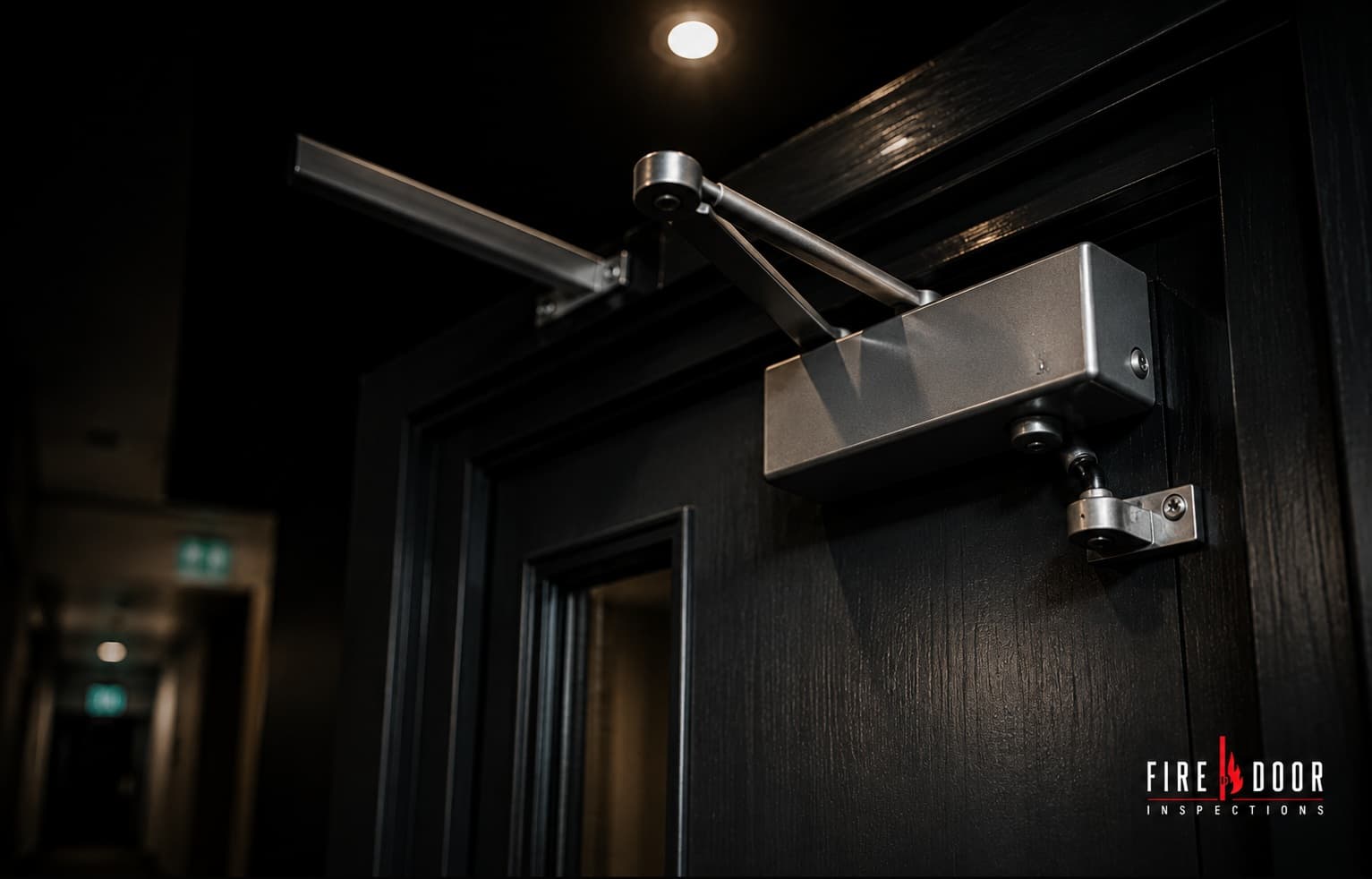
Issue recorded where observed
Bedroom doors not self-closing
Bedroom fire doors that fail to close or latch may be recorded where observed. In HMOs, repeated tenant use and room changes can affect closer performance over time.
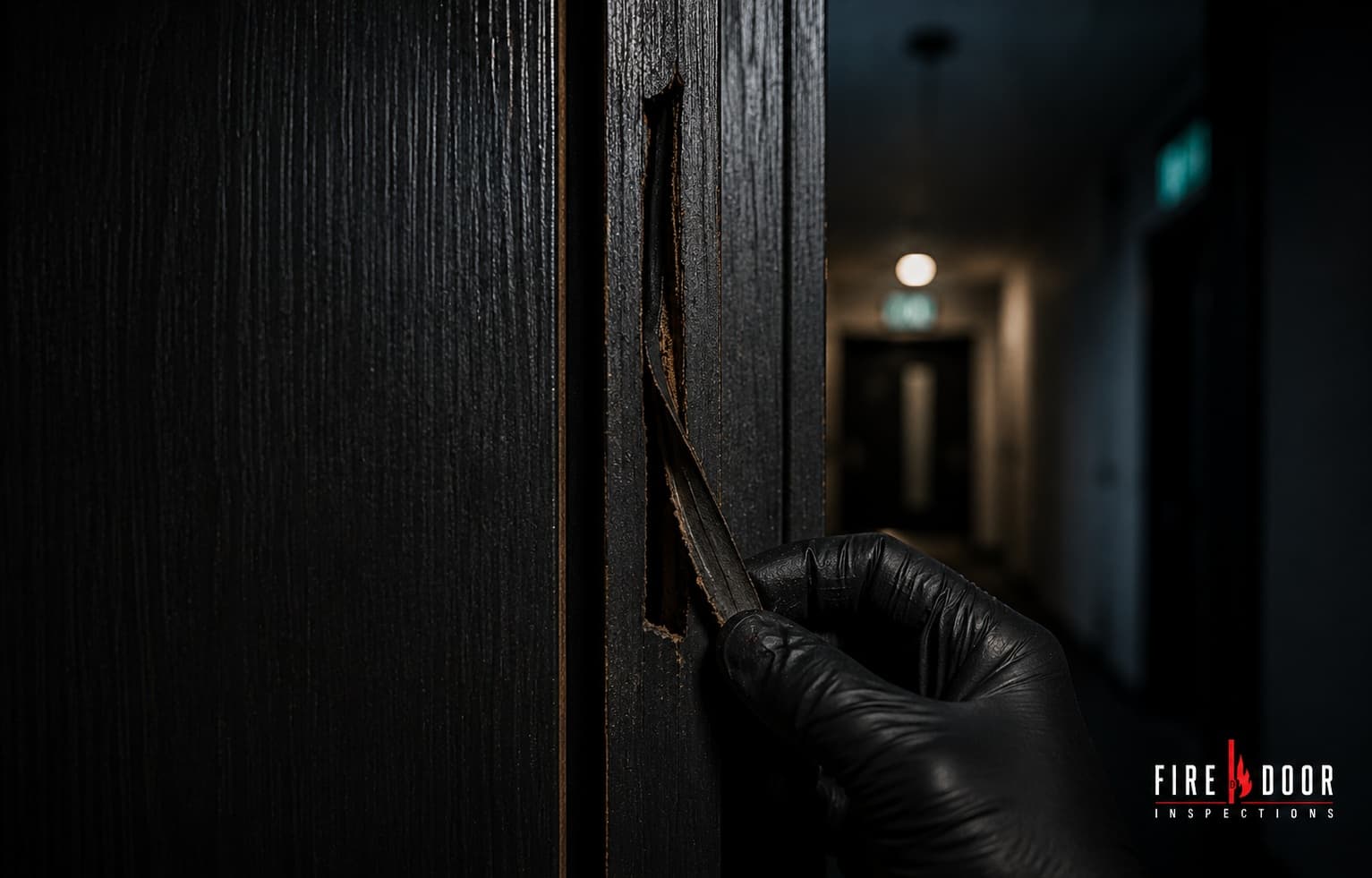
Issue recorded where observed
Damaged or missing seals
Intumescent and smoke seals may be damaged by impact, cleaning or contractor works across shared kitchens, corridors and bedroom door sets.
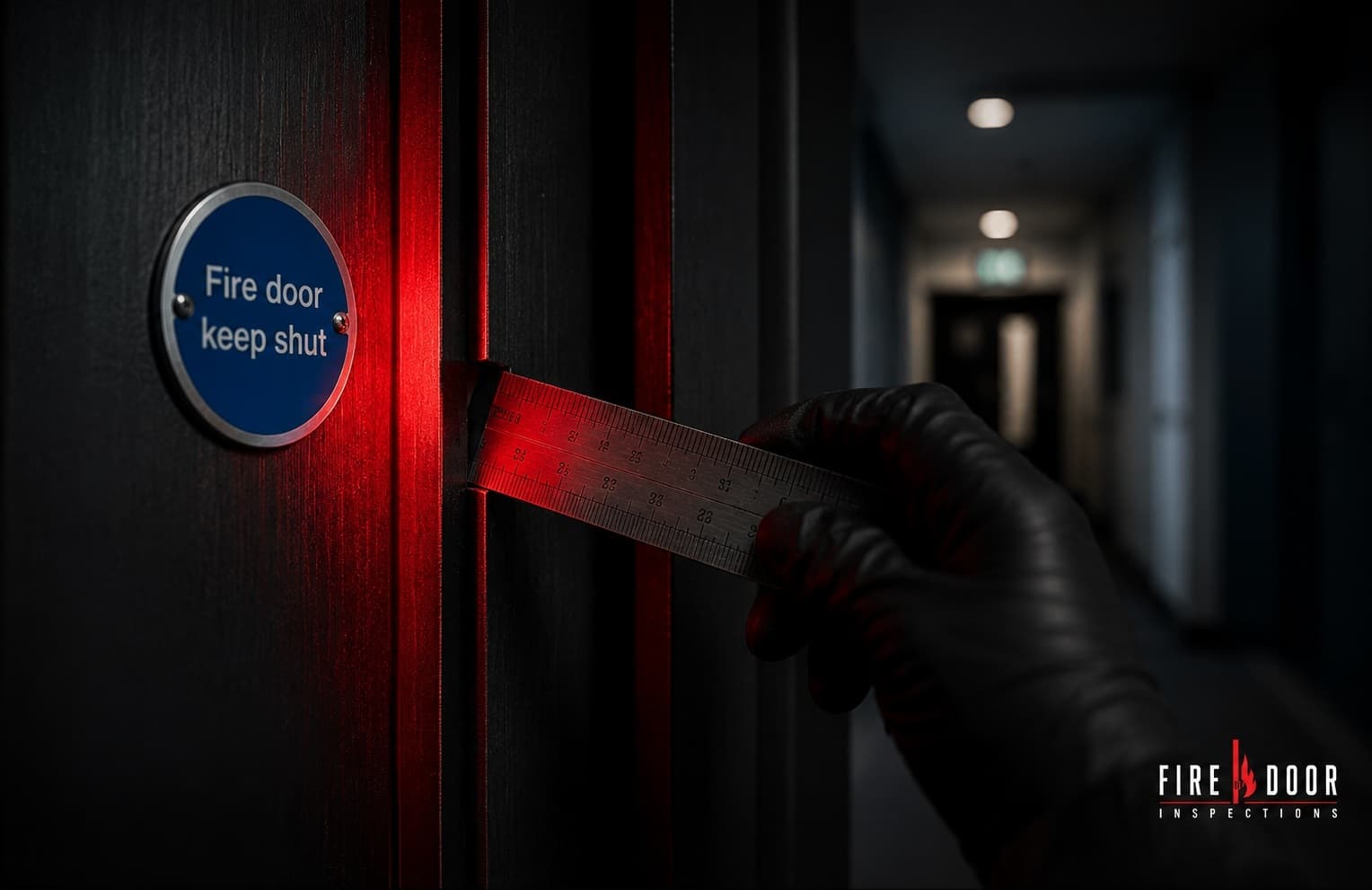
Issue recorded where observed
Excessive gaps
Gaps around HMO door sets may exceed permitted tolerances where observed, particularly on high-use communal and bedroom routes.
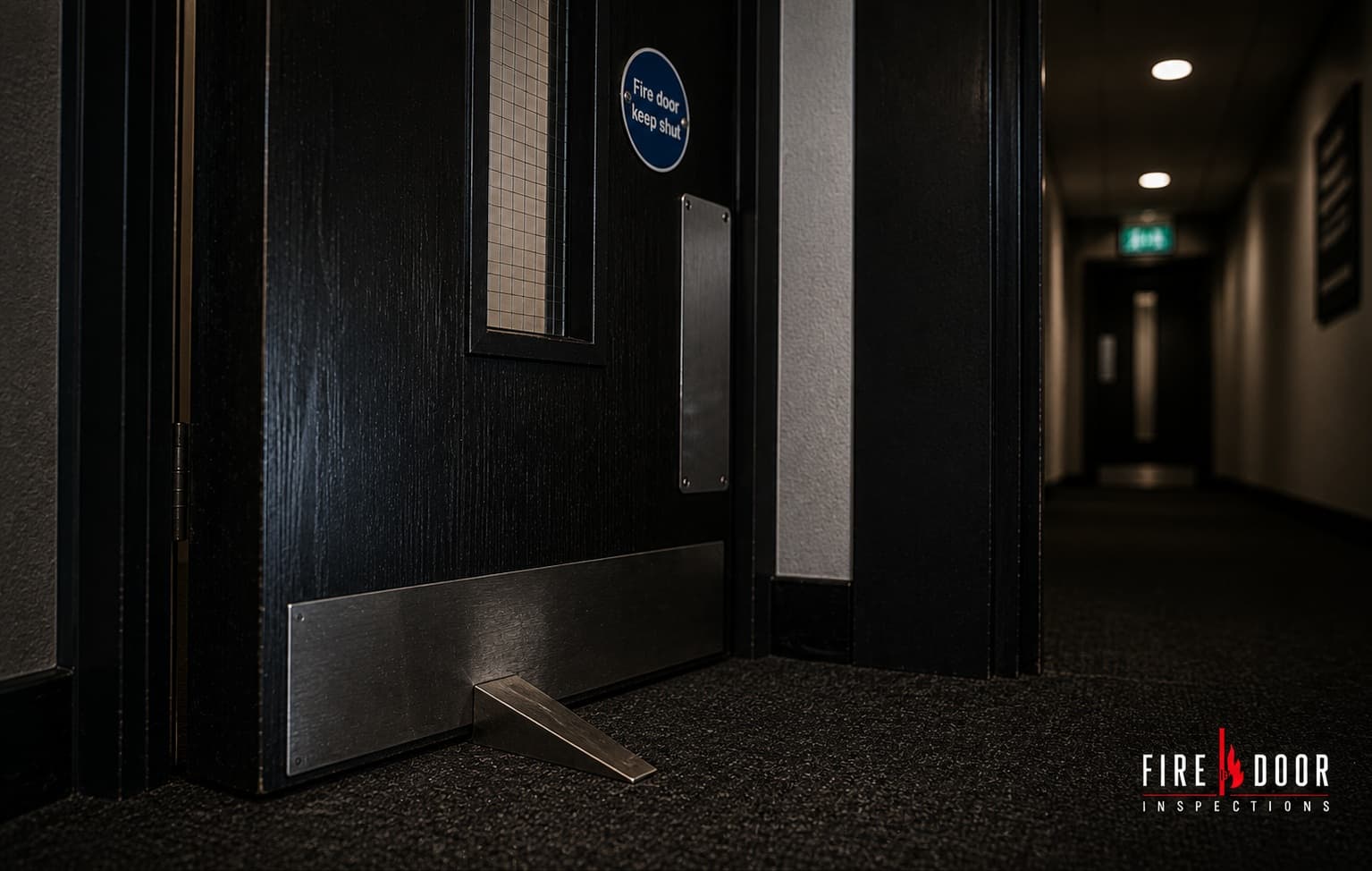
Issue recorded where observed
Doors wedged open
Fire doors held open with wedges or furniture are commonly observed in shared houses where tenants use communal routes throughout the day.
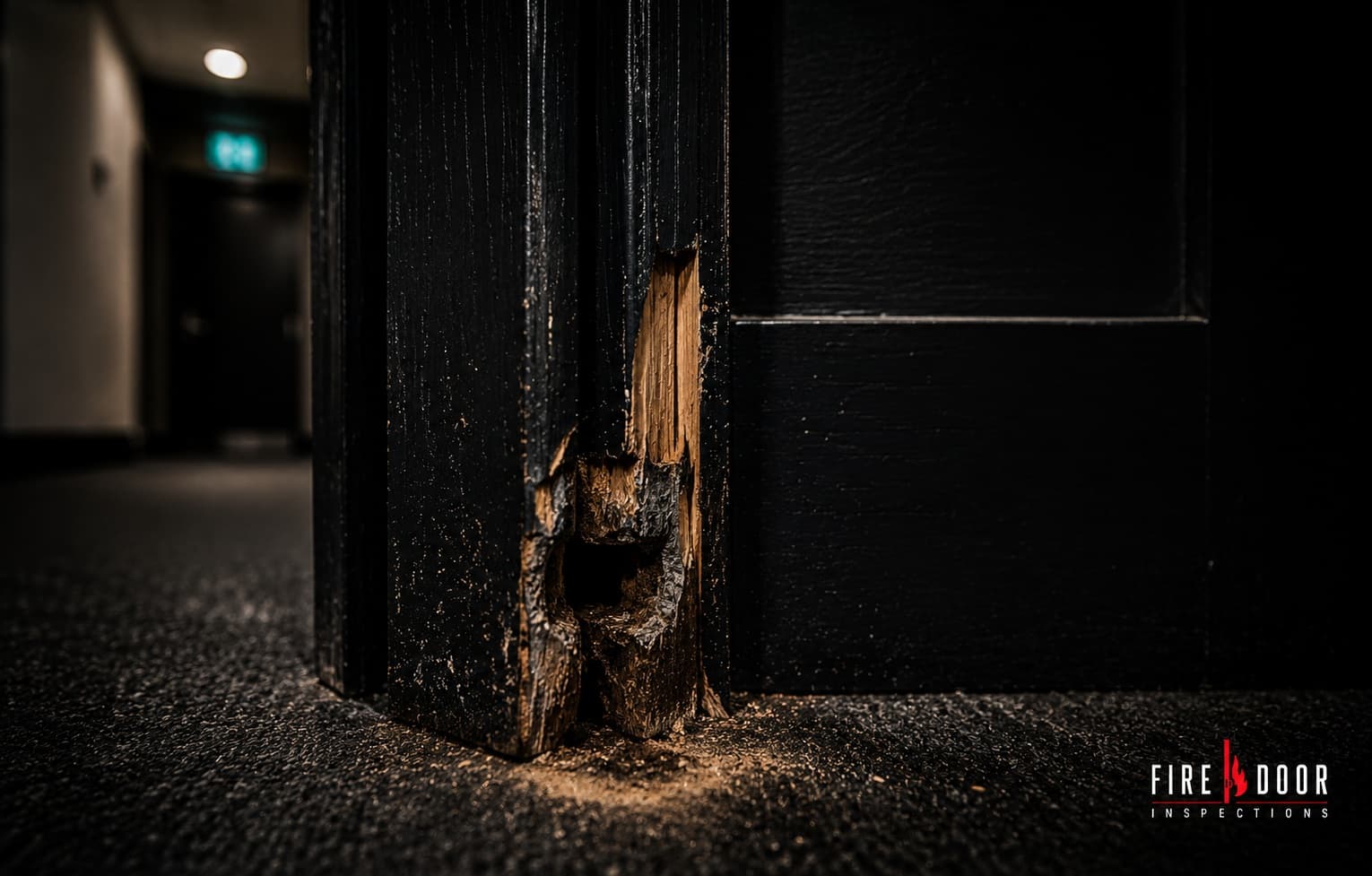
Issue recorded where observed
Damaged frames
Frame damage from moving furniture, contractor works and daily tenant traffic may be documented to support repair instructions.
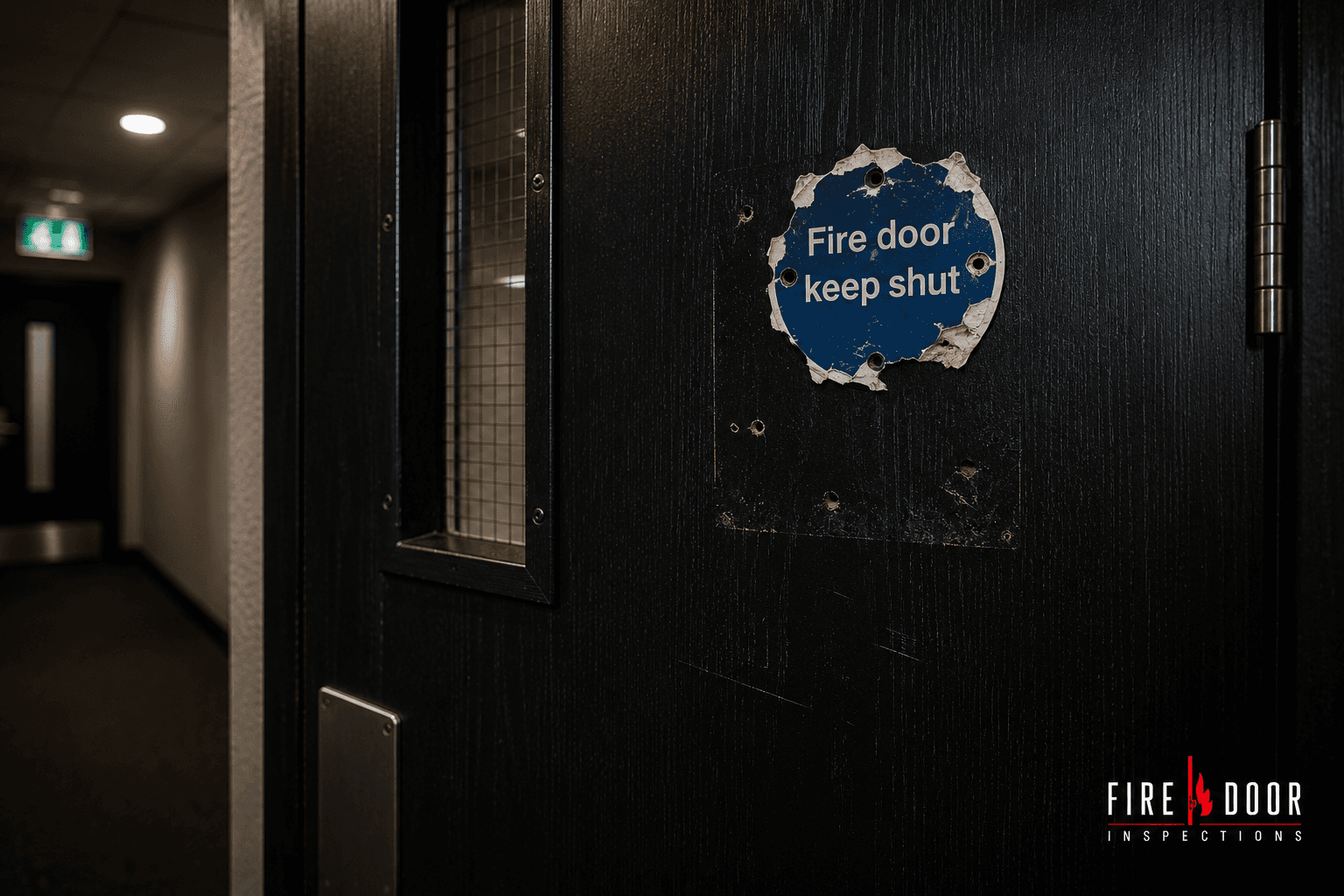
Issue recorded where observed
Poor or missing signage
Missing or unclear fire door signage may be noted where observed on communal escape routes and bedroom doors where included in scope.
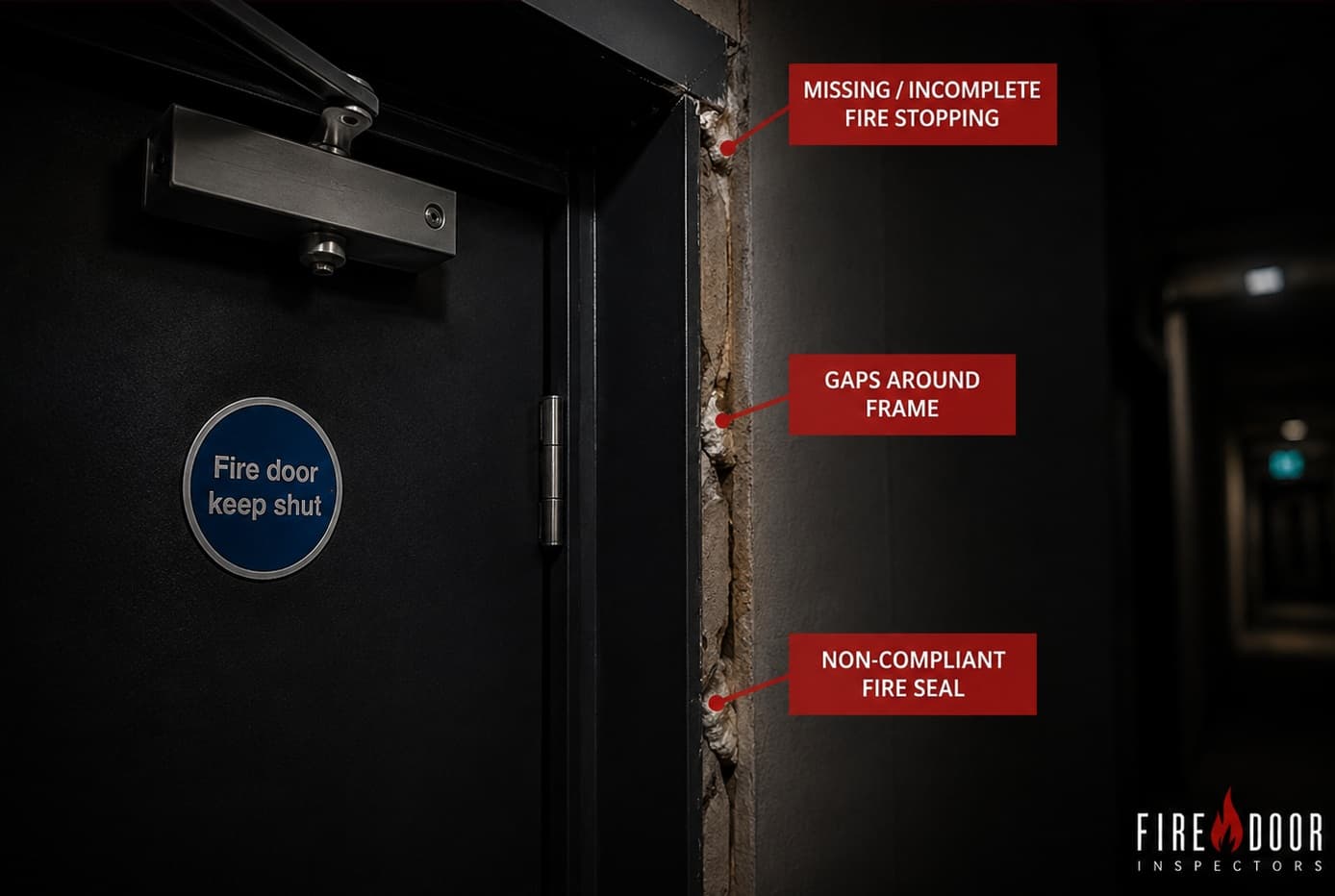
Issue recorded where observed
Fire stopping concerns
Incomplete fire stopping around door frames may be recorded where visible, particularly following maintenance or room conversion works.
Issue recorded where observed
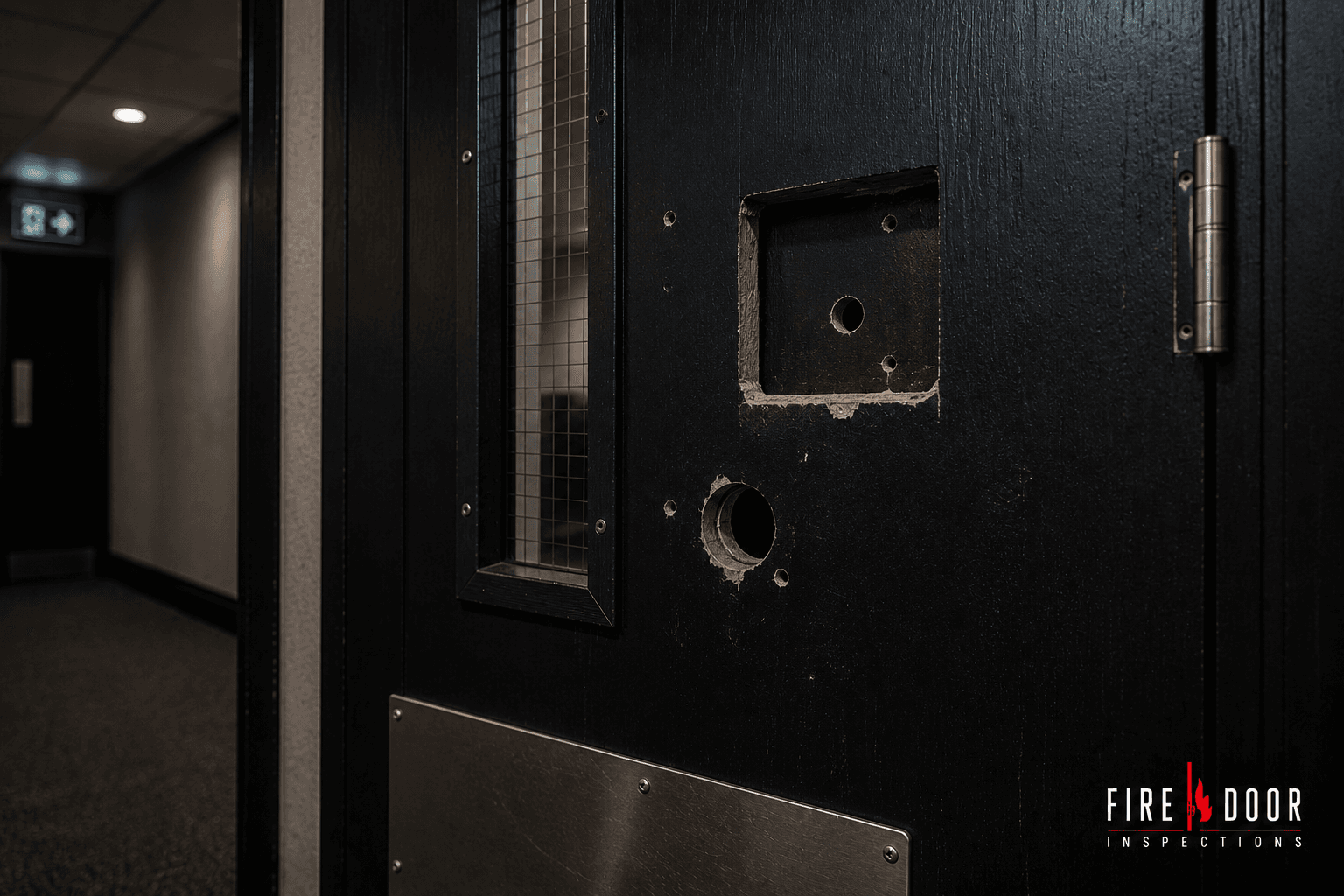
Unauthorised alterations
Additional locks, hardware changes or door modifications may be observed where tenants or contractors have altered door sets without coordination.
Issue recorded where observed
Access limitations
Occupied rooms, tenant availability and access coordination can affect which doors are inspected on the day. Scope and access arrangements should be confirmed before booking.
Who We Support
Built for HMO Landlords, Letting Agents and Property Managers
The service is designed for property owners and managers who need clear inspection records, practical defect notes and reports that can be shared internally or with contractors.
- HMO landlords
- Letting agents
- Property managers
- Managing agents
- Portfolio landlords
- Housing providers
- Estate managers
- Facilities managers
- Maintenance coordinators
- Contractor teams
Our Process
HMO Inspection and Reporting Process
HMO inspections often involve tenant notice, shared parts and multiple flat entrance doors — access is agreed with landlords or agents before doors are assessed on site.
- 01
Send HMO details
Share property type, number of rooms, approximate door numbers, bedroom door requirements and any known concerns or access restrictions.
- 02
Confirm door scope
We confirm whether bedroom doors, shared kitchens, escape routes and communal areas are included, along with reporting format and pricing.
- 03
Agree access arrangements
Tenant coordination, room access for occupied bedrooms, appointment timing and landlord or agent liaison are agreed before the visit.
- 04
Site inspection or survey
Fire door sets are assessed on site against agreed scope across shared areas, kitchens, stairwells and bedroom doors where access is available.
- 05
Evidence and observations recorded
Condition observations, defects and photographic evidence are recorded where captured during inspection, subject to scope and access on the day.
- 06
Report issued with priorities
A structured report is issued with door schedule, observations, defect notes and remedial priority guidance where applicable.
Reporting
Clear Fire Door Reports for HMOs
Reports can include a site summary, door schedule, observations, photographic evidence where recorded, defect notes, priority guidance and practical recommendations for HMO landlords, letting agents and property managers.
Reports are structured to support landlords and agents reviewing findings after the site visit. Content depends on inspection scope, HMO layout and what is observed on site, subject to access arrangements on the day.
View our fire door reports page and sample report for illustrative formats. Final report detail depends on scope and site conditions.
London Coverage
Fire Door Inspections for HMOs Across London
We support HMO inspection enquiries across Central London, North London, East London, South London, West London and Greater London.
We support HMO inspection enquiries across London, subject to appointment availability, access arrangements, tenant coordination and agreed inspection scope. This includes shared houses, licensed HMOs and portfolio programmes managed by landlords and letting agents.
Fire door inspections London →Areas Covered
- Central London
- North London
- East London
- South London
- West London
- Greater London
Compliance Records
Supporting Fire Door Compliance Records for HMOs
Inspection reports can support internal records and remedial planning for HMO landlords and property teams.
Reports document door condition, defects and priorities observed during inspection. They may help landlords and agents maintain clearer records across shared areas, escape routes and bedroom doors where included in scope.
Reports do not guarantee statutory compliance and do not constitute legal advice. Legal and regulatory responsibilities remain with the relevant responsible person, landlord or duty holder. Landlords and responsible persons should confirm applicable duties for their premises.
After Inspection
What Happens If Defects Are Found
Recorded defects are practical observations — not an automatic statement that the whole building is non-compliant.
The fire door inspection report helps landlords and HMO operators identify what may need attention, prioritise follow-up and brief contractors. Some defects may require competent remedial works. Re-inspection may be useful after remedial works to review updated condition.
Landlords and responsible persons remain responsible for confirming applicable duties and taking suitable action. Inspection reports support planning — they do not replace legal advice or a fire risk assessment. See our after-inspection guide for practical next steps.
Learn more about remedial works support and follow-up re-inspections after defects are addressed.
Portfolios
Portfolio HMO Inspections for Landlords and Property Managers
For landlords, letting agents, housing providers and property managers with multiple HMOs, consistent reporting formats can help compare issues across properties and prioritise remedial planning.
Portfolio programmes may require aligned door schedules, coordinated tenant access across properties and clear remedial prioritisation between HMOs. Scope is confirmed before programmes commence based on property types, door numbers and reporting preferences.
Portfolio Enquiry
Discuss Portfolio HMO Inspections
Include HMO numbers, door quantities, bedroom door requirements and access coordination preferences for your portfolio.
Pricing
How Much Does a Fire Door Inspection for an HMO Cost?
Pricing depends on the number of doors, number of rooms, property layout, access requirements, location, urgency, reporting scope and whether bedroom doors are included.
HMO inspection costs vary with room numbers, bedroom door inclusion, tenant access coordination and property layout across shared houses and licensed HMOs. Quotes are provided once HMO details are confirmed.
Fire door inspection cost guidance →Cost Factors
Door numbers, room count, bedroom inclusion, tenant access and reporting requirements all affect HMO inspection pricing.
Book an HMO Inspection
Need Fire Door Inspections for an HMO?
Send us the HMO details, approximate number of doors, room access requirements and urgency. We'll confirm scope, availability and pricing.
FAQ
HMO Fire Door Inspection Questions
Clear answers to common questions about fire door inspections, bedroom door scope and reporting for HMOs in London.
Do HMOs need fire door inspections?
What fire doors are checked in an HMO?
Are bedroom doors included in an HMO inspection?
Do you inspect shared kitchens and escape routes?
Can you provide reports for HMO landlords and agents?
Can you inspect multiple HMO properties?
Does the report include photo evidence?
How much does an HMO fire door inspection cost?
Related Information
- Get a quote
- Contact
- Sample report
- Fire door inspections
- HMOs London inspections
- Check whether inspection may be useful
- Review issue type before requesting inspection
- Fire door inspection defects
- Remedial works support
- Fire door re-inspections
- After inspection guide
- Regulatory Reform Fire Safety Order
- Case studies
- Fire door checklist
- Defect reporting checklist
- Inspection report dashboard
- Inspection cost guidance
- Inspection vs maintenance guide
- Doors wedged open
- Damaged frames
- Excessive gaps
- Fire door surveys
- Urgent inspections
- Inspection limitations
- Fire door reports
- Fire door compliance
- Inspection cost
- Inspections London
- Blocks of flats
- Property managers
- Housing associations
- Offices
- Landlords
- HMO fire door inspection duties and common findings
- Landlord inspection guide (blog)