
Defect Guide
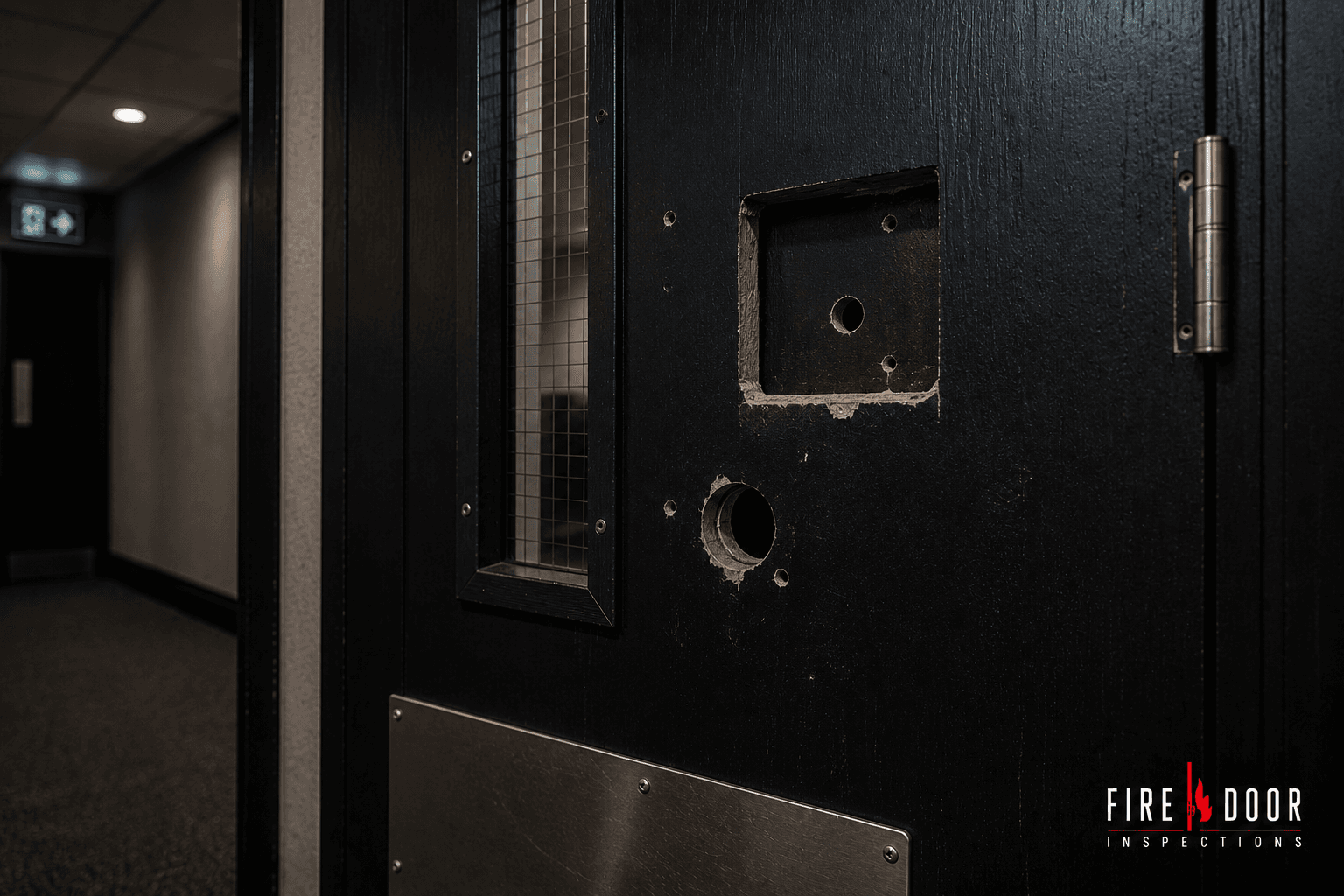
Unauthorised Fire Door Alterations
Fire doors are designed and tested as complete door sets. Unauthorised changes to the door leaf, frame, glazing, ironmongery or hardware can affect certification, operation and fire-resisting performance.
Defect Overview
What Are Unauthorised Fire Door Alterations?
Unauthorised alterations may include added hardware, removed components, drilled holes, unsuitable locks, unapproved glazing changes, cut-outs, ventilation grilles or repairs that are not supported by suitable evidence.
For property managers, landlords, facilities managers and responsible persons, visible modifications should be reviewed alongside certification records, maintenance history and the intended performance of the complete door set.
Risk & Impact
Why This Defect Matters
Unauthorised alterations can affect whether a fire door set still matches its intended tested configuration.
- The door may no longer match its tested configuration
- Certification or evidence may be affected
- Hardware changes can alter closing or latching performance
- Holes, cut-outs or added fittings may weaken the door leaf
- Further specialist review may be needed
Inspection Notes
How Inspectors Record Unauthorised Alterations
Where visible modifications are observed, inspection notes should describe the alteration, location and any related performance concerns.
- Door reference or location
- Evidence photo of the modification
- Description of the alteration or missing component
- Related operation, latch or closer observations
- Notes on available certification or maintenance records where seen
- Suggested remedial priority where applicable
Visible alterations are recorded at the time of inspection. Specialist advice or further evidence may be needed to confirm suitability and remedial requirements.
Visible Indicators
Common Signs of Unauthorised Alterations
These are examples of visible indicators that may be recorded where observed during inspection.
Added locks or hardware
Additional or non-standard hardware may alter operation or weaken the door leaf.
Unsealed drilled holes
New holes without suitable sealing may affect fire-resisting performance.
Removed or replaced components
Missing or substituted parts may change the tested door set configuration.
Unapproved glazing changes
Glazing replacement or modification may not match the original specification.
Cut-outs, vents or grilles added to the door
Penetrations in the door leaf may compromise fire and smoke separation.
Surface-mounted items affecting operation
Added fittings may obstruct closing, latching or seal contact.
Poor previous repair or patching
Unsupported repairs may indicate informal alteration without suitable evidence.
Remedial Planning
What Should Be Done Next?
The next action depends on severity, building type and inspection findings. Unauthorised alterations should be reviewed against available evidence and addressed through competent specialist advice where required.
Recommended next steps may include:
- Record the alteration and door location
- Photograph the modified area
- Check available certification or maintenance records
- Review whether the alteration affects operation or performance
- Arrange specialist advice or remedial works where needed, then re-inspect if required
Typical journey after a defect is recorded: inspection finding → defect noted in the fire door report → remedial works planned → re-inspection confirms the issue has been addressed where appropriate → door register or report evidence updated. See also inspection limitations and next steps after defects are found. For London bookings, see fire door inspections London.
Seeing a different visible issue? Use the Fire Door Defect Identifier to find the closest guidance and next steps.
FAQ
Common Questions About This Defect
Do letter plates, cat flaps or extra hardware count as unauthorised alterations?
Why might an altered fire door need further assessment beyond a visual check?
What remedial options are typical for unauthorised fire door alterations?
Is re-inspection expected after alterations are remedied?
Related Defects
Related Fire Door Defects
Other common fire door inspection defects that may be recorded alongside this issue.
Defect Guide
Non-Compliant Glazing
Incorrect or damaged glazing can affect fire door performance and may require specialist review.
View defect guideDefect Guide
Damaged Frames
Frame damage can affect fixing, alignment, smoke control and the fire-resisting performance of the door set.
View defect guideDefect Guide
Faulty Self-Closing Devices
A fire door that does not close fully may fail to protect the compartment when needed.
View defect guideDefect Guide
Damaged or Missing Seals
Intumescent and smoke seals must be continuous, correctly fitted and undamaged to support door performance.
View defect guideDefect Guide
Fire Door Regulations
Fire door requirements depend on the building type, use, risk profile and applicable fire safety duties.
View defect guide
Book an Inspection
Need Fire Door Defects Recorded Clearly?
Book a professional fire door inspection and receive clear evidence photos, defect notes and practical remedial guidance for your building.
Related Fire Door Inspection Resources
- Fire door defect identifier
- Fire door inspection defects hub
- Fire door inspection service
- Fire door reports
- Sample fire door inspection report
- Visible fire door defect checklist
- Responsible-person fire door checklist
- Fire door remedial works
- Fire door re-inspections
- Inspection limitations
- London fire door inspections
- Inspection report dashboard
- Request a fire door inspection quote