
Defect Guide
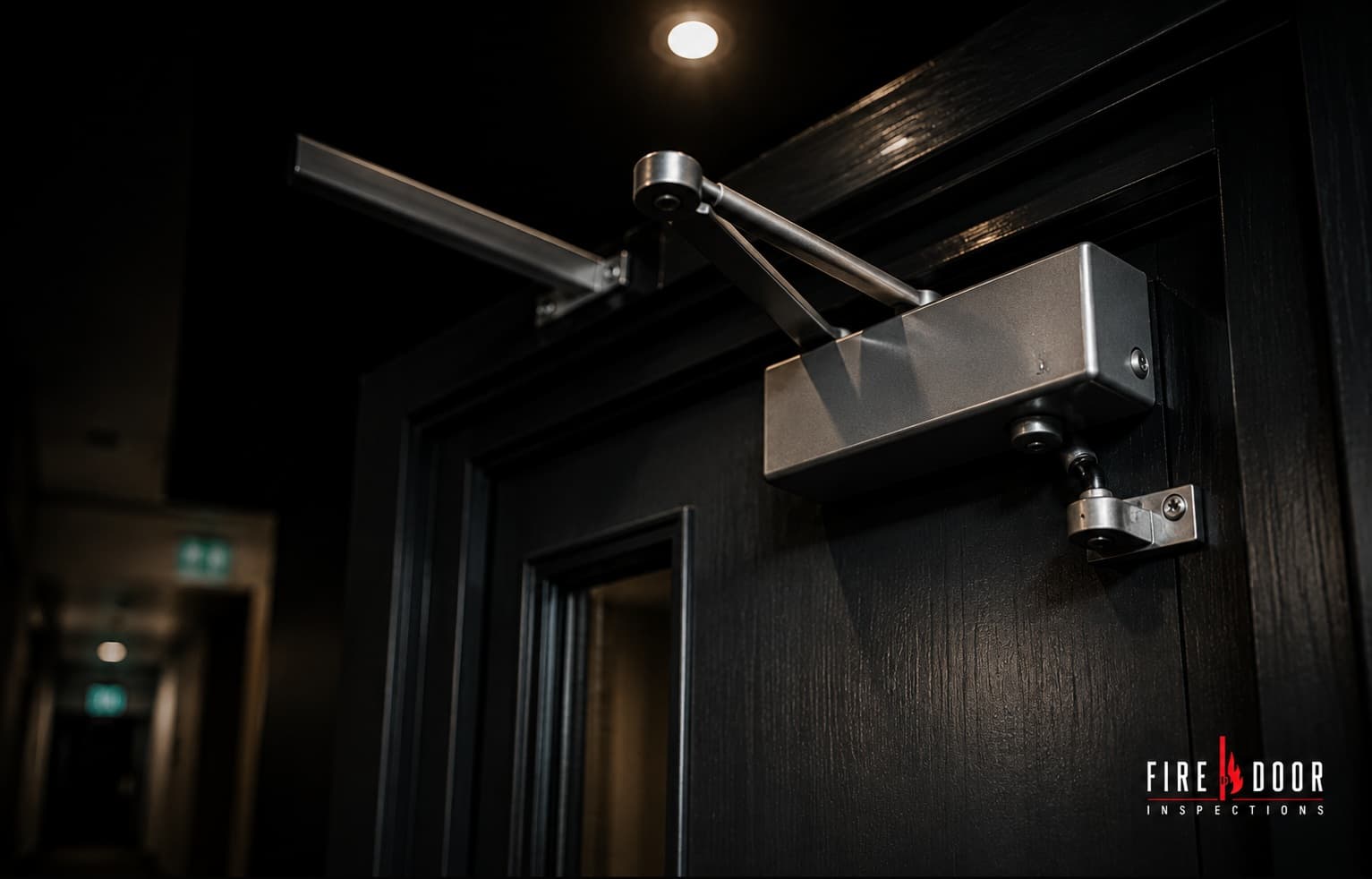
Faulty Fire Door Self-Closing Devices
A fire door must be able to close correctly when required. If the self-closing device is faulty, disconnected, weak, damaged or incorrectly adjusted, the door may remain open or fail to latch into the frame.
Defect Overview
What Are Faulty Self-Closing Devices?
Self-closing devices include overhead closers, concealed closers and other approved closing systems. They should close the door from a suitable open position and allow it to latch properly without obstruction.
For property managers, landlords, facilities managers and responsible persons, closer performance should be reviewed alongside latch engagement, gaps, seals and any obstructions that may prevent full closure.
Risk & Impact
Why This Defect Matters
A fire door that cannot self-close and latch may fail to maintain compartmentation when most needed.
- The door may remain open during a fire
- Smoke and fire separation may fail
- The door may not latch into the frame
- Occupants may rely on a door that does not self-close
- The defect may indicate poor adjustment, damage or obstruction
Inspection Notes
How Inspectors Record Self-Closing Defects
Where closer faults are observed, inspection notes should record the closing test result and any visible damage or disconnection.
- Door reference or location
- Closing test result
- Evidence photo of closer condition
- Latch engagement observation
- Related obstruction, gap or hinge notes
- Suggested remedial priority where applicable
Closing performance is assessed during inspection where safe and practical. Adjustment, repair or replacement should be carried out by competent contractors using suitable hardware.
Visible Indicators
Common Signs of Self-Closing Problems
These are examples of visible indicators that may be recorded where observed during inspection.
Door does not close fully
The door leaf may stop short of the frame and fail to achieve a closed position.
Door closes too slowly or too quickly
Incorrect closer adjustment may affect reliable latching and everyday use.
Door fails to latch
The door may reach the frame but not engage the latch or keep shut position.
Closer arm is damaged or disconnected
Physical damage or disconnection prevents the closer from operating correctly.
Door catches on flooring or frame
Obstruction during closing may prevent full closure and latch engagement.
Door is held open by friction or obstruction
Binding, debris or misalignment may stop the door returning to a closed position.
Oil leakage or visible damage to the closer
Wear or fluid leakage may indicate a failing or unserviceable closer unit.
Remedial Planning
What Should Be Done Next?
The next action depends on severity, building type and inspection findings. Closer defects should be addressed by competent contractors through adjustment, repair or suitable replacement.
Recommended next steps may include:
- Record the door closing test result
- Photograph damaged or disconnected closer parts
- Check latch, hinges, gaps, seals and flooring obstruction
- Arrange competent adjustment, repair or replacement
- Retest the door after remedial works
Typical journey after a defect is recorded: inspection finding → defect noted in the fire door report → remedial works planned → re-inspection confirms the issue has been addressed where appropriate → door register or report evidence updated. See also inspection limitations and next steps after defects are found. For London bookings, see fire door inspections London.
Seeing a different visible issue? Use the Fire Door Defect Identifier to find the closest guidance and next steps.
FAQ
Common Questions About This Defect
What if the fire door closes but does not latch into the keep?
Is closer adjustment enough, or does a faulty closer need replacing?
Will a door that fails to self-close normally be recorded as a defect?
Should the door be retested after closer repair or replacement?
Related Defects
Related Fire Door Defects
Other common fire door inspection defects that may be recorded alongside this issue.
Defect Guide
Doors Wedged Open
Fire doors held open without approved hold-open devices cannot perform their protective function.
View defect guideDefect Guide
Excessive Gaps
Gaps exceeding accepted tolerances can reduce smoke and fire separation performance.
View defect guideDefect Guide
Damaged Frames
Frame damage can affect fixing, alignment, smoke control and the fire-resisting performance of the door set.
View defect guideDefect Guide
Damaged or Missing Seals
Intumescent and smoke seals must be continuous, correctly fitted and undamaged to support door performance.
View defect guideDefect Guide
Fire Door Regulations
Fire door requirements depend on the building type, use, risk profile and applicable fire safety duties.
View defect guide
Book an Inspection
Need Fire Door Defects Recorded Clearly?
Book a professional fire door inspection and receive clear evidence photos, defect notes and practical remedial guidance for your building.
Related Fire Door Inspection Resources
- Fire door defect identifier
- Fire door inspection defects hub
- Fire door inspection service
- Fire door reports
- Sample fire door inspection report
- Visible fire door defect checklist
- Responsible-person fire door checklist
- Fire door remedial works
- Fire door re-inspections
- Inspection limitations
- London fire door inspections
- Inspection report dashboard
- Request a fire door inspection quote