
Defect Guide
Fire Door Regulations and Inspection Defects
Fire door requirements depend on the building type, layout, risk profile and applicable fire safety duties. Inspections help identify visible defects that may affect fire door performance and management.
Defect Overview
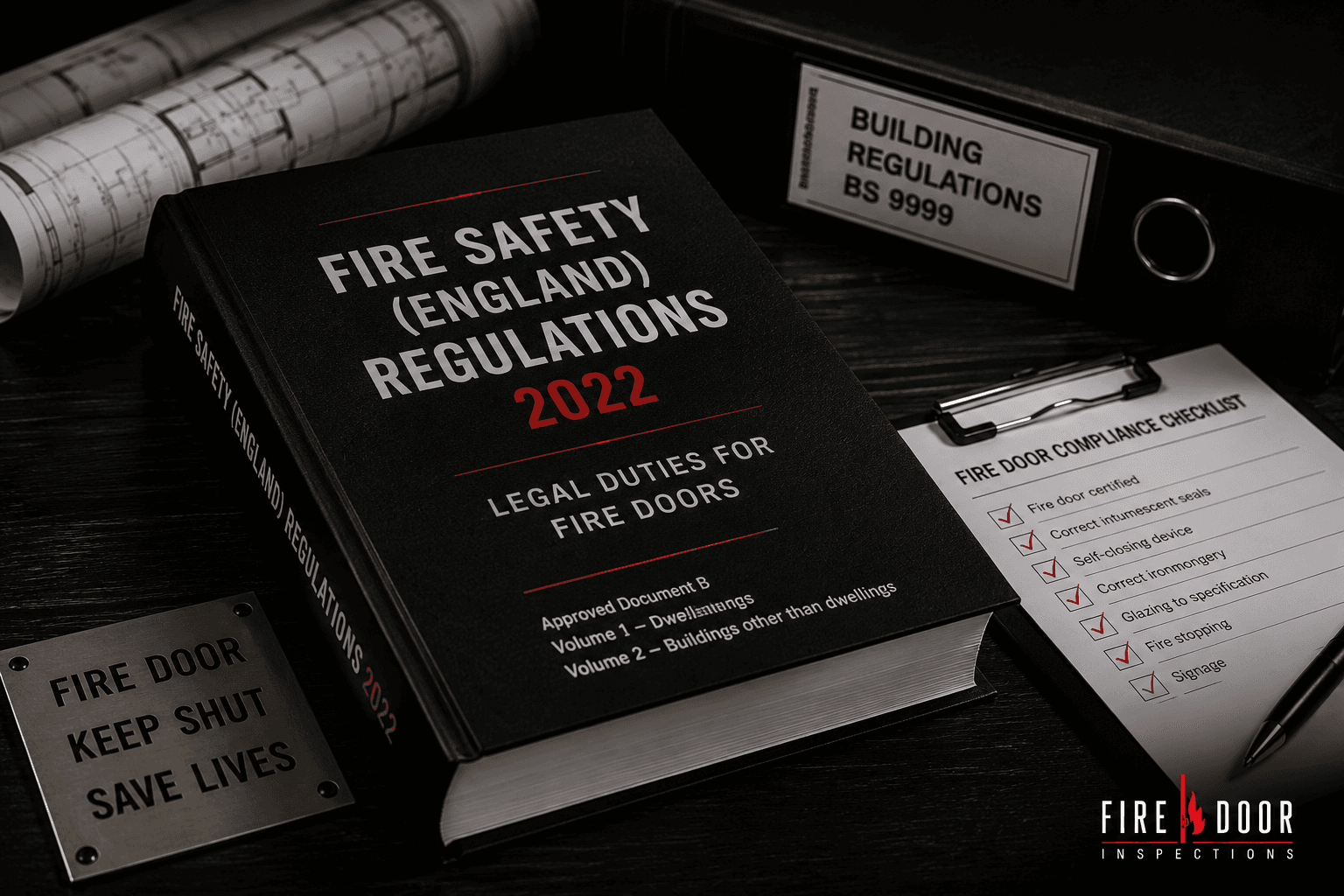
What Are Fire Door Regulations?
Fire door requirements are shaped by fire safety law, building standards, fire risk assessments, management duties and the intended purpose of the door. Requirements may differ between building types, uses and risk profiles.
For property managers, landlords, facilities managers and responsible persons, inspection findings should be considered alongside wider fire safety management duties and the building fire strategy.
This page provides general guidance only and does not constitute legal advice. Fire safety duties and inspection scope should be confirmed for the specific building.
Risk & Impact
Why This Defect Matters
Understanding how regulations relate to visible defects helps duty holders prioritise remedial action and maintain clearer records.
- Fire doors support compartmentation and escape routes
- Defects may affect the building fire strategy
- Inspection records help duty holders understand visible issues
- Different buildings may require different inspection scopes
- Fire risk assessments may identify doors requiring attention
Inspection Notes
How Inspection Findings Support Compliance Records
Structured inspection records help duty holders understand visible defects and plan remedial action within their wider fire safety management responsibilities.
- Door reference or location
- Visible defect observations
- Evidence photos where recorded
- Related component or operational notes
- Suggested remedial priority where applicable
- Scope and access limitations where relevant
Inspection records visible door condition at the time of visit. Legal duties, inspection frequency and remedial requirements should be confirmed for the specific building and risk profile.
Visible Indicators
Common Defects Relevant to Fire Door Compliance
These are examples of visible issues that may be recorded during inspection and considered within wider fire safety management.
Damaged or poorly maintained fire doors
General condition issues may affect the performance of the complete door set.
Missing or damaged seals
Seal defects may reduce smoke control and fire separation performance.
Faulty self-closing devices
Doors that do not self-close may fail to protect compartments when needed.
Excessive gaps or poor alignment
Gap and alignment issues may affect sealing and fire-resisting performance.
Missing signage
Absent or unclear signage may affect correct door use and management.
Unauthorised alterations
Unsupported modifications may affect certification and door set performance.
Missing inspection or maintenance records
Incomplete records may make it harder to track door condition and remedial history.
Remedial Planning
What Should Be Done Next?
The next action depends on building type, risk profile and inspection findings. Visible defects should be reviewed alongside the fire risk assessment and wider management duties.
Recommended next steps may include:
- Confirm the inspection scope before booking
- Review fire door findings alongside the fire risk assessment
- Prioritise defects based on risk and location
- Arrange competent remedial works where required
- Keep inspection and remedial records updated
Typical journey after a defect is recorded: inspection finding → defect noted in the fire door report → remedial works planned → re-inspection confirms the issue has been addressed where appropriate → door register or report evidence updated. See also inspection limitations and next steps after defects are found. For London bookings, see fire door inspections London.
Seeing a different visible issue? Use the Fire Door Defect Identifier to find the closest guidance and next steps.
Related Defects
Related Fire Door Defects
Other common fire door inspection defects that may be recorded alongside this issue.
Defect Guide
Defect Reporting Checklist
See how door references, photo evidence and defect notes are recorded consistently in inspection reports.
View defect guideDefect Guide
Fire Stopping Issues
Incomplete or damaged fire stopping around the frame can create pathways for fire and smoke spread.
View defect guideDefect Guide
Faulty Self-Closing Devices
A fire door that does not close fully may fail to protect the compartment when needed.
View defect guideDefect Guide
Damaged or Missing Seals
Intumescent and smoke seals must be continuous, correctly fitted and undamaged to support door performance.
View defect guideDefect Guide
Doors Wedged Open
Fire doors held open without approved hold-open devices cannot perform their protective function.
View defect guide
Book an Inspection
Need Fire Door Defects Recorded Clearly?
Book a professional fire door inspection and receive clear evidence photos, defect notes and practical remedial guidance for your building.
Related Fire Door Inspection Resources
- Fire door defect identifier
- Fire door inspection defects hub
- Fire door inspection service
- Fire door reports
- Sample fire door inspection report
- Visible fire door defect checklist
- Responsible-person fire door checklist
- Fire door remedial works
- Fire door re-inspections
- Inspection limitations
- London fire door inspections
- Inspection report dashboard
- Request a fire door inspection quote