
Defect Guide
Visible Fire Door Defect Checklist
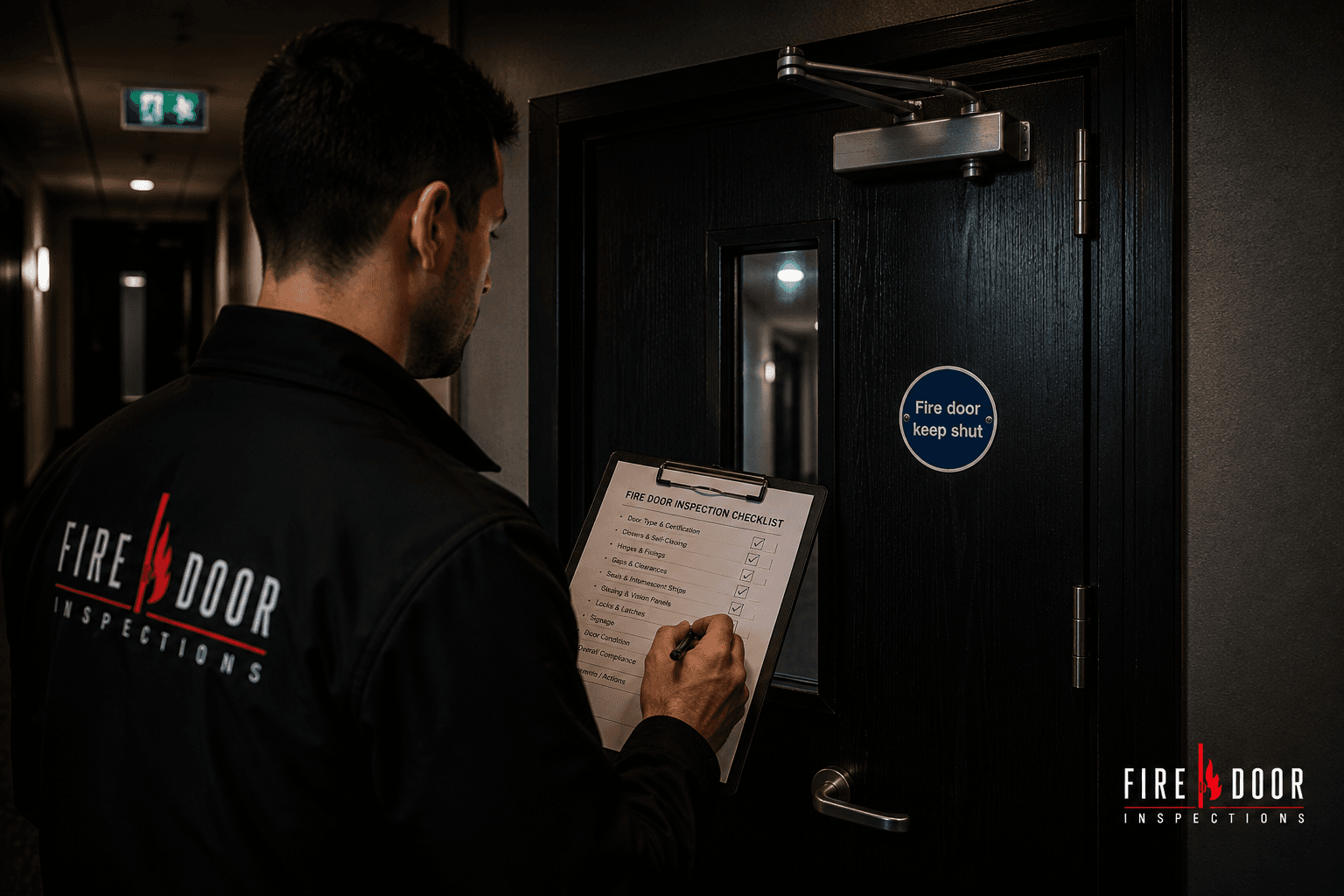
During a professional fire door inspection, defects are documented with door references, photo evidence, location notes, condition observations and remedial comments. This visible fire door defect checklist explains how reporting structures that evidence for building managers and managing agents — not routine in-house responsible-person checks.
Defect Overview
What Is a Defect Reporting Checklist?
A defect reporting checklist is the structured record used during a professional fire door inspection to capture door location or reference, photo evidence, gap observations, seal condition, closer operation, ironmongery, signage, glazing, frame and leaf condition, obstructions, severity notes and remedial observations for each door set.
For building managers and managing agents receiving a report, checklist-style records show how visible issues were documented consistently across multiple doors — supporting comparison, remedial planning, contractor instructions and internal records.
This is different from a responsible-person fire door checklist for routine visible checks. For that practical compliance management guidance, see our compliance fire door checklist page.
Defect observations depend on the condition visible at the time of inspection. This page explains reporting structure only and does not replace a professional inspection, fire risk assessment, or competent judgement.
Risk & Impact
Why This Defect Matters
Structured defect reporting helps ensure visible issues are captured consistently, with enough detail for remedial planning and follow-up inspection.
- Supports consistent door references across a building or portfolio
- Links photo evidence to specific locations and observations
- Helps building managers prioritise remedial work
- Creates clearer contractor instructions from written notes
- Supports re-inspection and internal record keeping
Inspection Notes
How Defects Are Recorded During Inspection
Inspectors use a reporting checklist to capture the same evidence fields for each door, supporting clearer comparison and remedial planning.
- Door location or asset reference
- Photo evidence of visible defects
- Gap and alignment observations
- Seal and intumescent strip condition
- Self-closer, latch and hinge operation
- Signage, glazing and ironmongery notes
- Frame, leaf and obstruction observations
- Severity or priority notes where applicable
- Remedial observations and re-inspection notes
Reporting scope should be confirmed before inspection. Observations depend on access, door configuration and the agreed inspection programme.
Visible Indicators
Common Reporting Checklist Fields
These are examples of fields commonly recorded when documenting visible fire door defects in an inspection report.
Door location or reference
Each door is identified with a location, flat number, corridor reference or asset ID to support follow-up.
Photo evidence
Photographs help show defect condition, location and severity where captured during inspection.
Gap observations
Gap measurements or descriptive notes may be recorded where gaps appear excessive or inconsistent.
Seals and intumescent strips
Seal continuity, damage, missing sections or poor engagement may be noted with supporting photos.
Self-closer operation
Closer performance, latch engagement and closing speed may be observed and described where tested.
Hinges and ironmongery
Hinge security, fixings and visible hardware condition may be recorded where relevant to door function.
Signage and glazing
Signage presence and glazed panel condition may be noted where visible on the door set.
Frame and leaf condition
Damage, distortion, repairs or alterations to the door leaf and frame may be documented with notes.
Obstructions or wedging
Doors held open without approved devices or blocked closing paths may be recorded as observations.
Severity and remedial notes
Priority guidance, remedial observations and re-inspection notes may support internal planning.
Remedial Planning
What Should Be Done Next?
After defects are recorded, building managers can use the report to plan remedial work, brief contractors and arrange follow-up where needed.
Typical next steps may include:
- Review door references and photo evidence in the report
- Prioritise issues using severity or priority notes where provided
- Brief contractors with location notes and defect descriptions
- Plan remedial work and access for follow-up
- Arrange re-inspection where defects have been addressed
- Retain records alongside wider fire safety management
Typical journey after a defect is recorded: inspection finding → defect noted in the fire door report → remedial works planned → re-inspection confirms the issue has been addressed where appropriate → door register or report evidence updated. See also inspection limitations and next steps after defects are found. For London bookings, see fire door inspections London.
Seeing a different visible issue? Use the Fire Door Defect Identifier to find the closest guidance and next steps.
Related Defects
Related Fire Door Defects
Other common fire door inspection defects that may be recorded alongside this issue.
Defect Guide
Responsible Person Fire Door Checklist
Routine visible checks for responsible persons and property teams — separate from formal defect reporting during inspection.
View defect guideDefect Guide
What Inspectors Look For (Blog Explainer)
Plain-English narrative of common inspection checklist items — educational support, not a dutyholder routine checklist or formal defect report template.
View defect guideDefect Guide
Inspection Report Dashboard
See how structured reports present defects, evidence photos and recommended actions for duty holders.
View defect guideDefect Guide
Excessive Gaps
Gaps exceeding accepted tolerances can reduce smoke and fire separation performance.
View defect guideDefect Guide
Damaged or Missing Seals
Intumescent and smoke seals must be continuous, correctly fitted and undamaged to support door performance.
View defect guideDefect Guide
Faulty Self-Closing Devices
A fire door that does not close fully may fail to protect the compartment when needed.
View defect guideDefect Guide
Fire Door Regulations
Fire door requirements depend on the building type, use, risk profile and applicable fire safety duties.
View defect guide
Inspection Reports
See How Defects Are Documented in Practice
View a sample fire door inspection report or request a quote to discuss structured defect reporting for your building or portfolio.
Related Fire Door Inspection Resources
- Fire door defect identifier
- Fire door inspection defects hub
- Fire door inspection service
- Fire door reports
- Sample fire door inspection report
- Visible fire door defect checklist
- Responsible-person fire door checklist
- Fire door remedial works
- Fire door re-inspections
- Inspection limitations
- London fire door inspections
- Inspection report dashboard
- Request a fire door inspection quote