
Defect Guide
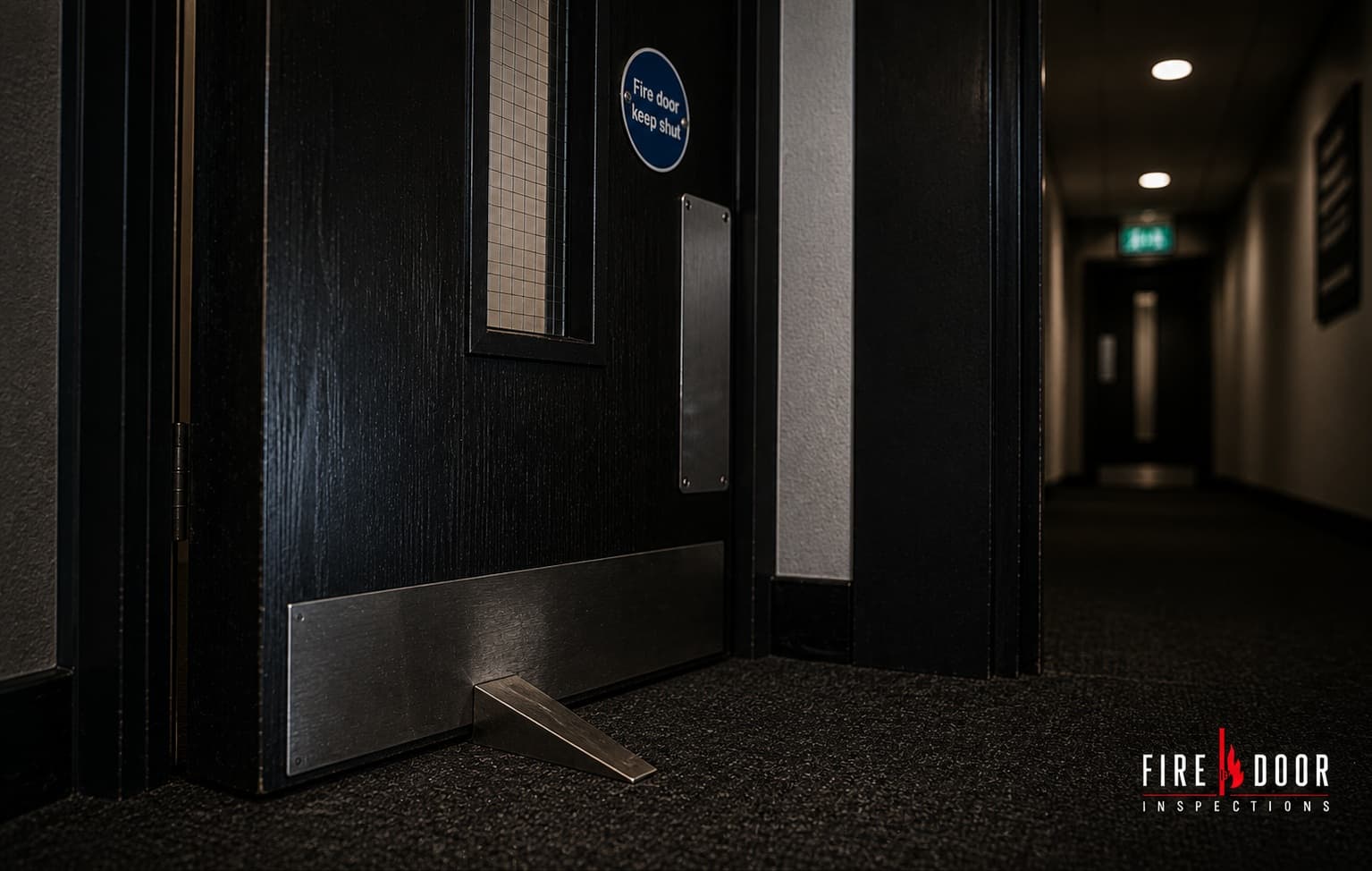
Fire Doors Wedged Open
A fire door that is wedged, propped or held open without an approved hold-open device may not protect the escape route or compartment when needed. This is a common operational defect recorded during fire door inspections.
Defect Overview
What Are Fire Doors Wedged Open?
Fire doors should normally remain closed or be held open only by suitable approved devices designed to release when required. Unapproved wedges, furniture, hooks or obstructions can prevent the door from closing.
For property managers, landlords, facilities managers and responsible persons, wedged-open doors are often an operational and management issue as well as a physical defect, particularly in busy buildings and escape routes.
Risk & Impact
Why This Defect Matters
A wedged-open fire door cannot provide the intended level of protection if a fire or smoke incident occurs.
- The fire door cannot close when needed
- Smoke may spread into escape routes
- Compartmentation may be defeated
- Occupants may become used to unsafe door operation
- The issue may indicate poor building management or access problems
Inspection Notes
How Inspectors Record Wedged-Open Defects
Where a door is found held open without approval, inspection notes should record the method used and the door location.
- Door reference or location
- Evidence photo of wedge or hold-open method
- Description of how the door is held open
- Self-closing test result where checked
- Related closer or obstruction notes
- Suggested remedial priority where applicable
Wedged-open defects are typically recorded as observed on site. Management action and closer retesting may be needed to confirm the door can operate correctly once the obstruction is removed.
Visible Indicators
Common Signs of Wedged-Open Doors
These are examples of visible indicators that may be recorded where observed during inspection.
Door wedge placed under the leaf
A physical wedge is one of the most common methods used to hold a fire door open.
Door held open by furniture or equipment
Chairs, bins, trolleys or other items may be used to prop the door in an open position.
Hook, chain or unapproved retainer fitted
Informal retainers can prevent the door from closing unless removed manually.
Door propped open for ventilation or convenience
Routine convenience practices can defeat the protective function of the door set.
Closer disconnected to keep the door open
Disabling the closer removes the door's ability to self-close when required.
Damaged flooring or threshold causing users to prop the door
Practical access problems may lead occupants to hold doors open informally.
Door repeatedly left open in a high-traffic area
Frequent open use in busy locations may indicate management or layout issues.
Remedial Planning
What Should Be Done Next?
The next action depends on severity, building type and inspection findings. Wedged-open defects usually require immediate management action and may need closer adjustment or approved hold-open solutions where appropriate.
Recommended next steps may include:
- Record the door location and method used to hold it open
- Photograph the wedge, obstruction or unapproved retainer
- Check whether the self-closing device works correctly
- Remove unsafe hold-open practices through management action
- Consider approved hold-open solutions where appropriate, then re-inspect if needed
Typical journey after a defect is recorded: inspection finding → defect noted in the fire door report → remedial works planned → re-inspection confirms the issue has been addressed where appropriate → door register or report evidence updated. See also inspection limitations and next steps after defects are found. For London bookings, see fire door inspections London.
Seeing a different visible issue? Use the Fire Door Defect Identifier to find the closest guidance and next steps.
FAQ
Common Questions About This Defect
Is wedging a fire door open treated as an inspection defect?
How do approved hold-open devices differ from wedges or door stops?
What should building managers do as soon as a wedged fire door is found?
Do wedged-open findings always need a formal re-inspection?
Related Defects
Related Fire Door Defects
Other common fire door inspection defects that may be recorded alongside this issue.
Defect Guide
Faulty Self-Closing Devices
A fire door that does not close fully may fail to protect the compartment when needed.
View defect guideDefect Guide
Excessive Gaps
Gaps exceeding accepted tolerances can reduce smoke and fire separation performance.
View defect guideDefect Guide
Damaged Frames
Frame damage can affect fixing, alignment, smoke control and the fire-resisting performance of the door set.
View defect guideDefect Guide
Poor or Missing Signage
Fire door signage helps occupants understand the door purpose and correct operation.
View defect guideDefect Guide
Fire Door Regulations
Fire door requirements depend on the building type, use, risk profile and applicable fire safety duties.
View defect guide
Book an Inspection
Need Fire Door Defects Recorded Clearly?
Book a professional fire door inspection and receive clear evidence photos, defect notes and practical remedial guidance for your building.
Related Fire Door Inspection Resources
- Fire door defect identifier
- Fire door inspection defects hub
- Fire door inspection service
- Fire door reports
- Sample fire door inspection report
- Visible fire door defect checklist
- Responsible-person fire door checklist
- Fire door remedial works
- Fire door re-inspections
- Inspection limitations
- London fire door inspections
- Inspection report dashboard
- Request a fire door inspection quote