
Defect Guide
Excessive Fire Door Gaps
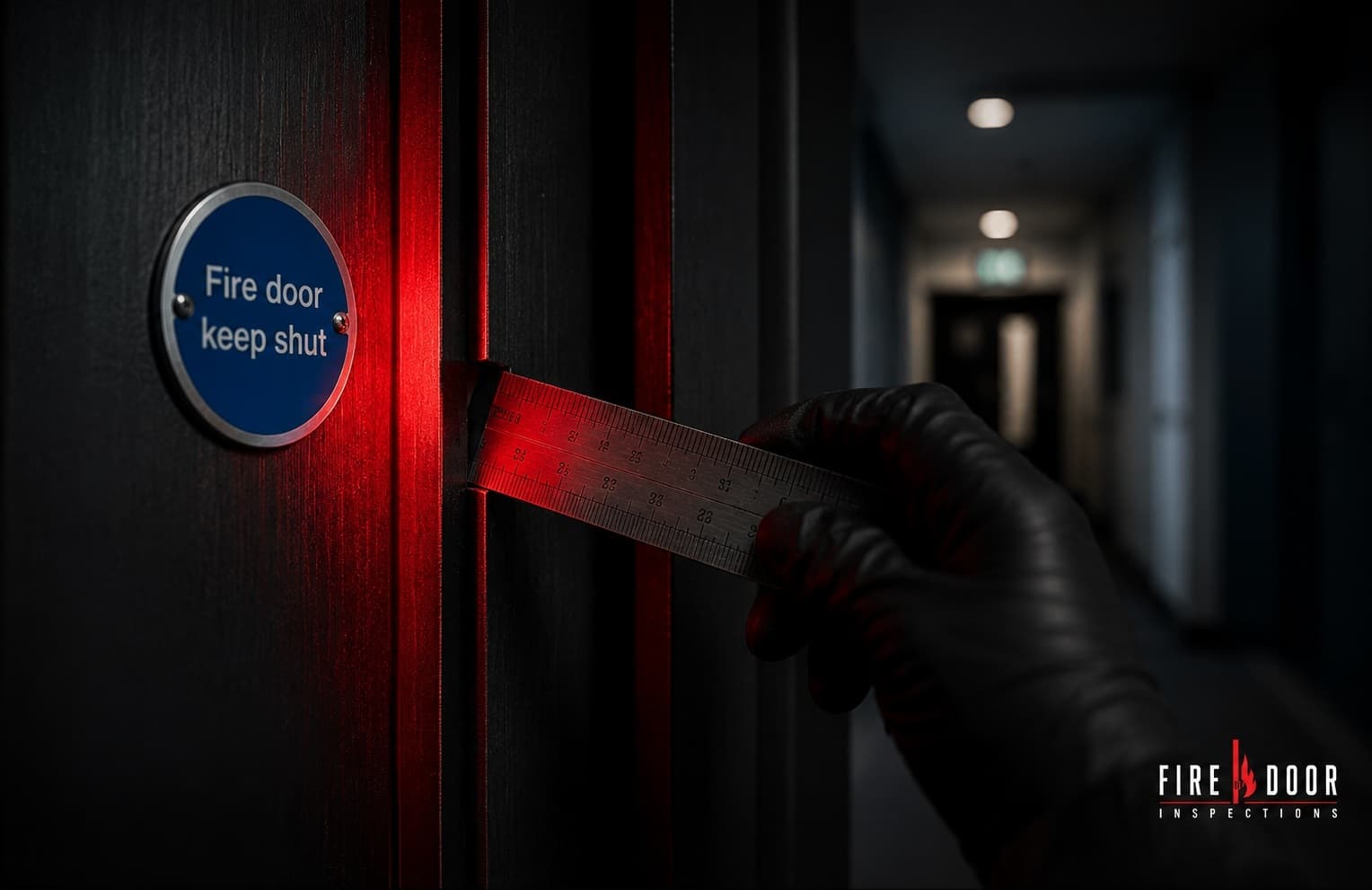
Gaps around a fire door must be reviewed carefully because excessive or inconsistent gaps can reduce smoke control, fire separation and the overall performance of the door set. During inspection, gap issues should be recorded with evidence photos, location notes and practical remedial guidance.
Defect Overview
What Are Excessive Fire Door Gaps?
Gaps are the clearances around the door leaf, frame, threshold and meeting edges. Excessive, uneven or poorly controlled gaps may affect the ability of the fire door set to resist fire and smoke spread.
For property managers, landlords, facilities managers and responsible persons, gap tolerances should be reviewed in context with door alignment, seals, frame condition and the intended performance of the complete door set.
Risk & Impact
Why This Defect Matters
Gap defects can affect how effectively a fire door set restricts smoke movement and maintains separation between compartments.
- Smoke and fire may pass around the door leaf
- The door may not sit correctly within the frame
- Seals may not engage effectively
- Excessive threshold gaps may affect smoke control
- The issue may indicate frame movement, poor installation or later damage
Inspection Notes
How Inspectors Record Excessive Gap Defects
Where gap concerns are observed, inspection notes should identify the affected edges and any related alignment or sealing issues.
- Door reference or location
- Evidence photo of visible gaps
- Affected edges (head, hinge, closing, threshold)
- Visible gap inconsistency or concern where recorded
- Related alignment, seal or frame observations
- Suggested remedial priority where applicable
Visible gap observations are recorded at the time of inspection. Further adjustment, investigation or specialist review may be needed depending on door configuration and site conditions.
Visible Indicators
Common Signs of Excessive Gap Problems
These are examples of visible indicators that may be recorded where observed during inspection.
Large gaps around the door leaf
Clearances that appear wider than expected may reduce the effectiveness of seals and fire separation.
Uneven gaps on the hinge or closing side
Inconsistent clearances may suggest alignment problems, frame movement or poor installation.
Excessive gap at the threshold
A large threshold clearance may allow increased smoke movement at floor level.
Door leaf rubbing or sitting out of alignment
Misalignment can prevent the door from closing correctly and may affect seal contact.
Seals not making proper contact
Gaps that prevent seals engaging may reduce smoke control performance.
Frame distortion or movement
Movement in the frame can create changing or excessive clearances around the door leaf.
Evidence of poor previous adjustment
Repeated planing, packing or informal adjustment may indicate unresolved gap issues.
Remedial Planning
What Should Be Done Next?
The next action depends on severity, building type and inspection findings. Gap-related defects should be addressed by competent contractors or specialists using appropriate methods — not informal adjustment alone.
Recommended next steps may include:
- Record the door location and affected edges
- Photograph visible gap concerns
- Review alignment, hinges, seals and frame condition
- Arrange competent adjustment or remedial works where needed
- Reinspect after remedial works if required
Typical journey after a defect is recorded: inspection finding → defect noted in the fire door report → remedial works planned → re-inspection confirms the issue has been addressed where appropriate → door register or report evidence updated. See also inspection limitations and next steps after defects are found. For London bookings, see fire door inspections London.
Seeing a different visible issue? Use the Fire Door Defect Identifier to find the closest guidance and next steps.
FAQ
Common Questions About This Defect
Does an excessive gap automatically mean the door fails inspection?
Can excessive gaps around a fire door be adjusted rather than replaced?
How are gaps usually assessed during a UK commercial fire door inspection?
Is re-inspection recommended after gap adjustment or remedial works?
Related Defects
Related Fire Door Defects
Other common fire door inspection defects that may be recorded alongside this issue.
Defect Guide
Damaged or Missing Seals
Intumescent and smoke seals must be continuous, correctly fitted and undamaged to support door performance.
View defect guideDefect Guide
Damaged Frames
Frame damage can affect fixing, alignment, smoke control and the fire-resisting performance of the door set.
View defect guideDefect Guide
Faulty Self-Closing Devices
A fire door that does not close fully may fail to protect the compartment when needed.
View defect guideDefect Guide
Fire Stopping Issues
Incomplete or damaged fire stopping around the frame can create pathways for fire and smoke spread.
View defect guideDefect Guide
Fire Door Regulations
Fire door requirements depend on the building type, use, risk profile and applicable fire safety duties.
View defect guide
Book an Inspection
Need Fire Door Defects Recorded Clearly?
Book a professional fire door inspection and receive clear evidence photos, defect notes and practical remedial guidance for your building.
Related Fire Door Inspection Resources
- Fire door defect identifier
- Fire door inspection defects hub
- Fire door inspection service
- Fire door reports
- Sample fire door inspection report
- Visible fire door defect checklist
- Responsible-person fire door checklist
- Fire door remedial works
- Fire door re-inspections
- Inspection limitations
- London fire door inspections
- Inspection report dashboard
- Request a fire door inspection quote