
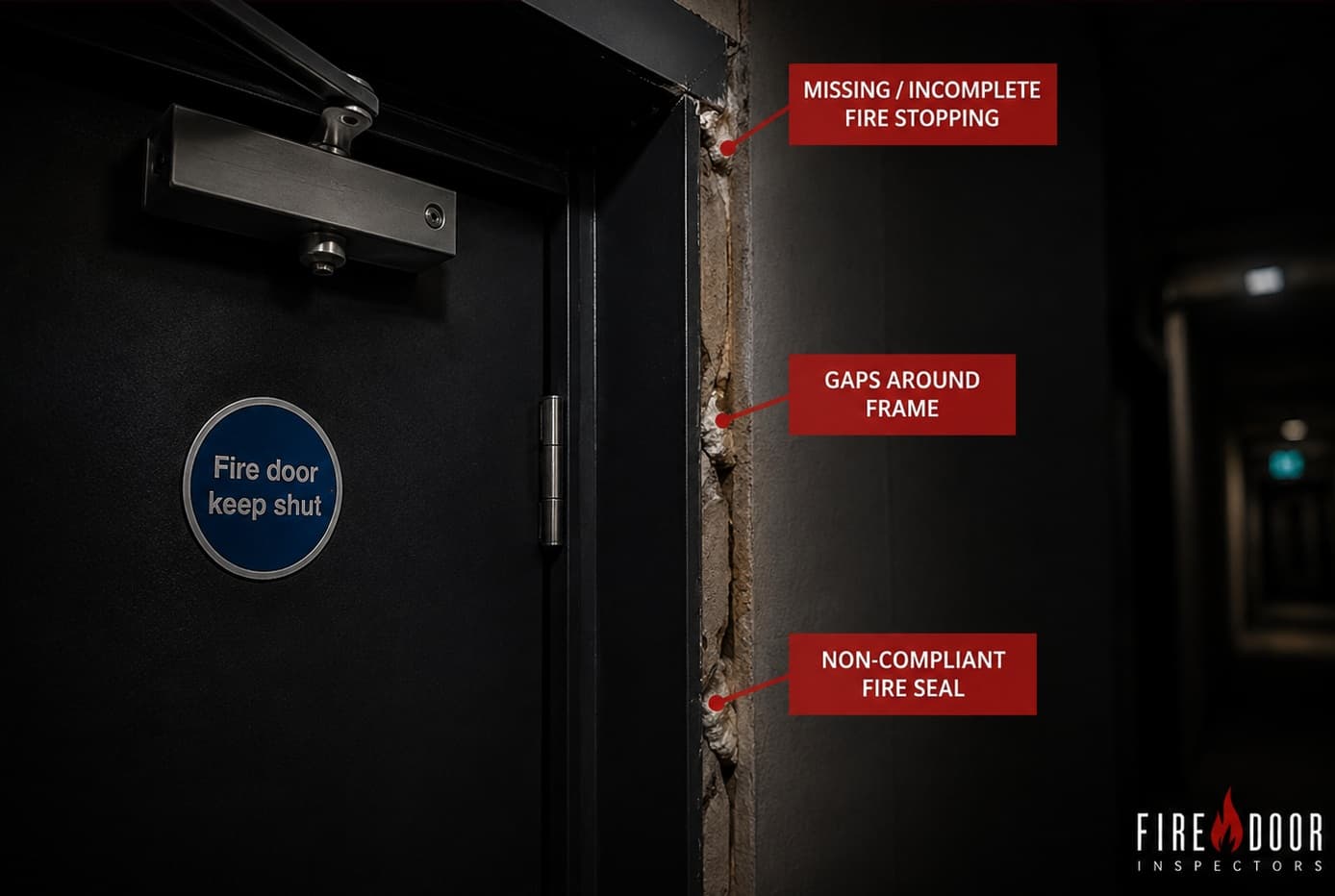
Defect Guide
Fire Stopping Issues Around Fire Doors
Incomplete, missing or damaged fire stopping around a fire door frame can create hidden pathways for fire and smoke spread. During inspection, this defect should be clearly recorded with evidence photos, location notes and appropriate remedial guidance.
Defect Overview
What Are Fire Stopping Issues?
Fire stopping is the fire-resistant material or system used to seal gaps, openings and service penetrations around the fire door frame and surrounding wall construction. If it is incomplete, missing, incorrectly installed or damaged, the fire door set may not provide the expected level of compartmentation.
For property managers, landlords, facilities managers and responsible persons, the key point is that fire stopping works with the door, frame and seals to help contain fire and smoke. A defect in this area may not always be obvious during routine use, which is why structured inspection and photographic evidence can be important.
Risk & Impact
Why This Defect Matters
Fire stopping defects can affect how a door set performs as part of the wider fire strategy for a building.
- Fire and smoke may bypass the door set
- Compartmentation can be weakened
- Escape routes may be affected
- The defect may require remedial works by a competent contractor
- Poor previous installation or later damage may not be obvious without inspection
Inspection Notes
How Inspectors Record Fire Stopping Defects
Where fire stopping issues are observed, inspection notes should be clear enough for duty holders and contractors to understand what was found.
- Door reference or location
- Evidence photo
- Description of missing, damaged or incomplete fire stopping
- Visible gaps around frame
- Related seal, frame or alignment issues
- Suggested remedial priority where applicable
Non-invasive inspections may only record visible evidence at the time of visit. Where fire stopping is concealed within the wall construction, further investigation by a competent specialist may be needed if a defect is suspected but cannot be confirmed from visible inspection alone.
Visible Indicators
Common Signs of Fire Stopping Problems
These are examples of visible indicators that may be recorded where observed during inspection.
Open gaps around the frame
Visible voids between the frame and surrounding wall construction may indicate missing or failed fire stopping.
Crumbling or missing material
Damaged, loose or absent fire-resistant material around the opening can reduce the intended fire separation.
Poorly filled voids
Incomplete filling of gaps or service openings may leave unprotected pathways around the door set.
Damaged frame edges
Frame damage at the interface with the wall can disturb fire stopping and affect overall performance.
Visible separation between frame and wall
A clear gap or movement at the frame-to-wall junction may suggest inadequate or failed sealing.
Inconsistent sealant or unsuitable filler
Non-fire-rated fillers or poor application may not provide the required level of protection.
Previous alterations around the door opening
Works around the frame, services or wall construction may have disturbed original fire stopping.
Remedial Planning
What Should Be Done Next?
The next action depends on severity, building type and inspection findings. Fire stopping defects should be addressed by competent contractors using appropriate fire-rated materials and methods — not informal or uncertified repairs.
Recommended next steps may include:
- Recording the defect
- Reviewing the door location and fire strategy
- Arranging competent remedial works
- Reinstating suitable fire stopping
- Re-inspecting or updating records after completion
Typical journey after a defect is recorded: inspection finding → defect noted in the fire door report → remedial works planned → re-inspection confirms the issue has been addressed where appropriate → door register or report evidence updated. See also inspection limitations and next steps after defects are found. For London bookings, see fire door inspections London.
Seeing a different visible issue? Use the Fire Door Defect Identifier to find the closest guidance and next steps.
FAQ
Common Questions About This Defect
What does fire stopping around a fire door frame actually mean?
Are fire-stopping defects always visible during a routine inspection?
Who should carry out remedial fire stopping at a door frame?
Is re-inspection needed once fire stopping has been reinstated?
Related Defects
Related Fire Door Defects
Other common fire door inspection defects that may be recorded alongside this issue.
Defect Guide
Excessive Gaps
Gaps exceeding accepted tolerances can reduce smoke and fire separation performance.
View defect guideDefect Guide
Damaged or Missing Seals
Intumescent and smoke seals must be continuous, correctly fitted and undamaged to support door performance.
View defect guideDefect Guide
Damaged Frames
Frame damage can affect fixing, alignment, smoke control and the fire-resisting performance of the door set.
View defect guideDefect Guide
Faulty Self-Closing Devices
A fire door that does not close fully may fail to protect the compartment when needed.
View defect guideDefect Guide
Fire Door Regulations
Fire door requirements depend on the building type, use, risk profile and applicable fire safety duties.
View defect guide
Book an Inspection
Need Fire Door Defects Recorded Clearly?
Book a professional fire door inspection and receive clear evidence photos, defect notes and practical remedial guidance for your building.
Related Fire Door Inspection Resources
- Fire door defect identifier
- Fire door inspection defects hub
- Fire door inspection service
- Fire door reports
- Sample fire door inspection report
- Visible fire door defect checklist
- Responsible-person fire door checklist
- Fire door remedial works
- Fire door re-inspections
- Inspection limitations
- London fire door inspections
- Inspection report dashboard
- Request a fire door inspection quote