
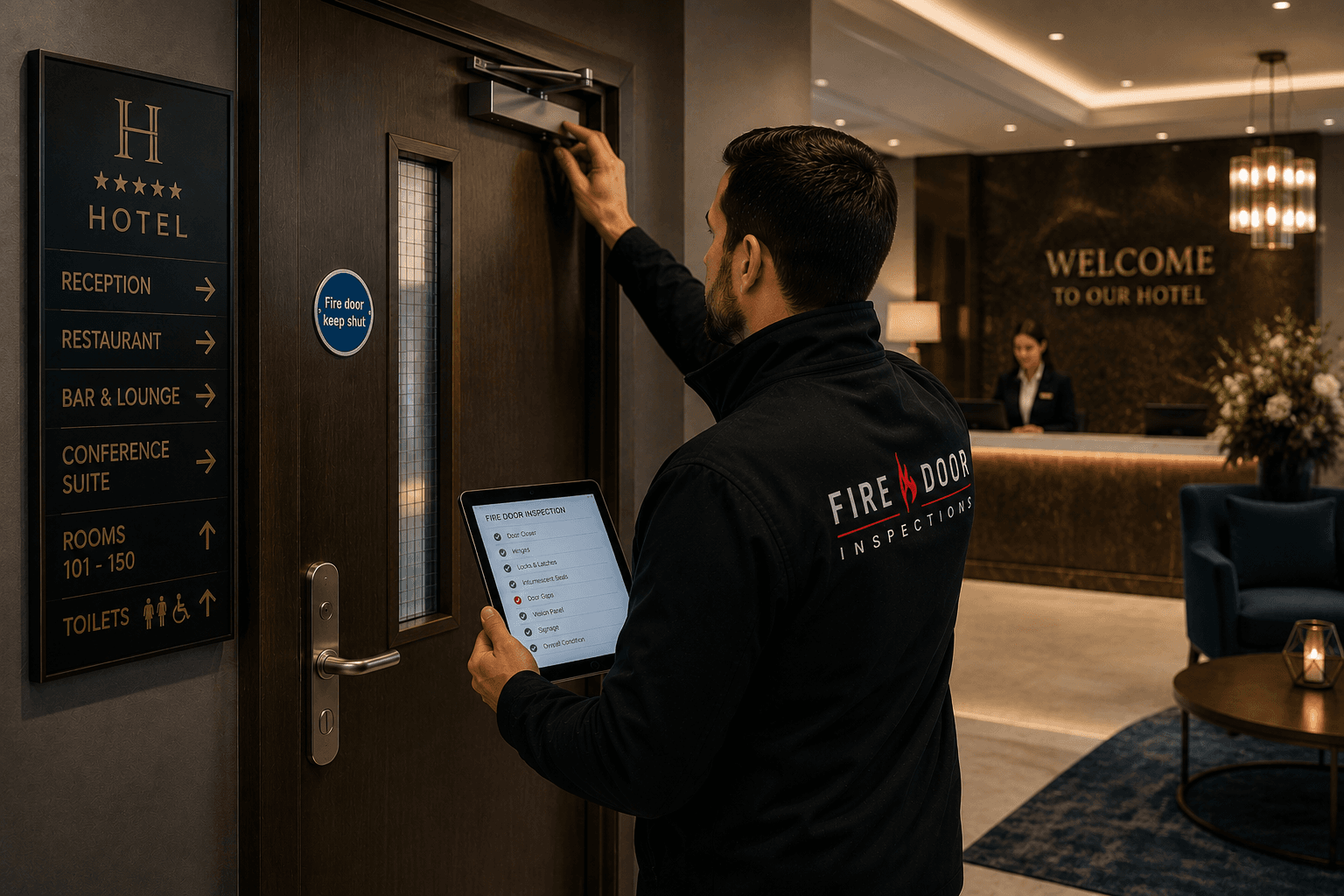
City of London
Fire Door Inspections in City of London
Structured fire door inspections, surveys and reports for City of London properties, including residential blocks, commercial buildings, managed premises and property portfolios.
- Fire door inspections in City of London
- Reports and photo evidence where recorded
- Defect notes and priorities
- Suitable for property teams and portfolios
- London & Greater London coverage
- General guidance only, not legal advice
Direct answer
Fire door inspections in City of London
Fire door inspections can be arranged across the City of London for offices, commercial buildings, mixed-use premises and managed portfolios where scope and access are agreed in advance. Bookings typically come from facilities managers, managing agents and portfolio teams who need structured records of communal routes, office suites and back-of-house fire doors. Reports can include door references, defect observations, priority notes and photographic evidence where recorded during the visit. Where defects are identified, findings can support internal remedial planning, contractor briefings and optional re-inspection after works — they do not replace a fire risk assessment or guarantee statutory compliance. Share your City of London property details, approximate door numbers and any trading-hour or security access constraints via the quote form or contact page to confirm scope and pricing.
Request a quote via get a quote or contact. For the main London service overview, see fire door inspections London.
City of London
Fire Door Inspection Support in City of London
The City of London combines high-density commercial offices, mixed-use buildings and historic premises where fire doors support compartmentation across busy weekday occupancy. Managing agents and facilities teams often coordinate access around trading hours, contractor activity and security requirements. Inspection scope can cover communal doors, office suites, retail frontages and back-of-house routes where agreed in advance. Weekday trading-hour access, security reception sign-in and multi-tenant fit-out coordination are common operational constraints — inspections are usually phased floor-by-floor or core-by-core so occupied trading floors and live tenant areas are not disrupted without prior agreement.
Property management teams and facilities managers overseeing City office portfolios often need consistent door schedules and defect priorities to plan remedial work without disrupting occupied trading floors.
This is a local area page for City of London. For the main London service overview, see fire door inspections London, or browse all areas on the London locations hub.
Inspection reports may support internal records and remedial planning but do not constitute legal advice or guarantee statutory compliance. Responsible persons and duty holders should confirm applicable duties.
City of London Enquiry
Get a Quote
Include the postcode, estimated number of fire doors and property type when you request a quote for City of London.
Areas covered
Areas and postcode districts in City of London
City of London enquiries commonly relate to properties around Bank, Liverpool Street, Moorgate, Barbican and Monument, including EC1, EC2, EC3 and EC4 districts where relevant. Coverage depends on appointment availability, agreed inspection scope and practical access to communal areas, plant rooms and tenant floors where included.
Coverage depends on appointment availability, property access and agreed inspection scope. We do not operate a separate branch in each borough — enquiries are handled through the London service.
Property Types
Property Types We Can Support in City of London
Inspection scope depends on property type, access arrangements and agreed reporting requirements.
- Commercial offices
- Mixed-use buildings
- Managed office portfolios
- Retail and hospitality frontages
- Historic commercial premises
- Residential mansion blocks
- Managing agent portfolios
Inspection Scope
What a Fire Door Inspection in City of London Can Include
Observations depend on inspection scope, site access and door condition. Not every item may apply to every door.
- Door leaf condition
- Frame condition
- Door gaps and alignment
- Intumescent and smoke seals
- Hinges and fixings
- Self-closing devices
- Locks, latches and ironmongery
- Glazing and vision panels
- Fire door signage
- Fire stopping around frames
- Door reference or location
- Defect notes
- Priority guidance
- Photos where recorded
- Access limitations
- Door schedule
For practical inspection guidance, see our fire door inspection defects hub, defect reporting checklist and inspection report dashboard.
Common Issues
Common Fire Door Issues Found in City of London Properties
In the City of London, high footfall, contractor alterations and security-controlled access can contribute to wear, wedged doors and incomplete maintenance records across commercial estates.
Where recorded during inspection, defects are documented with notes and photographic evidence. Explore our fire door inspection defects hub for practical guidance on common issues.
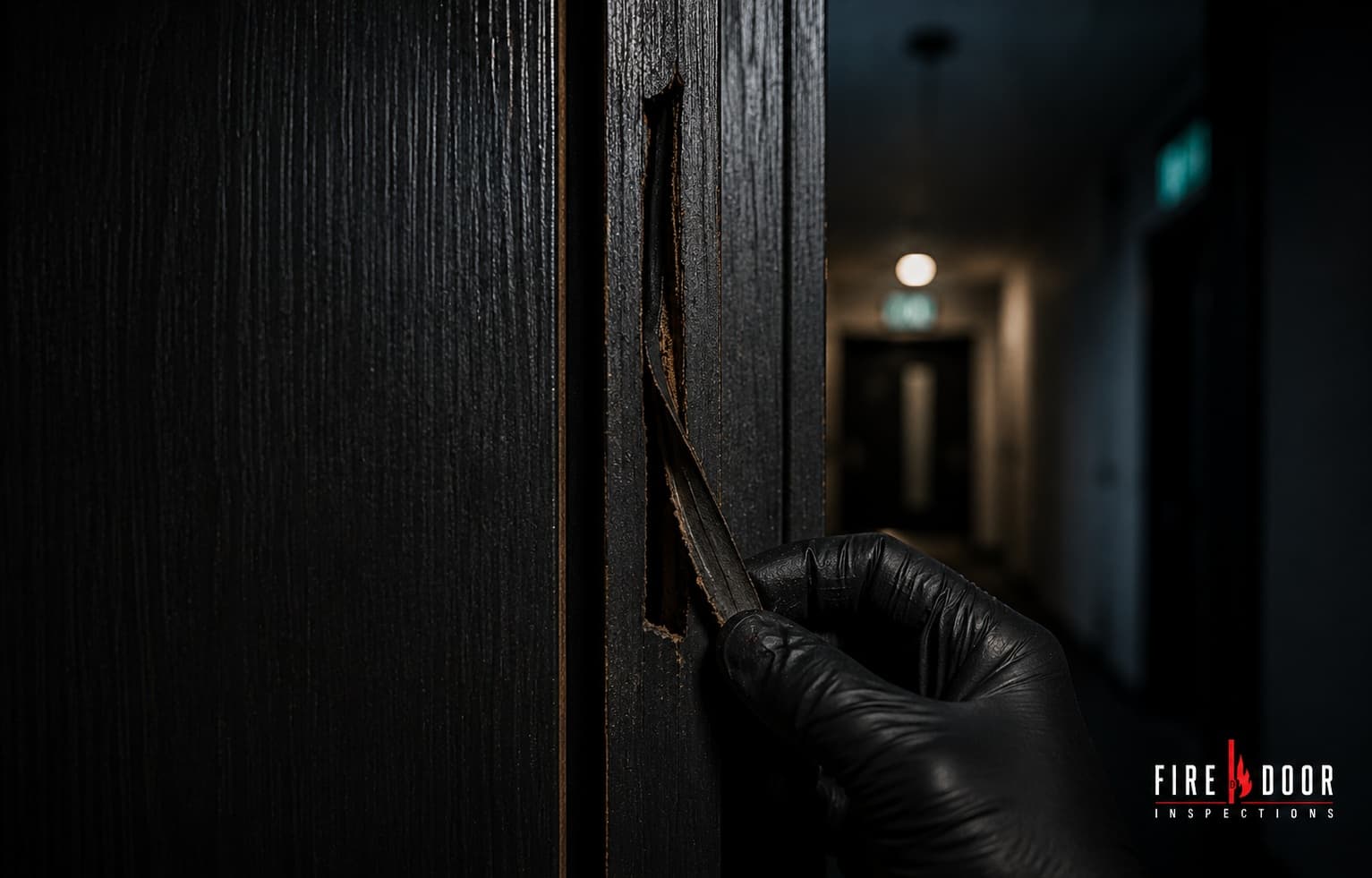
Damaged or missing seals
Intumescent and smoke seals can fail around heavily used office circulation doors and service riser entries.
View defect guide →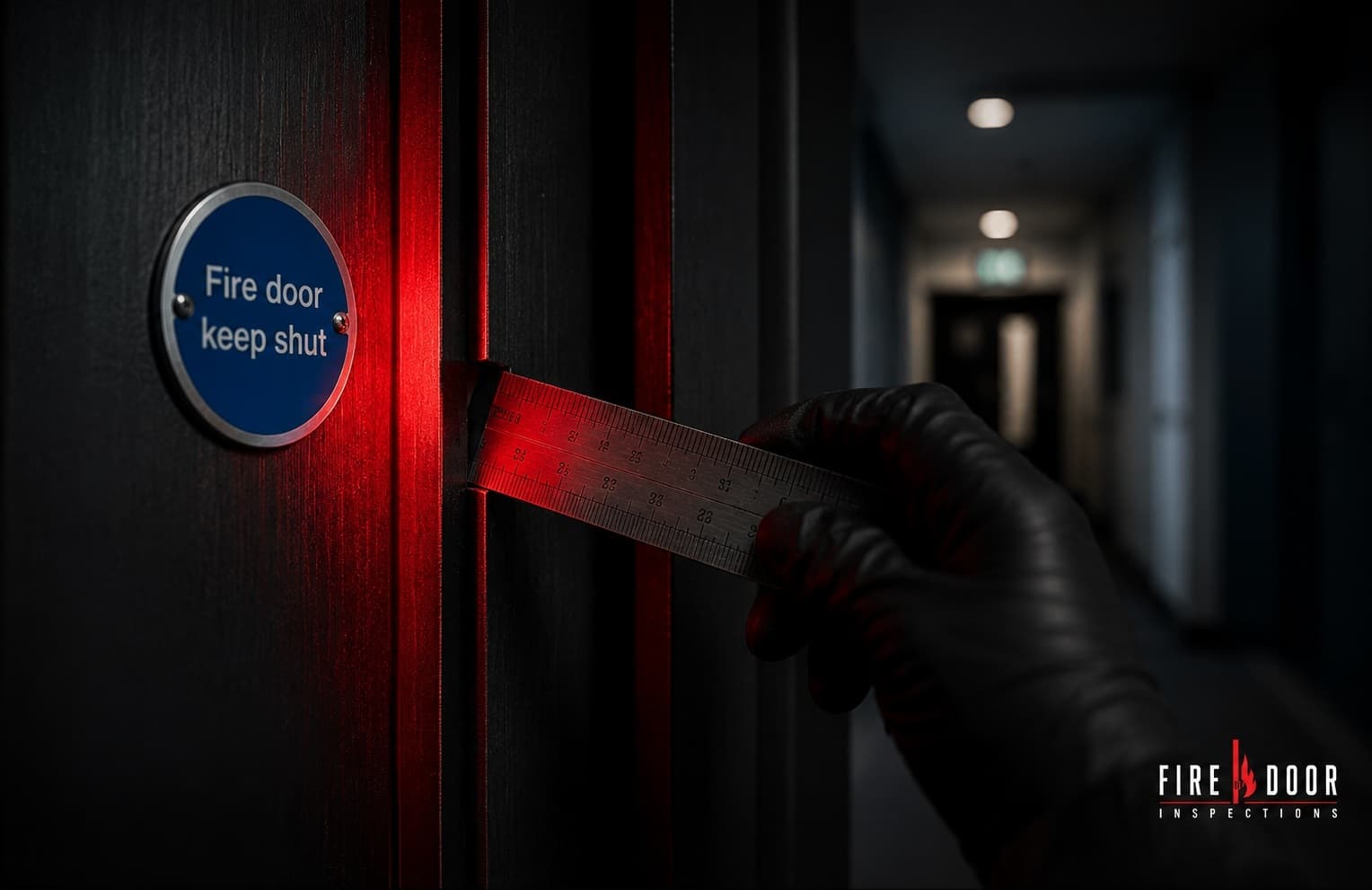
Excessive gaps
Settlement and repeated adjustment on older commercial frames can leave gaps outside practical tolerances where observed.
View defect guide →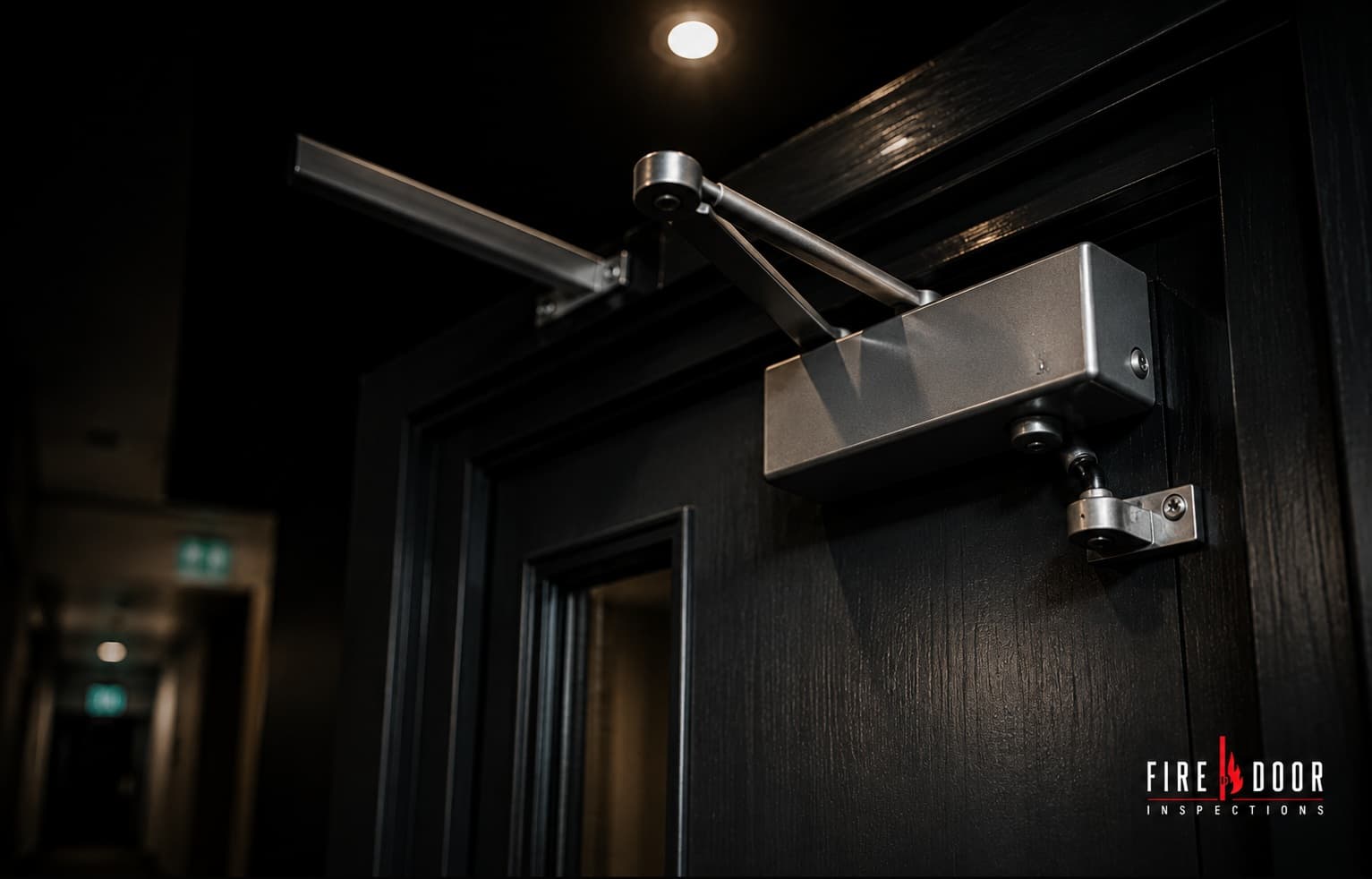
Faulty self-closing devices
High-frequency office doors may show closer wear or misalignment after sustained daily use.
View defect guide →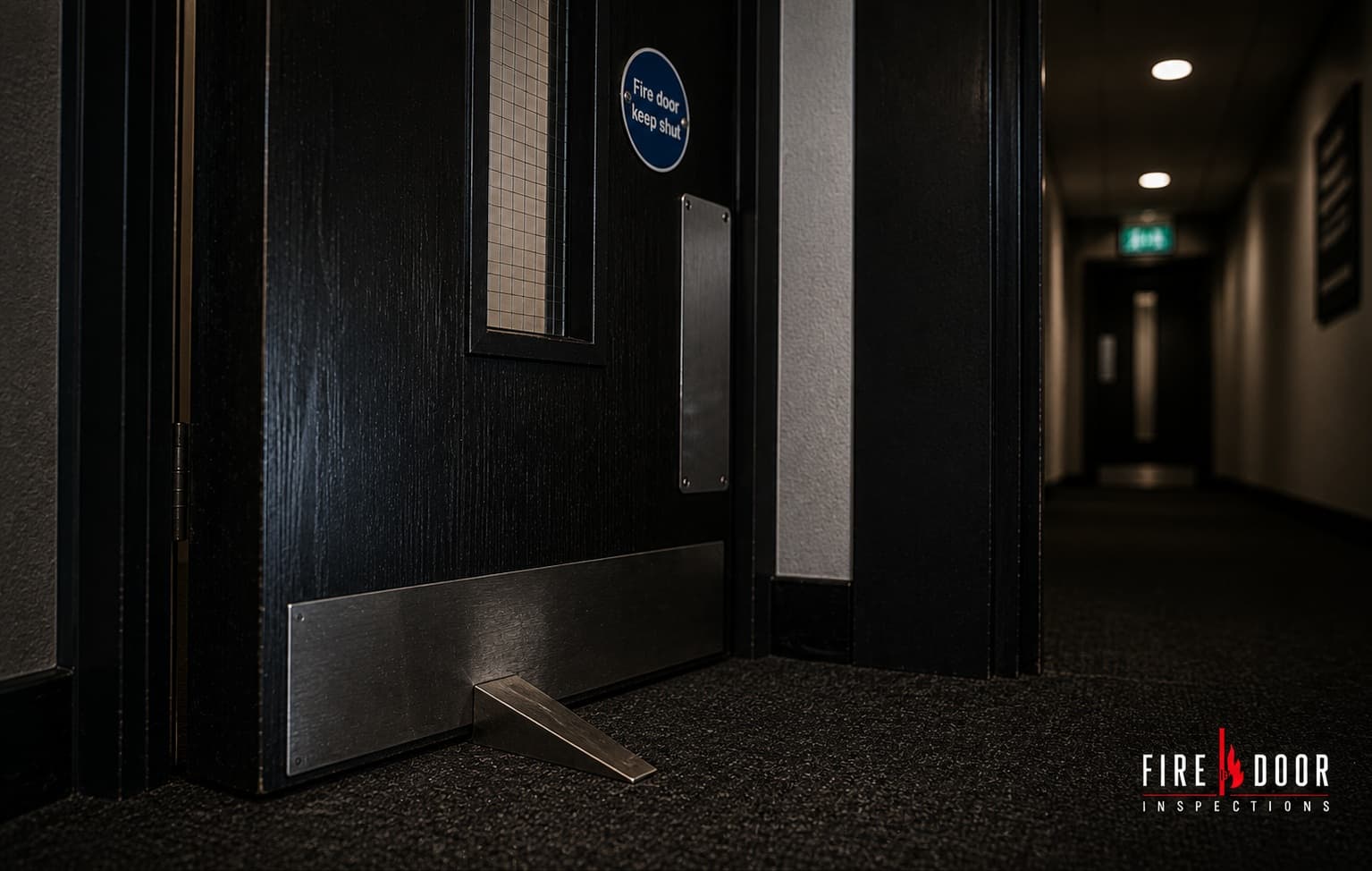
Doors wedged open
Operational teams may wedge doors during deliveries or cleaning without approved hold-open devices.
View defect guide →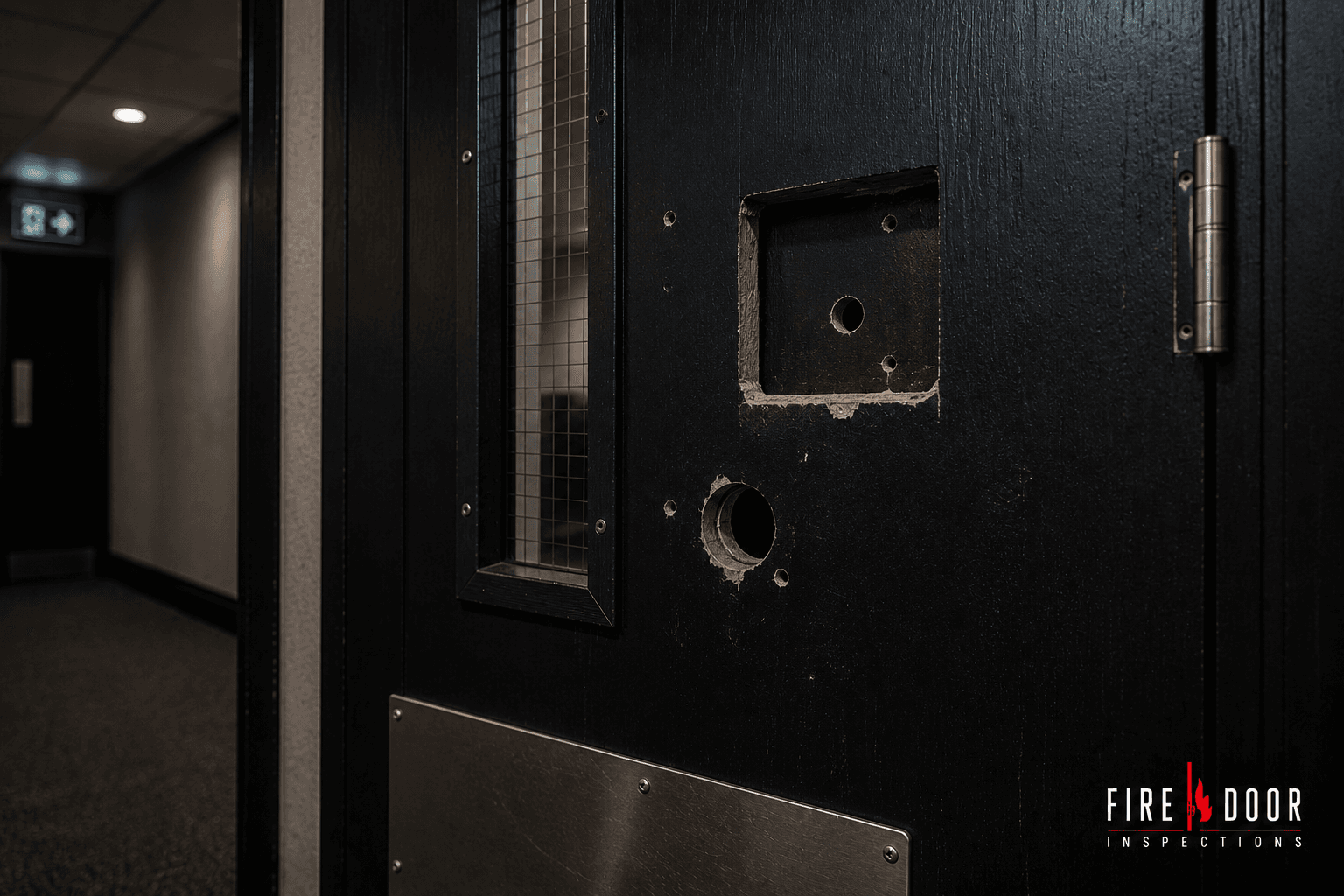
Unauthorised alterations
Fit-out works and access control upgrades can affect ironmongery, vision panels or frame interfaces.
View defect guide →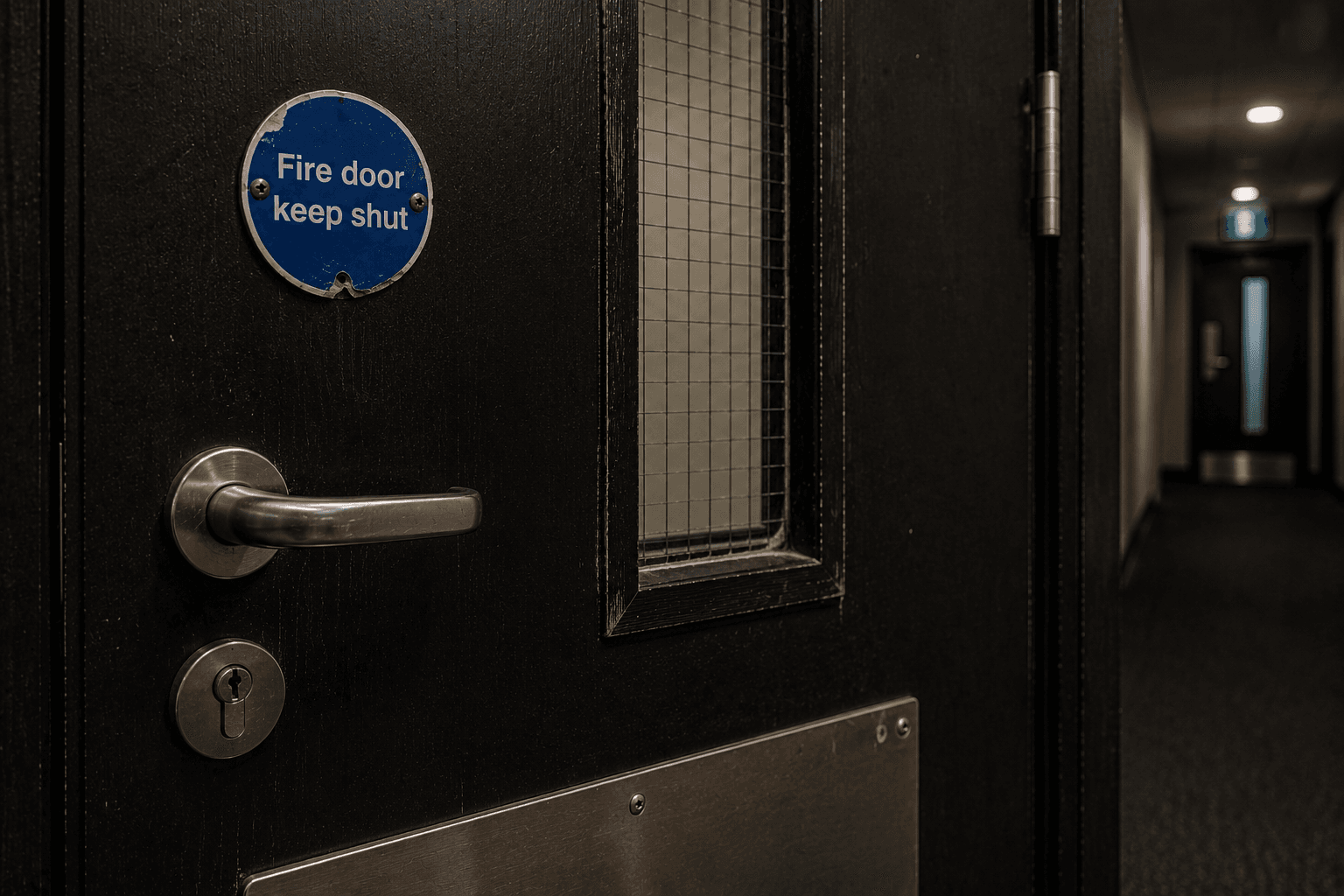
Incomplete records
Portfolio teams may lack aligned door schedules after multiple tenant changes across managed buildings.
Reports
Clear Fire Door Reports for City of London Properties
Reports can include site summary, door schedule, observations, photographic evidence where recorded, defect notes, priority guidance and practical recommendations.
Structured reporting can help property teams review findings, plan remedial work and maintain internal fire safety documentation. Report content depends on inspection scope, access and site conditions.
View our inspection report dashboard, illustrative sample report or the fire door reports overview to see example report structure.
Who Books
Who Books Fire Door Inspections in City of London?
Inspections can support responsible persons, property teams and portfolio managers across residential, commercial and institutional estates.
Our Process
How Fire Door Inspections Work in City of London
For City of London properties, local access, communal doors and managing-agent coordination are agreed before we attend — then you receive a structured door-by-door report with photos where recorded.
- 01
Send property details
Share the property address, approximate number of doors, access arrangements and any portfolio or reporting requirements.
- 02
Confirm inspection scope
We agree what will be inspected, reporting format, door references and any limitations before the site visit.
- 03
Agree access arrangements
Access is coordinated with managing agents, facilities teams or residents where required, subject to site conditions.
- 04
Site inspection or survey
Doors are inspected on site with observations recorded against agreed scope and door schedule references.
- 05
Evidence and observations recorded
Defects, limitations and photographic evidence are documented where recorded during the visit.
- 06
Report issued with priorities
A structured report is issued with defect notes, priority guidance and practical recommendations where applicable.
Inspection journey
From inspection to follow-up in City of London
A practical path after defects are recorded — reports, remedial support, re-inspection and door-register tracking where applicable.
- Step 1Inspection
- Step 2Report
- Step 3Remedial works
- Step 4Re-inspection
- Step 5Door register
After a City of London inspection, review the report, plan remedial works where needed, arrange re-inspection after works, and use a door register for portfolio tracking where applicable. See also inspection limitations.
Compliance Records
Supporting Fire Door Compliance Records in City of London
Inspection reports can support compliance evidence and remedial planning for City of London properties, but they do not guarantee statutory compliance and do not constitute legal advice. Responsible persons and duty holders should confirm applicable duties. Fire door inspections do not replace a fire risk assessment.
Where applicable, inspections may follow up actions from a fire risk assessment and can cover communal doors and flat entrance doors in blocks of flats or multi-occupied residential buildings. Regulation 10 duties may apply to certain multi-occupied residential buildings where applicable — this is general guidance only, not legal advice. Not every door requires the same inspection frequency.
Explore our fire door compliance support, flat entrance doors guidance and compliance guidance hub for general information on records, checklists and inspection frequency.
Nearby Areas
Nearby London Areas We Cover
Explore fire door inspection support in neighbouring London areas from our first published location pages.
City of London
Need Fire Door Inspections in City of London?
Request a quote with the postcode, estimated number of fire doors and property type. We will confirm scope, availability and pricing. You can also call or message on WhatsApp if that is easier for your team.
FAQ
Fire Door Inspection FAQs — City of London
General guidance on fire door inspections, reports and booking enquiries.